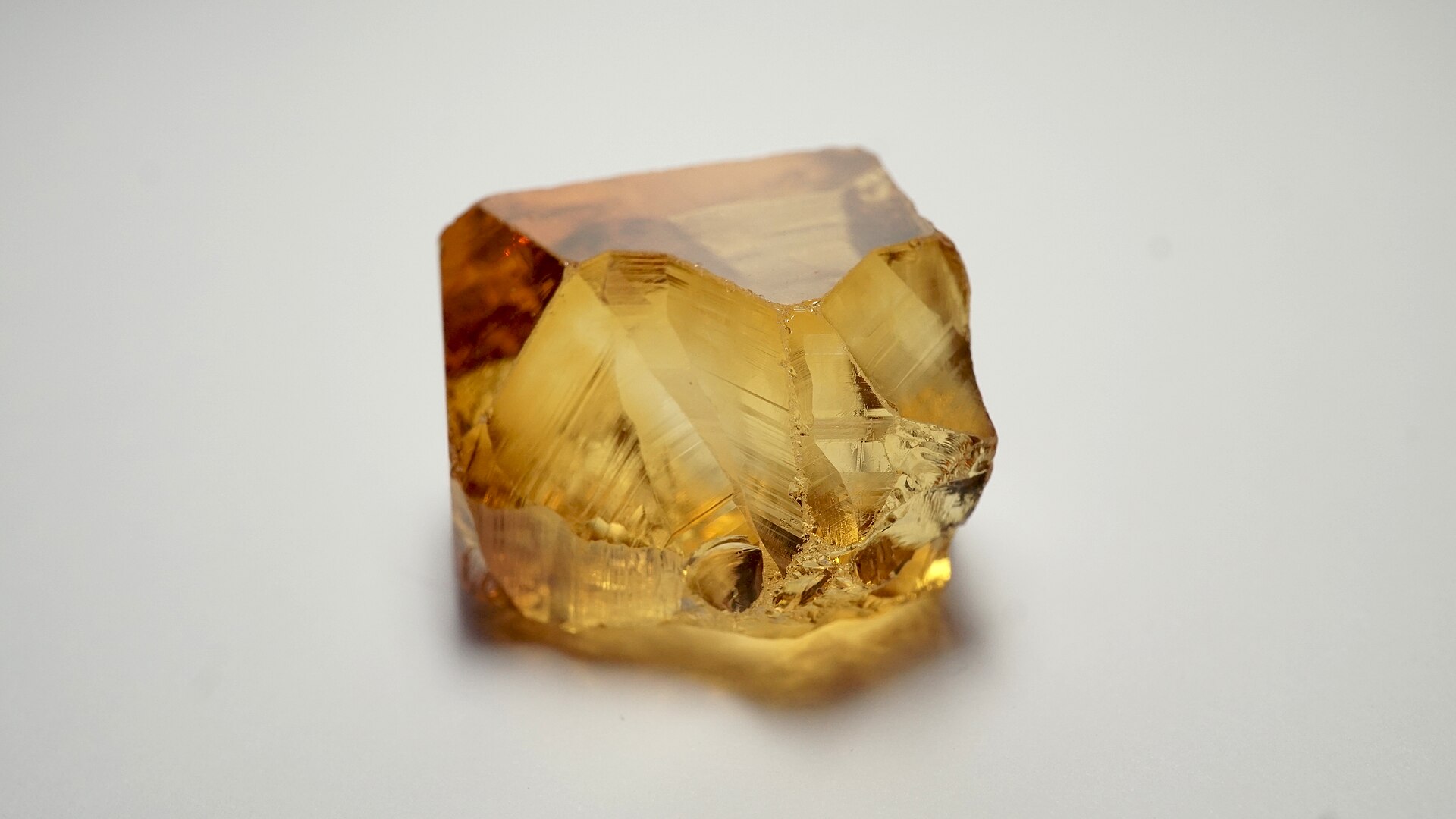
Citrine — yellow to orange quartz, here as a natural crystal and a cut gem — Photo: Paweł Maliszczak [hardleo.com] · CC BY-SA 4.0
What is Citrine?
Citrine is the yellow-to-orange variety of quartz — and one of the most misunderstood gems on the market. Natural citrine is genuinely rare: nearly every ‘citrine’ in a jewelry case began life as amethyst or smoky quartz, heated to a few hundred degrees so its color centers shift from purple or brown to golden yellow.
The result is still real quartz with real durability — the treatment simply hurries what geology does slowly. Heated material runs toward rich orange and reddish brown (‘Madeira’ citrine), while natural citrine stays a softer pale yellow, sometimes with a smoky tint.
Citrine shares November with topaz, and the two were confused for centuries: ‘topaz quartz’ was a common — and misleading — trade name for yellow quartz.
Physical Properties
The full data table is in the panel alongside. Here’s what those numbers actually mean.
Color. Natural citrine is pale yellow to yellow-orange, occasionally with smoky or greenish tones; heat-treated stones run orange to reddish brown. The coloring agent itself is still debated — iron was long blamed, but newer work points to aluminium-based color centers similar to those in smoky quartz.
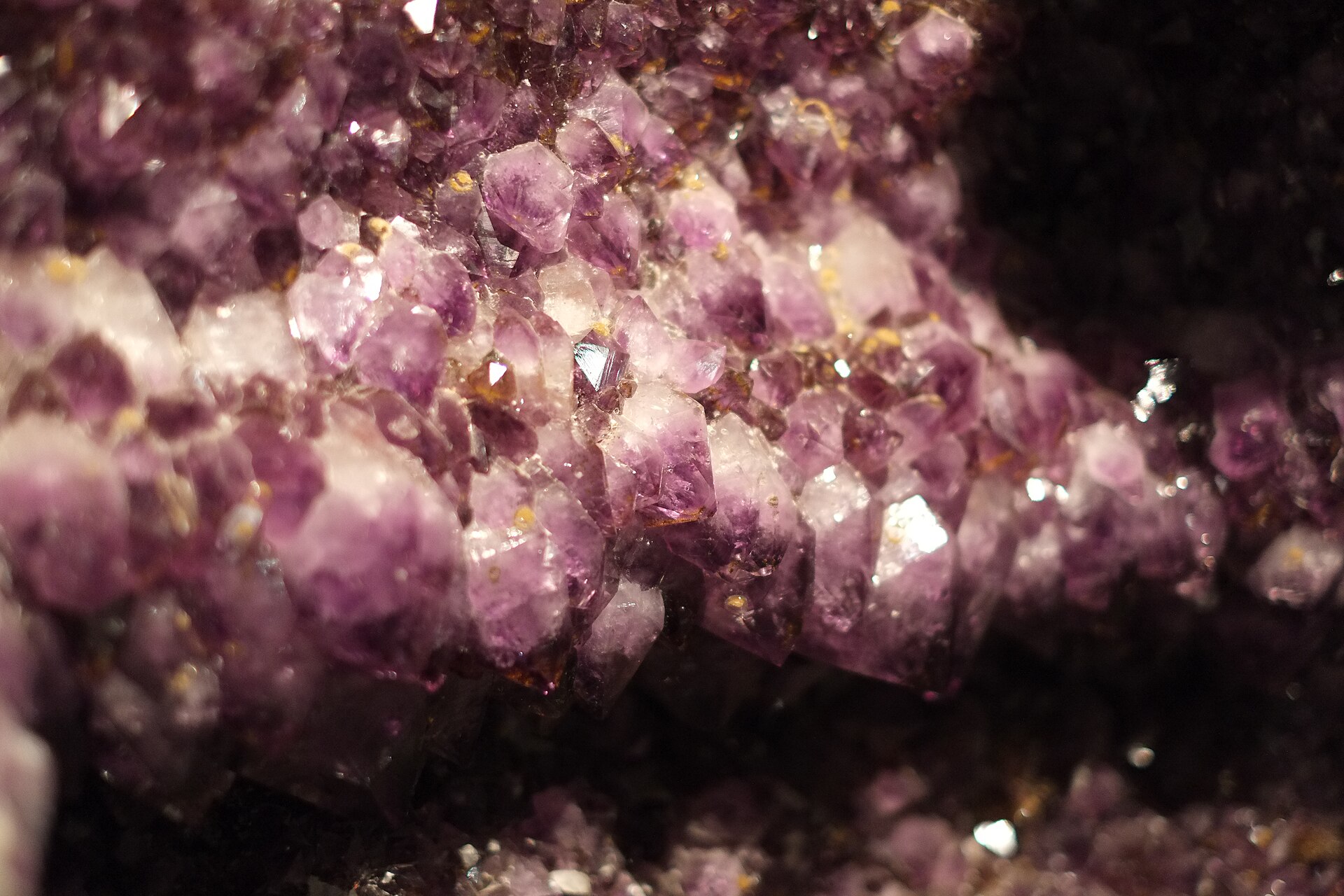
Natural vs treated. Not always obvious to the eye, but there are clues: treated amethyst often keeps amethyst's growth pattern, with color pooled at the crystal tips or in a geode crust, and a slightly milky base. Deep, even ‘Madeira’ red-orange is almost always heated.
Durability. Citrine is stable in light and, at hardness 7, durable enough for rings — though household dust can still scratch it over time.
How & Where It Forms
Natural citrine forms in pegmatites and hydrothermal veins where quartz grew with traces of aluminium and iron in its lattice — and where the right radiation and temperature history switched those impurities ‘on.’ Brazil, Madagascar and Bolivia supply most of the natural material.
Far more citrine is made than mined: amethyst geodes and crystals are baked at roughly 400–500 °C, which rearranges the iron color centers and shifts purple to yellow and orange — the same change that happens when rocks are heated naturally.
Often grows alongside:
What It’s Used For
How to Identify It
Yellow quartz is identified like any quartz — hardness 7, no cleavage, conchoidal fracture, glassy luster. The real question is what it is not: yellow topaz is harder (8), heavier, and shows one perfect cleavage; golden beryl (heliodor) forms hexagonal prisms; yellow sapphire is far harder (9) and denser.
To spot treated material, look for color concentrated at the tips of druzy crystals and tell-tale reddish-orange ‘Madeira’ hues that natural citrine rarely reaches.
| Looks like… | But differs because… | Quick test |
|---|---|---|
| Topaz | Harder (8), denser (SG ~3.5) and has one perfect cleavage direction | Cleavage & heft |
| Heliodor | Golden beryl grows hexagonal prisms and is slightly harder (7.5–8) | Crystal shape & hardness |
| Corundum | Yellow sapphire is far harder (9) and much denser (SG ~4.0) | Hardness |
Where It’s Found
Notable localities for fine specimens:
Gallery
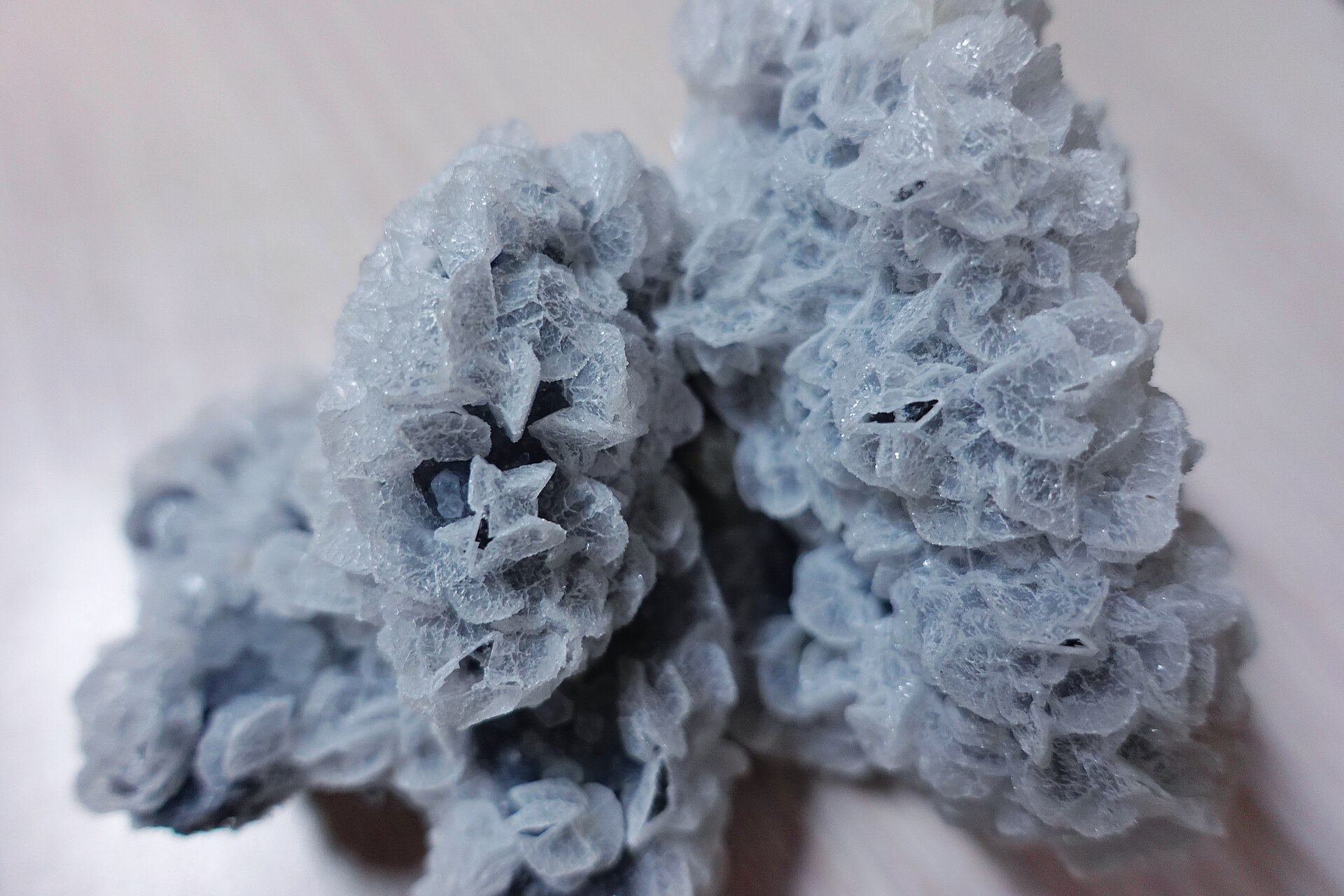
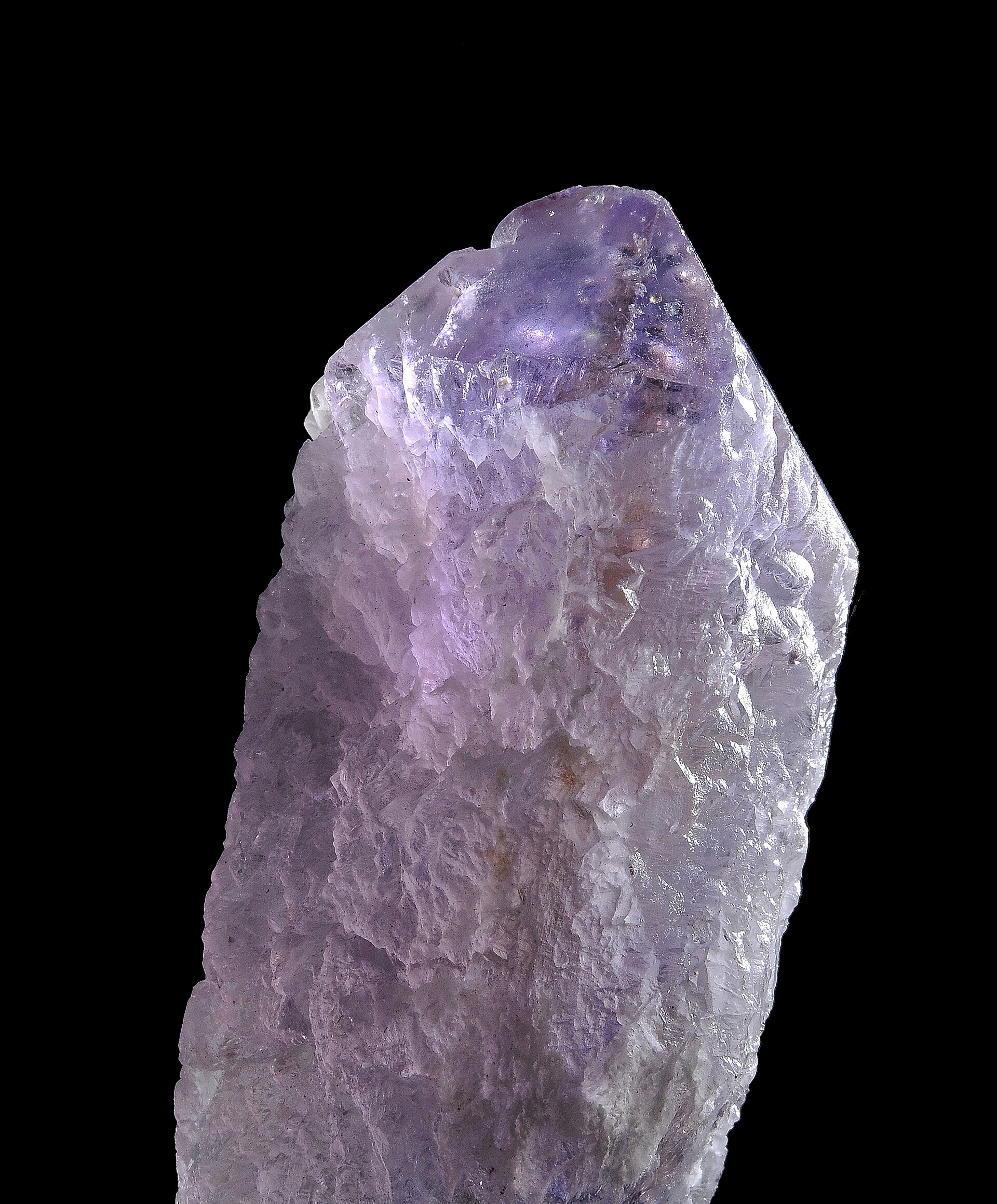
Photographs from Wikimedia Commons contributors — click a credit on the main image for the source and license.
Related Minerals
Others in the same family and minerals it commonly grows alongside.
References & Further Reading
- Dana’s New Mineralogy, 8th ed. Silica group, tectosilicates.
- Mindat.org — Citrine mineral data and locality records.
- Wikipedia — Citrine.
Last reviewed 2026-09-14 · How to cite this page.