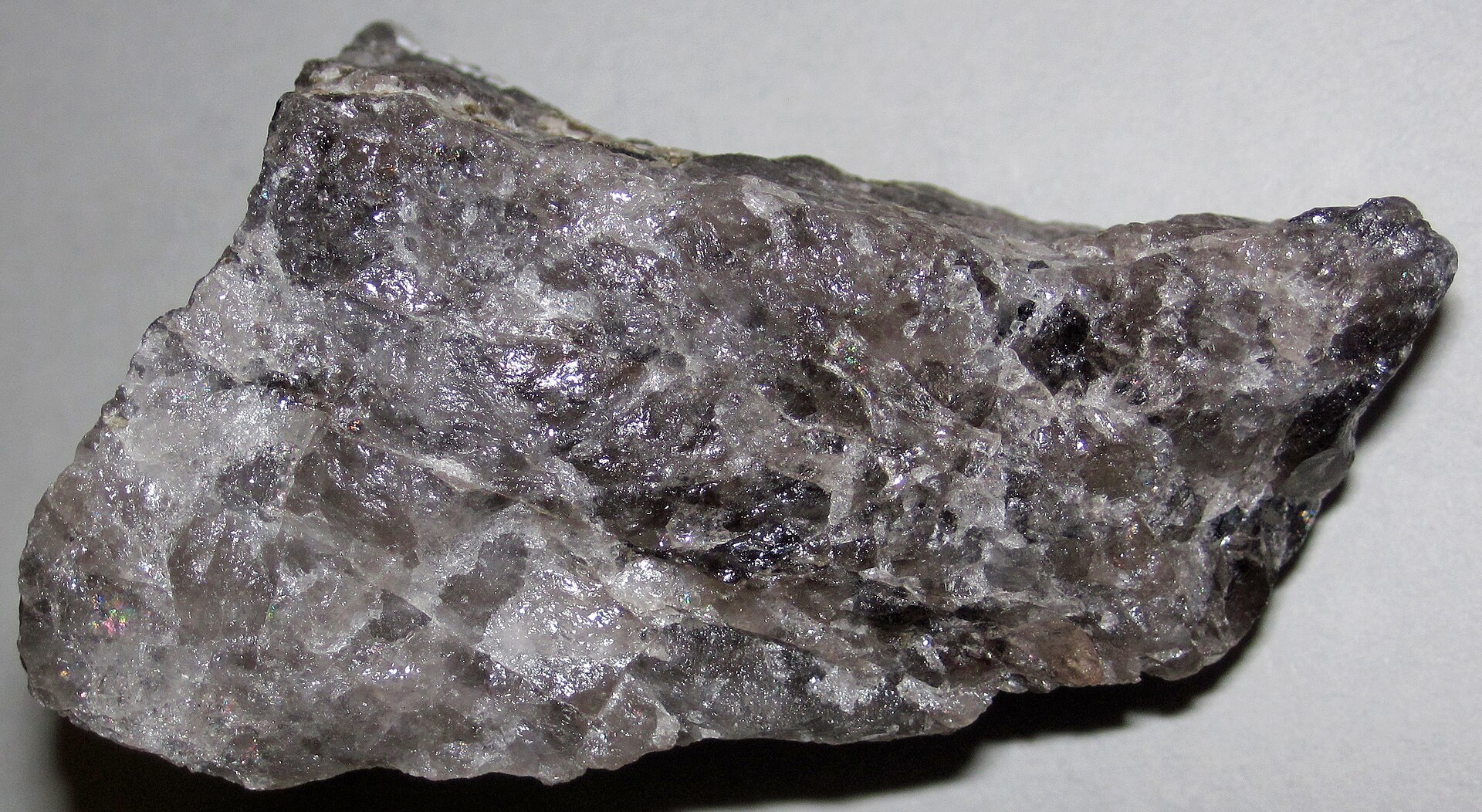
Smoky quartz — a transparent brown crystal point from an alpine-type cleft — Photo: James St. John · CC BY 2.0
What is Smoky Quartz?
Smoky quartz is the brown-to-black variety of quartz — clear crystal tinted as if by smoke. Its color is radiation made visible: trace aluminium in the lattice plus natural background radiation produces light-absorbing ‘color centers,’ tinting the crystal from pale tan through chocolate to the nearly black variety called morion.
Scotland's Cairngorm Mountains gave the gem its most famous synonym — cairngorm, the smoky quartz worn in Highland dress — and it remains Scotland's national gemstone. The Swiss Alps produce the most dramatic specimens: twisted ‘gwindel’ crystals the length of your forearm.
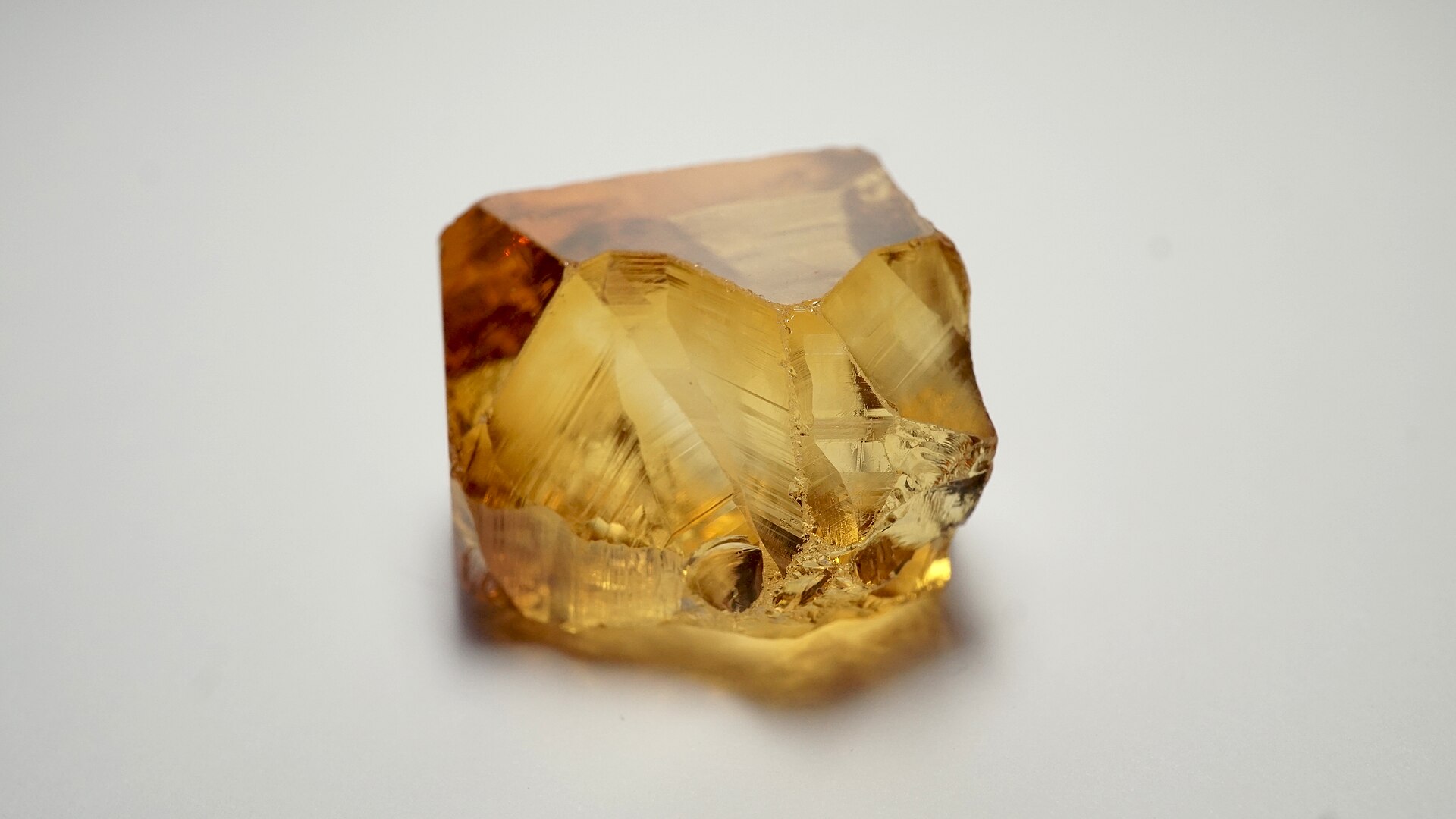
Because the radiation-plus-heat recipe works in reverse, much commercial smoky quartz is irradiated rock crystal — and heating smoky quartz is one of the routes to citrine.
Physical Properties
The full data table is in the panel alongside. Here’s what those numbers actually mean.
Color. Aluminium substitutes for silicon in the SiO₂ lattice; natural radiation then forms an [AlO₄]⁰ hole center that absorbs light across the visible spectrum. More time in the radiation bath means a darker stone; extreme doses yield opaque black morion.
Stability. Heat returns the color centers to their un-irradiated state: smoky quartz baked at a few hundred degrees fades toward colorless or turns yellow — one route to commercial citrine. Very dark material can also lighten slowly in strong sunlight.
Habit. Beyond ordinary prisms, alpine pockets yield gwindels — crystals twisted around their vertical axis as they grew against the moving wall of a mountain cleft. They are among the most coveted quartz specimens known.
How & Where It Forms
Smoky quartz needs three ingredients: open space to grow, aluminium in the fluid, and a slow bath of natural radiation — usually from uranium- and thorium-bearing granitic rocks around the pocket. That is why it is so common in granite pegmatites, alpine clefts and veins cutting radioactive bedrock, and so rare in ‘clean’ rocks.
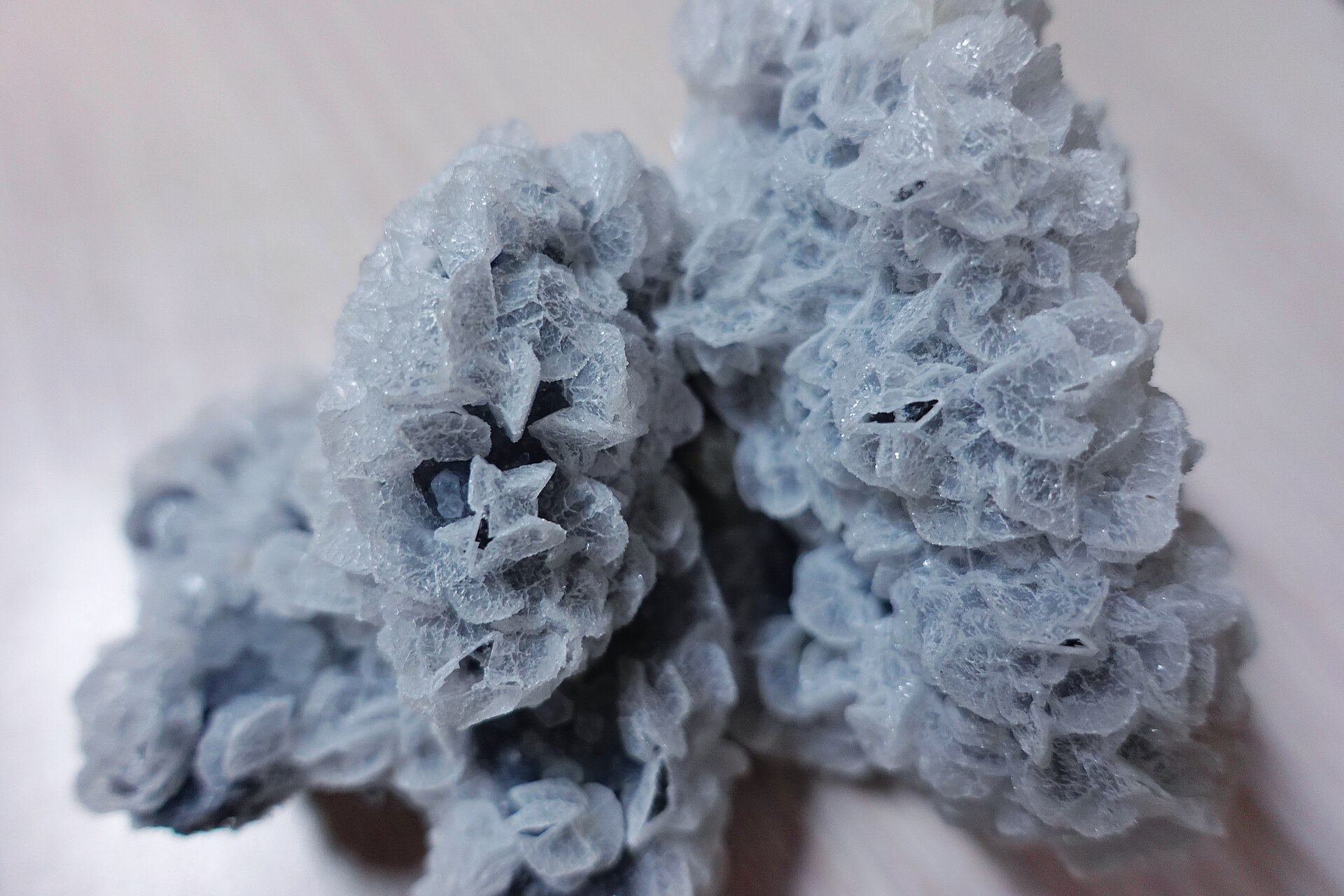
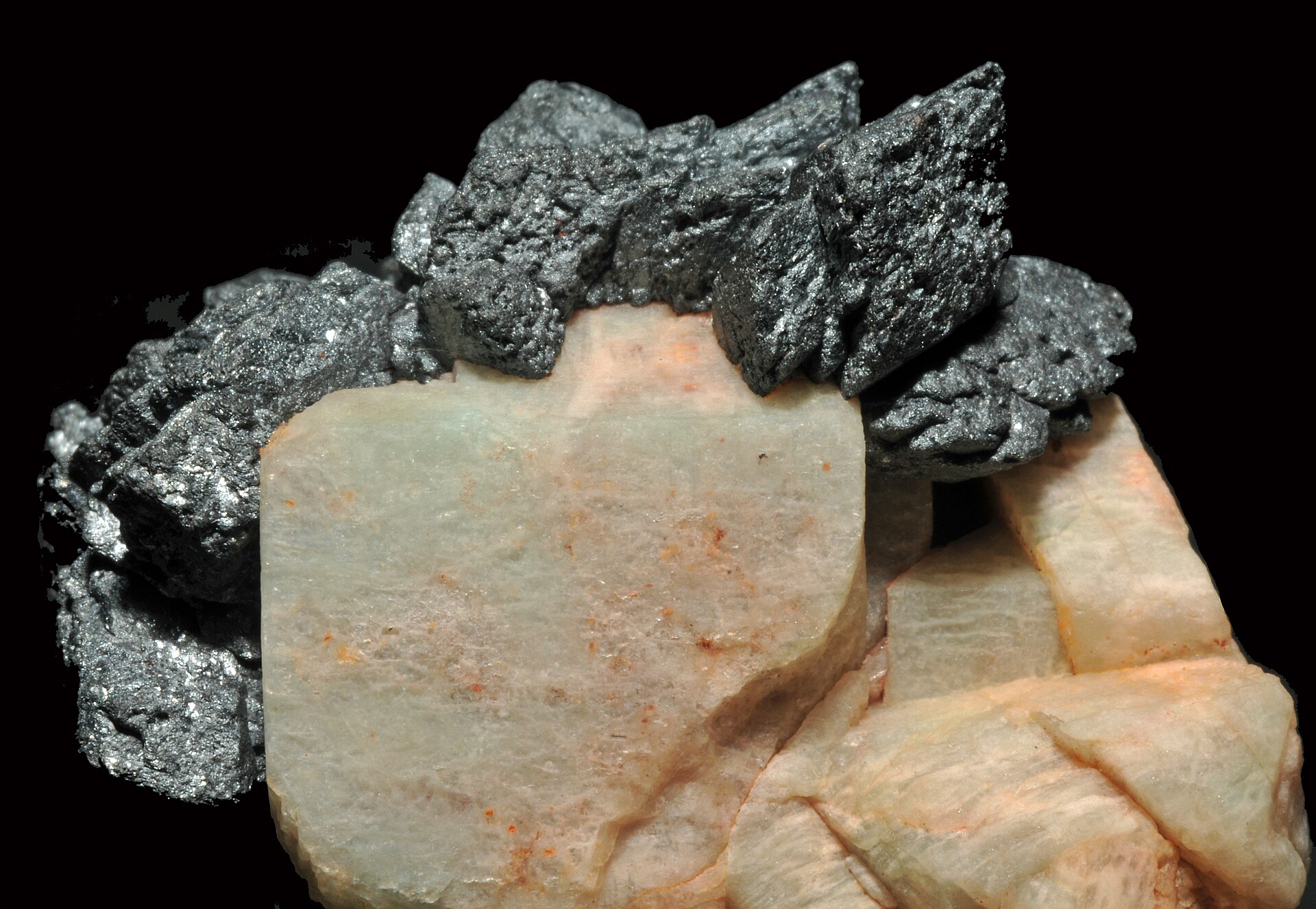
Colorado's Pikes Peak granite — famous for smoky quartz paired with sky-blue amazonite feldspar — and the clefts of the high Swiss Alps are the textbook settings.
Often grows alongside:
What It’s Used For
How to Identify It
Brown-to-black transparent crystal, hardness 7, no cleavage, conchoidal fracture — smoky quartz announces itself. The lookalikes are dark tourmaline (look for a rounded-triangle cross-section and heavy lengthwise striations) and obsidian, which is glass: lighter, amorphous, and never crystalline.
Watch for impossibly even, dead-black ‘smoky’ at bargain prices — artificially irradiated quartz is common and chemically indistinguishable from the natural stone.
| Looks like… | But differs because… | Quick test |
|---|---|---|
| Tourmaline | Black tourmaline (schorl) shows a rounded-triangular cross-section and heavy lengthwise striations | Cross-section shape |
| Obsidian | Volcanic glass is amorphous, lighter (SG ~2.4) and never forms crystals | Crystal form & heft |
| Hematite | Metallic, much denser (SG ~5.3) and leaves a red-brown streak | Streak plate |
Where It’s Found
Notable localities for fine specimens:
Gallery
Photographs from Wikimedia Commons contributors — click a credit on the main image for the source and license.
Related Minerals
Others in the same family and minerals it commonly grows alongside.
References & Further Reading
- Dana’s New Mineralogy, 8th ed. Silica group, tectosilicates.
- Mindat.org — Smoky Quartz mineral data and locality records.
- Wikipedia — Smoky quartz.
Last reviewed 2026-09-14 · How to cite this page.