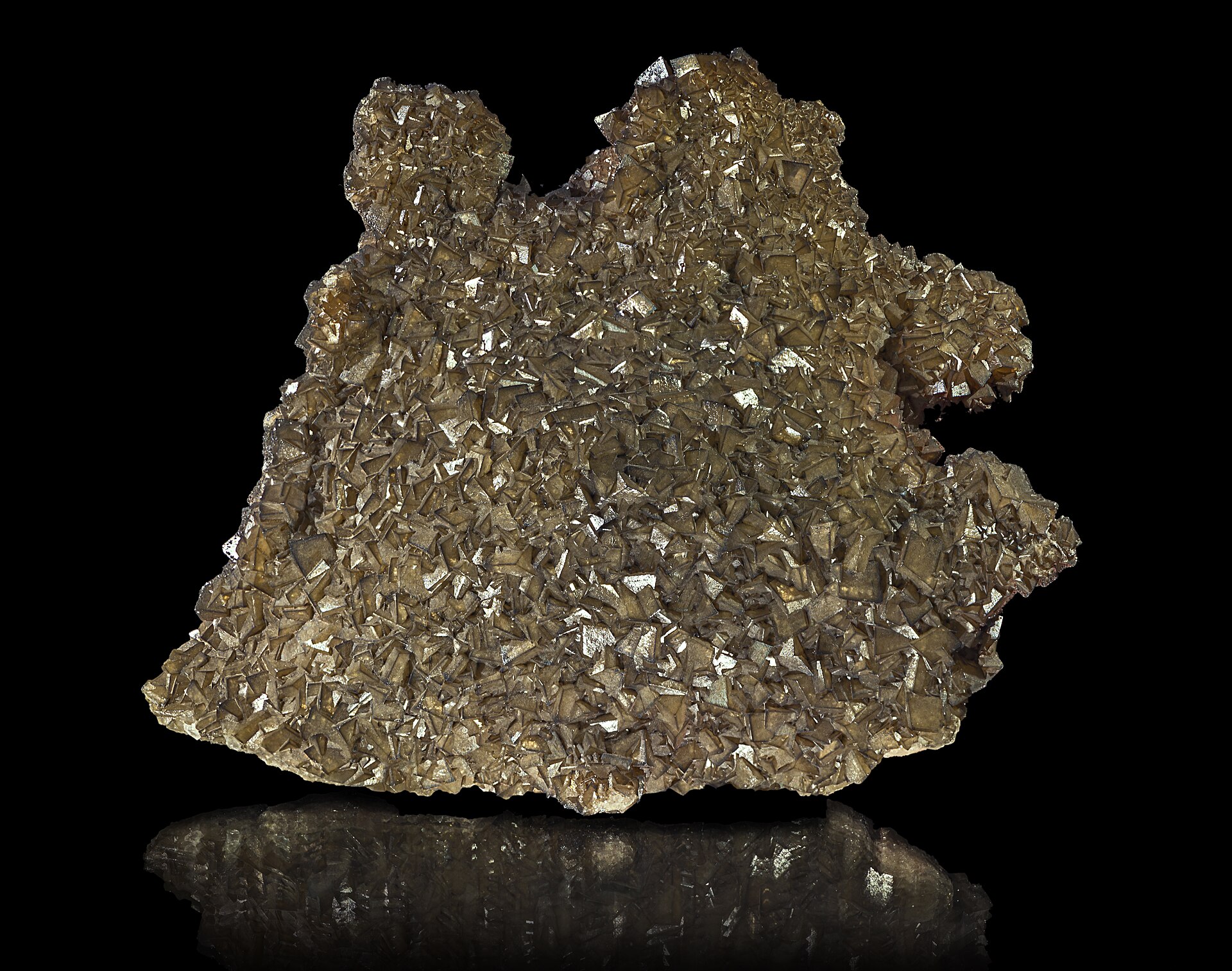
Cadmian Smithsonite Locality : Tsumeb Mine (Tsumcorp Mine), Tsumeb, Otjikoto (Oshikoto) Region, Namibia Size : 20x16x5cm — Photo: Didier Descouens · CC BY-SA 3.0
Smithsonite
Also known as: Zinc spar, Bonamite.
Zinc carbonate — 'zinc spar' — a botryoidal secondary zinc mineral named for Smithsonian founder James Smithson.
Intro adapted from Wikipedia (CC BY-SA).
Smithsonite is an IMA-recognized mineral species in the carbonate class, with the chemical formula Zn(CO₃).
It crystallizes in the hexagonal crystal system (space group R-3c). It is a member of the Calcite structural group.
Key properties: Mohs hardness 4–4.5; specific gravity 4.43; typically blue or green or pink or yellow or white or brown or purple; White streak; Vitreous, may be pearly luster; refractive index 1.737; optically uniaxial.
IMA symbol Smt, grandfathered status — known before the IMA’s founding, named in 1832.
A secondary mineral formed in the oxidized zone of zinc-bearing deposits and replacing adjacent carbonate rocks, where it may constitute an ore.
It is found associated with Hemimorphite, willemite, hydrozincite, cerussite, malachite, azurite, aurichalcite, anglesite.
The mineral was named to honor James Lewis (Macie) Smithson (1754–1829), British chemist and mineralogist, whose bequest founded the Smithsonian Institution, Washington, D.C., USA.
Collections: Collector Favorites.