Obsidian — Photo: James St. John · CC BY 2.0
What is Obsidian?
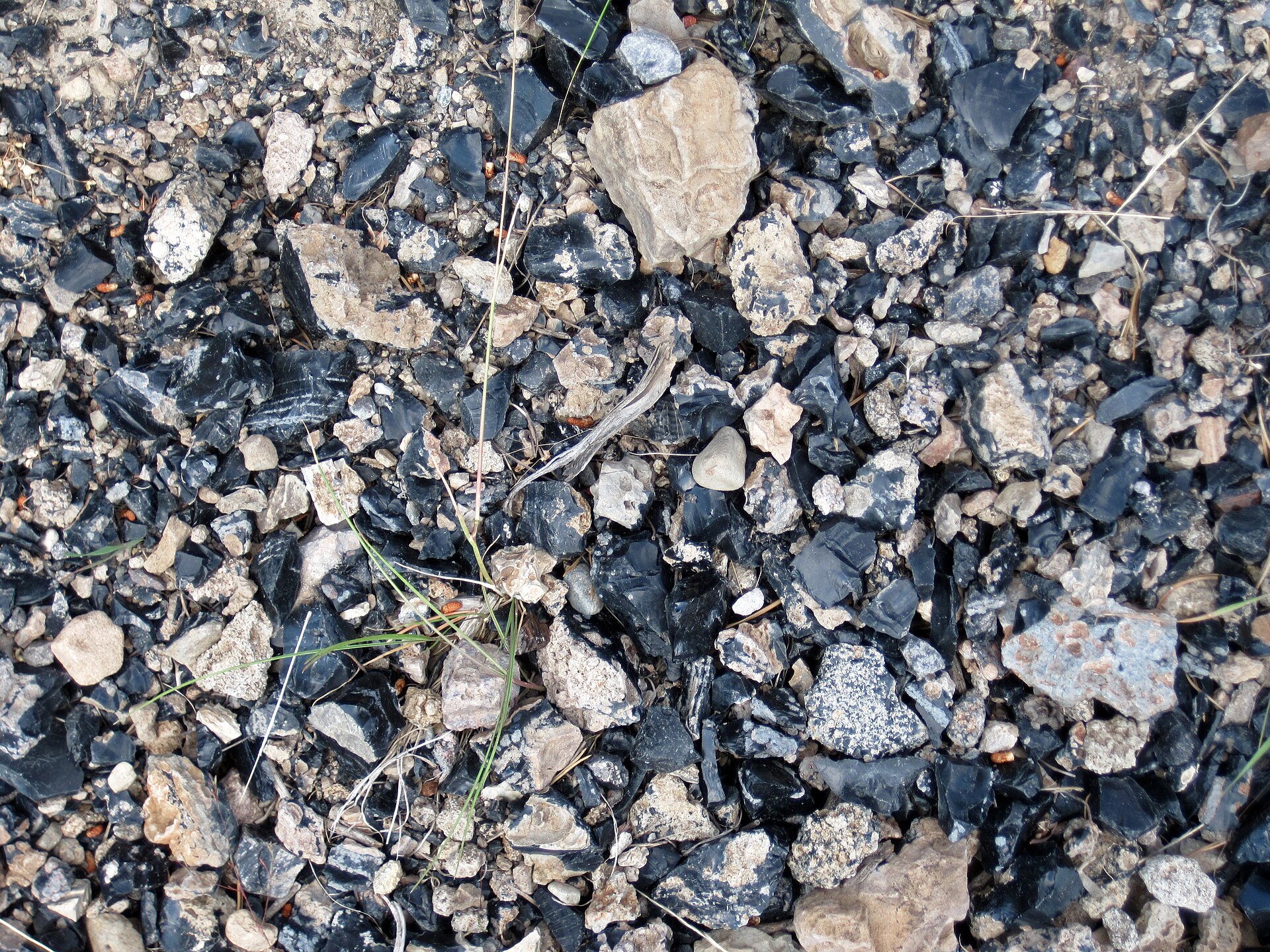
Obsidian is volcanic glass — silica-rich lava that cooled too fast for crystals to organize. Chemically it is roughly rhyolite; structurally it is not a mineral at all but a mineraloid, an amorphous solid.
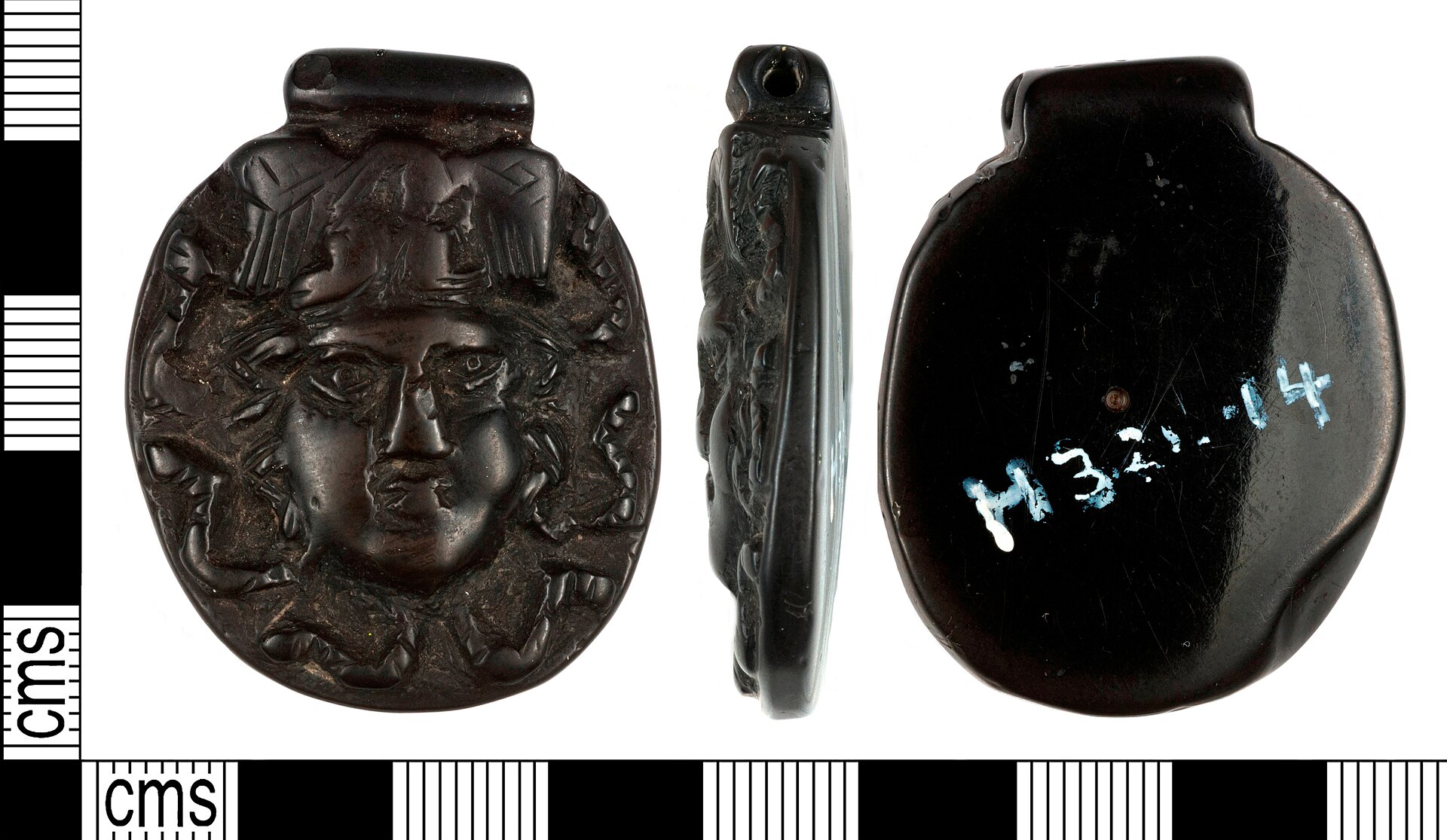
Its conchoidal fracture produces edges a few molecules wide — sharper than any metal. That made obsidian the steel of the Stone Age, traded over thousands of kilometers; archaeologists fingerprint its trace elements to map ancient trade routes.
Physical Properties
The full data table is in the panel alongside. Here’s what those numbers actually mean.
Fracture. Conchoidal flakes with edges under 3 nm — far keener than scalpels.
Varieties. Snowflake obsidian carries cristobalite spherulites; sheen types show magnetite or gas-void layers.
Dating. Fresh obsidian slowly hydrates — the hydration rind's thickness estimates age (obsidian hydration dating).
What It’s Used For
How to Identify It
| Looks like… | But differs because… | Quick test |
|---|---|---|
| Jet | Organic lignite — lighter, warm to the touch, brown streak | Streak & feel |
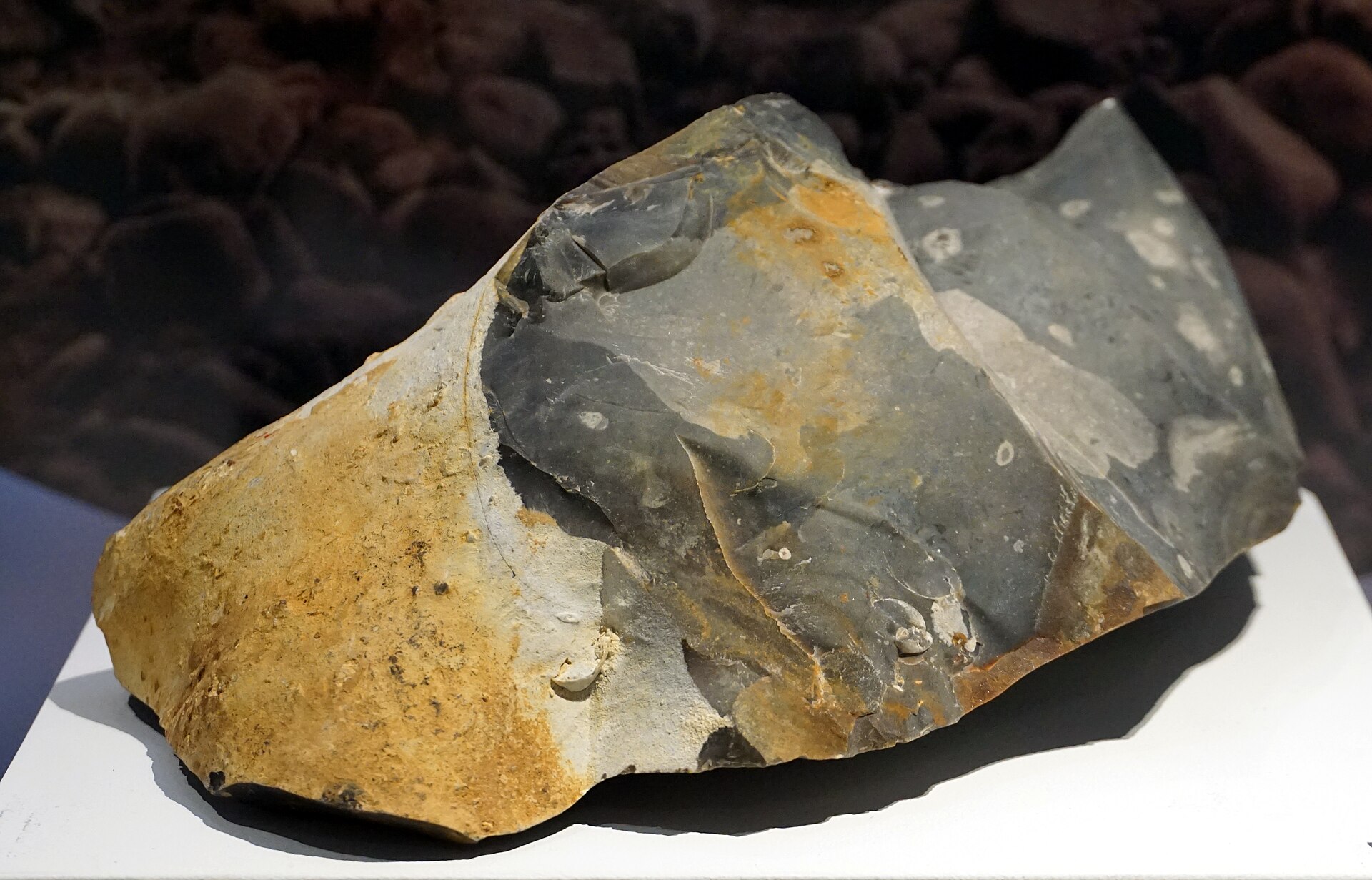
| Flint | Cryptocrystalline, duller luster, not glassy | Luster |
Where It’s Found
Notable localities for fine specimens:
Gallery
Photographs from Wikimedia Commons contributors — click a credit on the main image for the source and license.
Related Minerals
Others in the same family and minerals it commonly grows alongside.