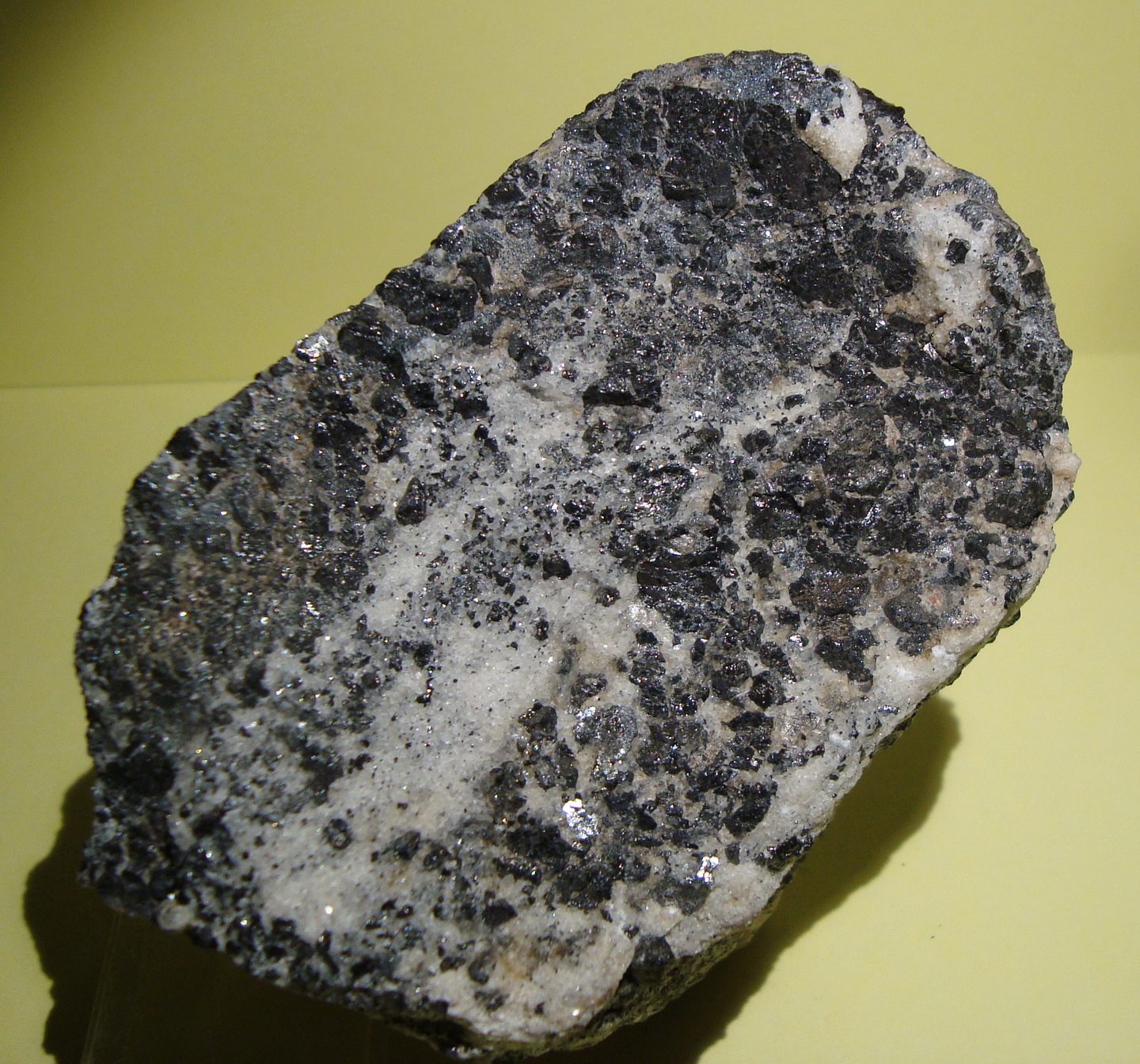
Magnetite octahedron — iron-black, and it sticks to a magnet — Photo: Ryan Somma · CC BY-SA 2.0
What is Magnetite?
Magnetite is an iron oxide with a twist — its formula, Fe²⁺Fe³⁺₂O₄ (often shortened to Fe₃O₄), mixes two kinds of iron in one lattice. That mix is the whole story: electrons hopping between Fe²⁺ and Fe³⁺ make magnetite the most magnetic naturally occurring mineral, and one of the few minerals that conducts electricity.
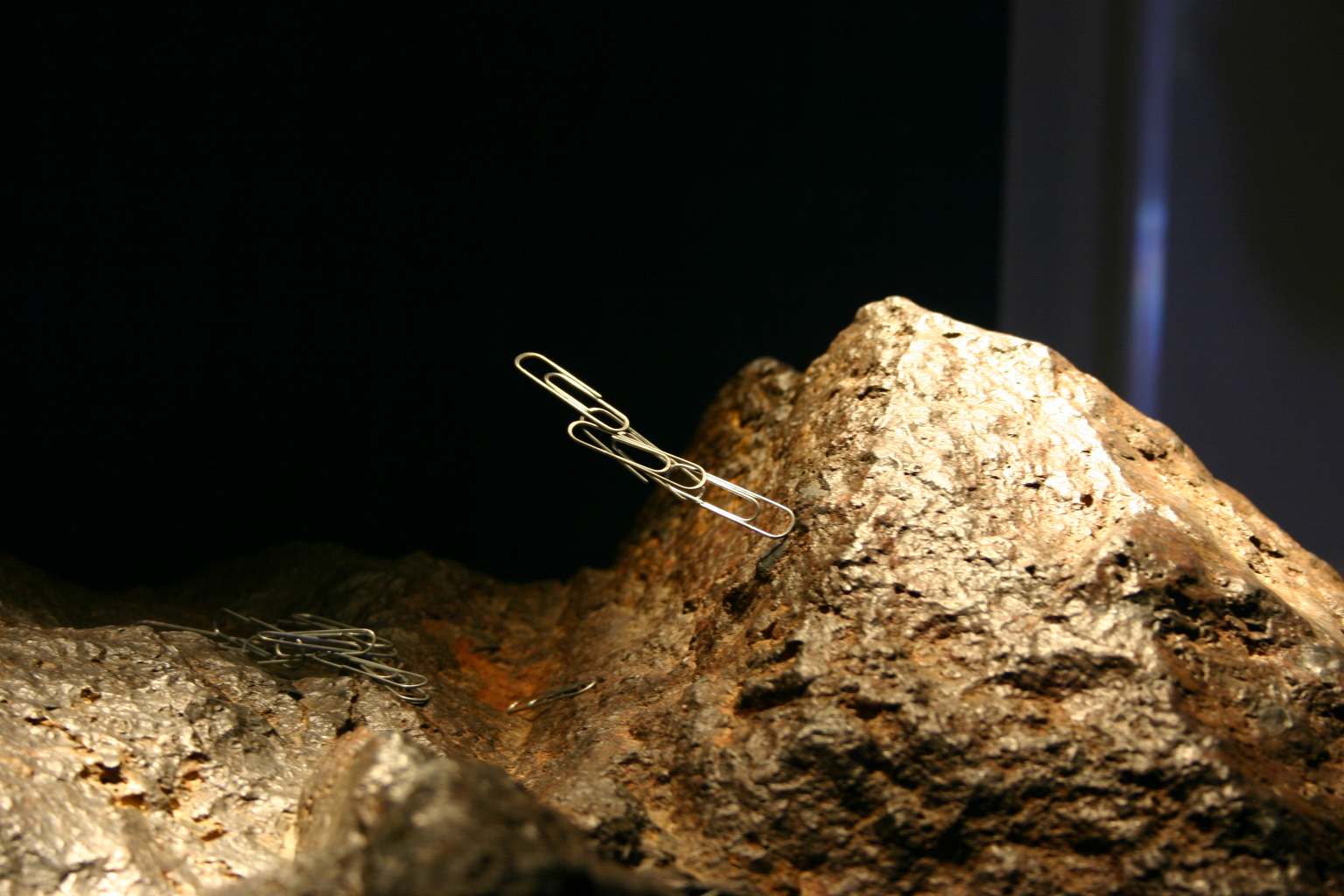
Bring a magnet near a specimen and it snaps to it — the simplest field test in mineralogy. Rarer still is lodestone, magnetite that is itself a permanent magnet (probably magnetized by lightning strikes); chunks of lodestone hung from threads were the world’s first compasses.
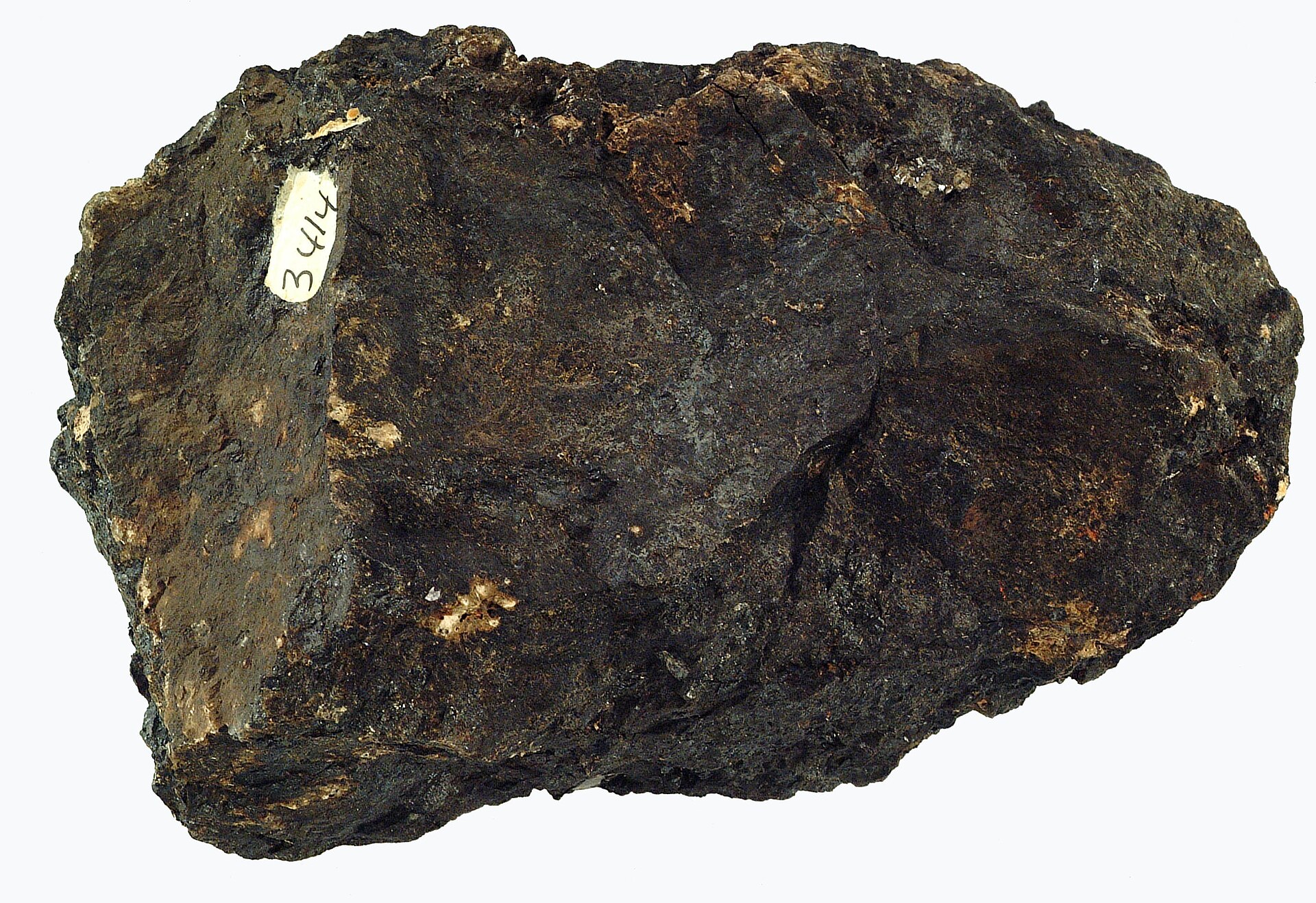
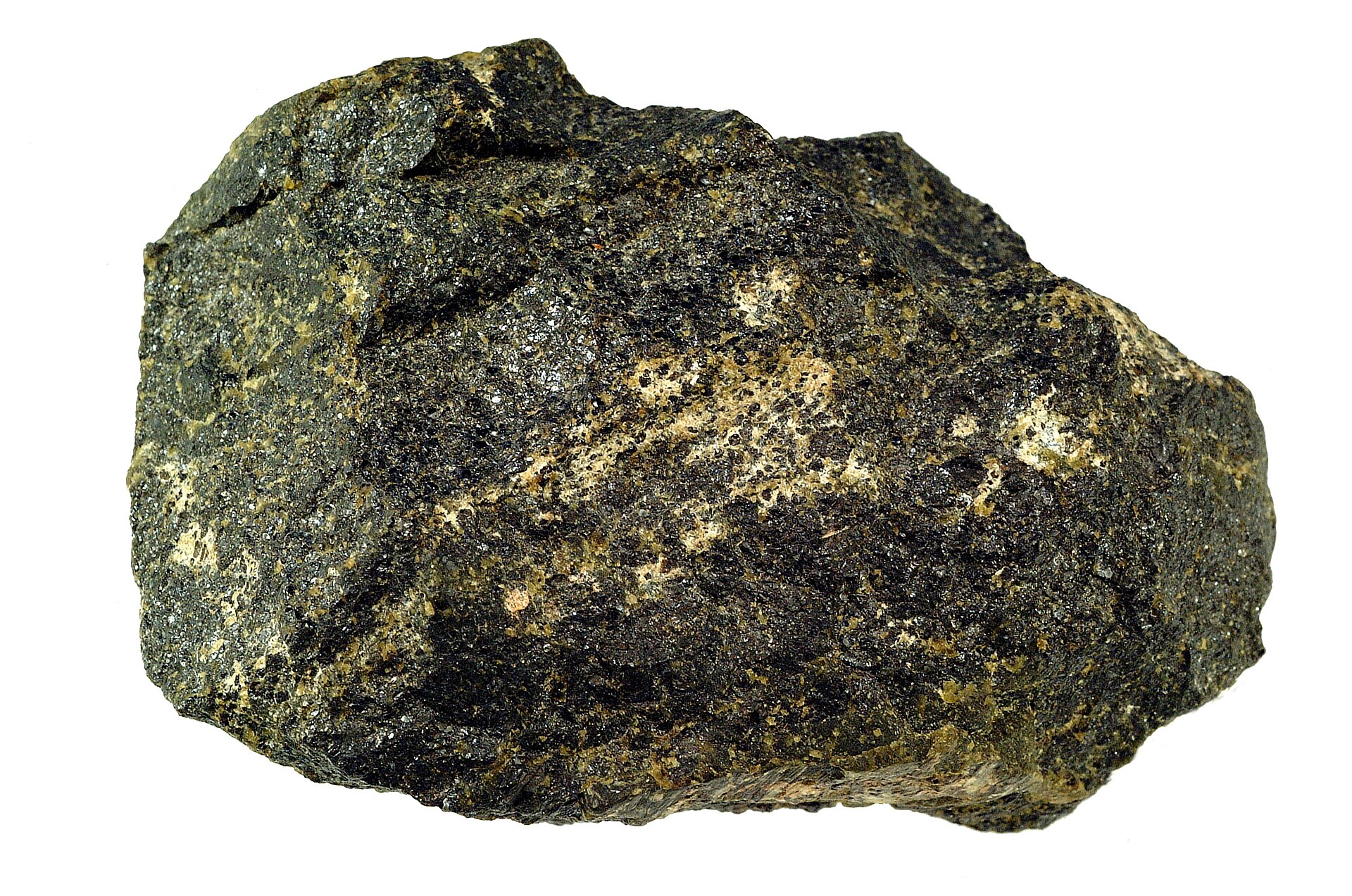
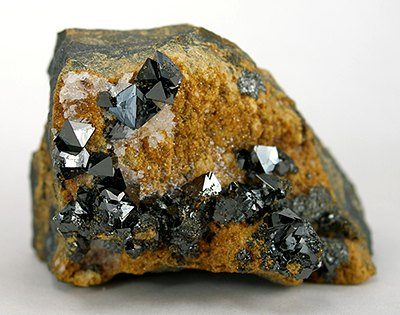
Crystals are typically sharp octahedra — two four-sided pyramids base to base — or chunky black masses. Beach ‘black sand’ is often mostly magnetite, concentrated because it’s heavy and it resists weathering better than most iron minerals.
Physical Properties
The full data table is in the panel alongside. Here’s what those numbers actually mean.
Magnetism. Ordinary magnetite is ferrimagnetic: it races to any magnet, though it doesn’t usually act as a magnet itself. Lodestone — the naturally magnetized variety — does, and can pick up paperclips.
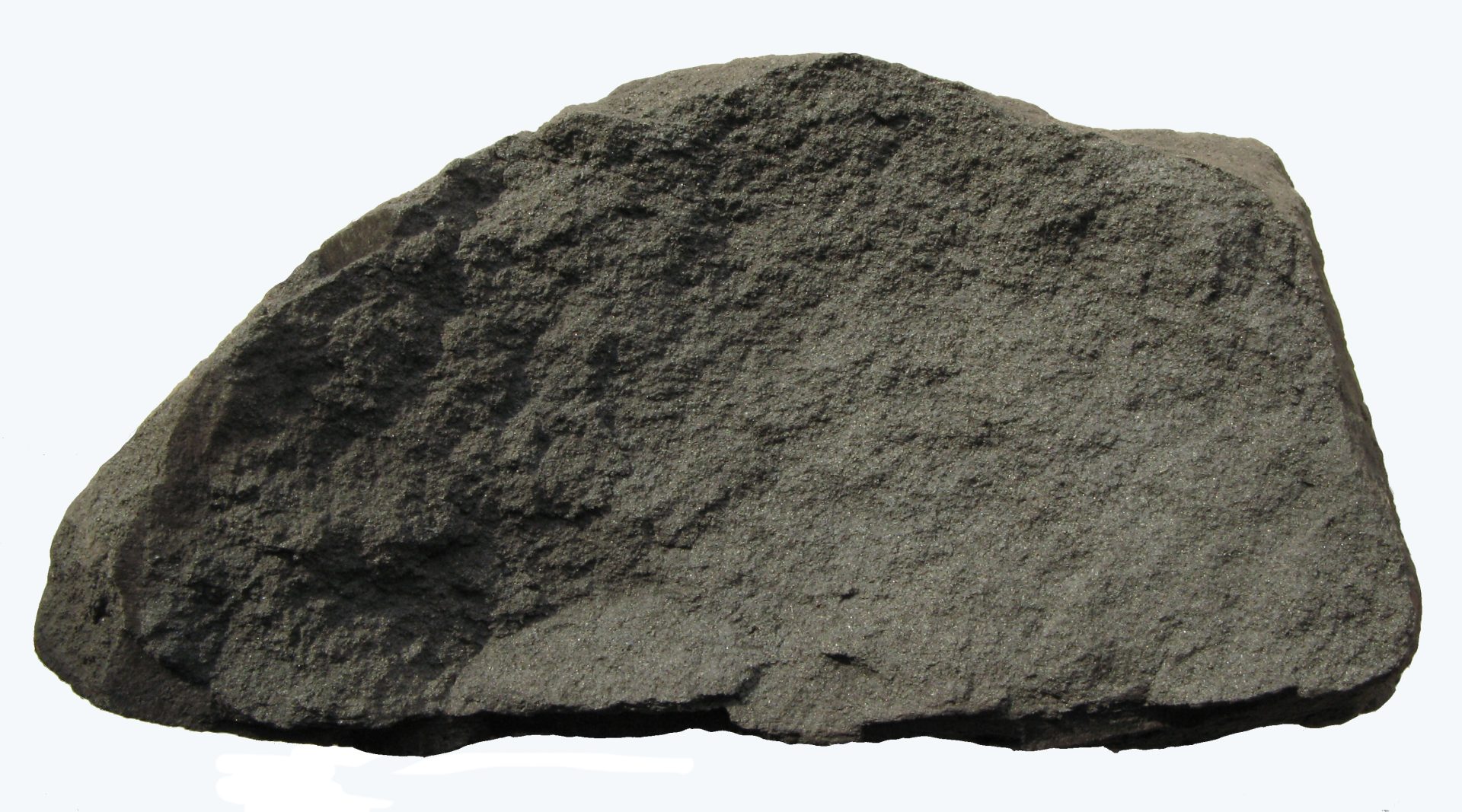
Color and streak. Always iron-black, and the streak is black too — the fastest way to split it from hematite (cherry-red streak) and goethite (yellow-brown).
Weight and hardness. Mostly iron, so it’s dense (SG ~5.2) and fairly hard (5.5–6.5) — it scratches glass and just resists a knife blade.
Crystal form. A member of the spinel family: look for octahedra and dodecahedra, often twinned on the spinel law. It has no true cleavage, though twinning can leave an octahedral parting.
How & Where It Forms
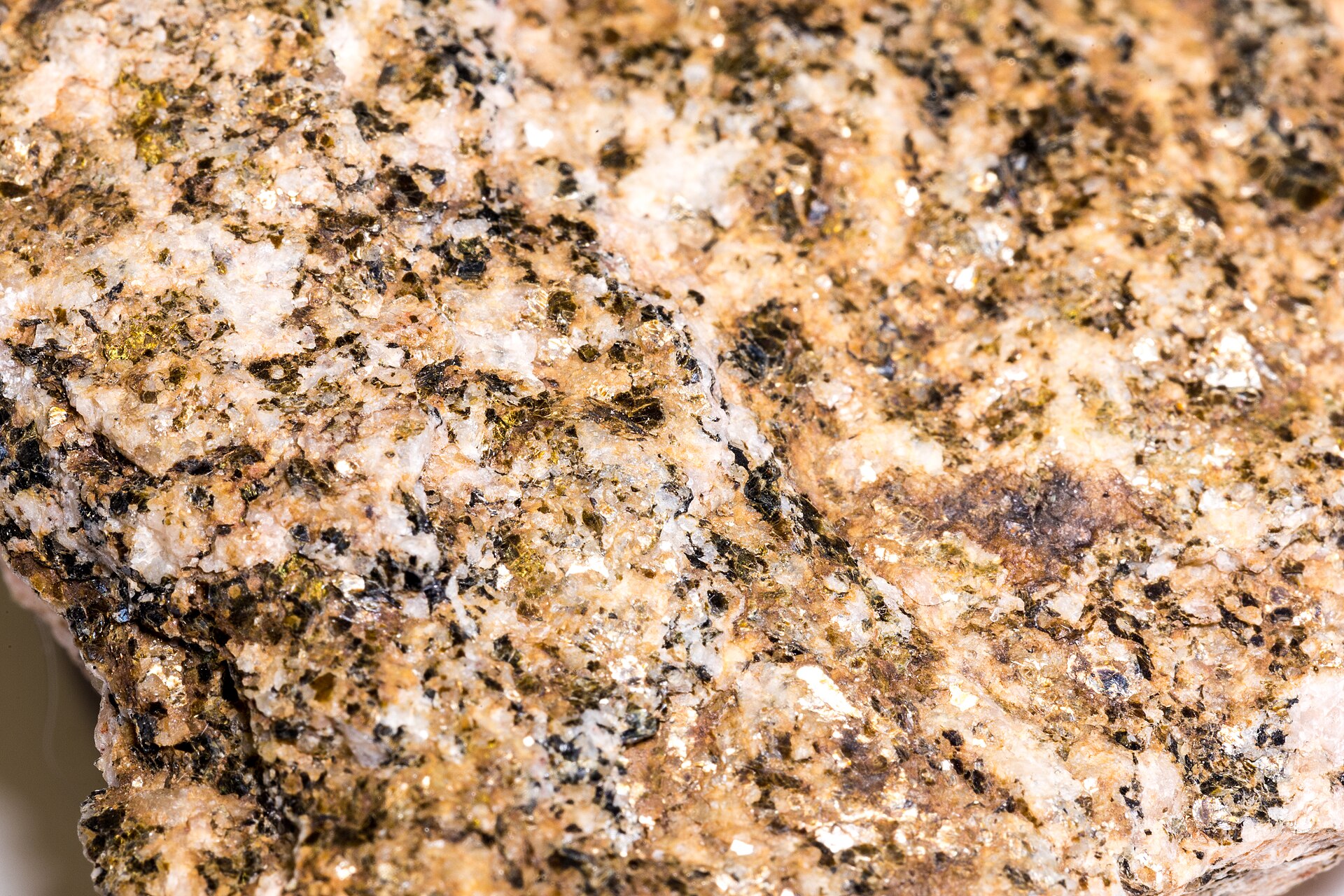
Magnetite crystallizes early from iron-rich magma, so it turns up as a black accessory in almost every igneous rock — granite included. Where magma chemistry cooperates it builds orebodies outright: Kiruna in Sweden is a mountain of nearly pure magnetite.
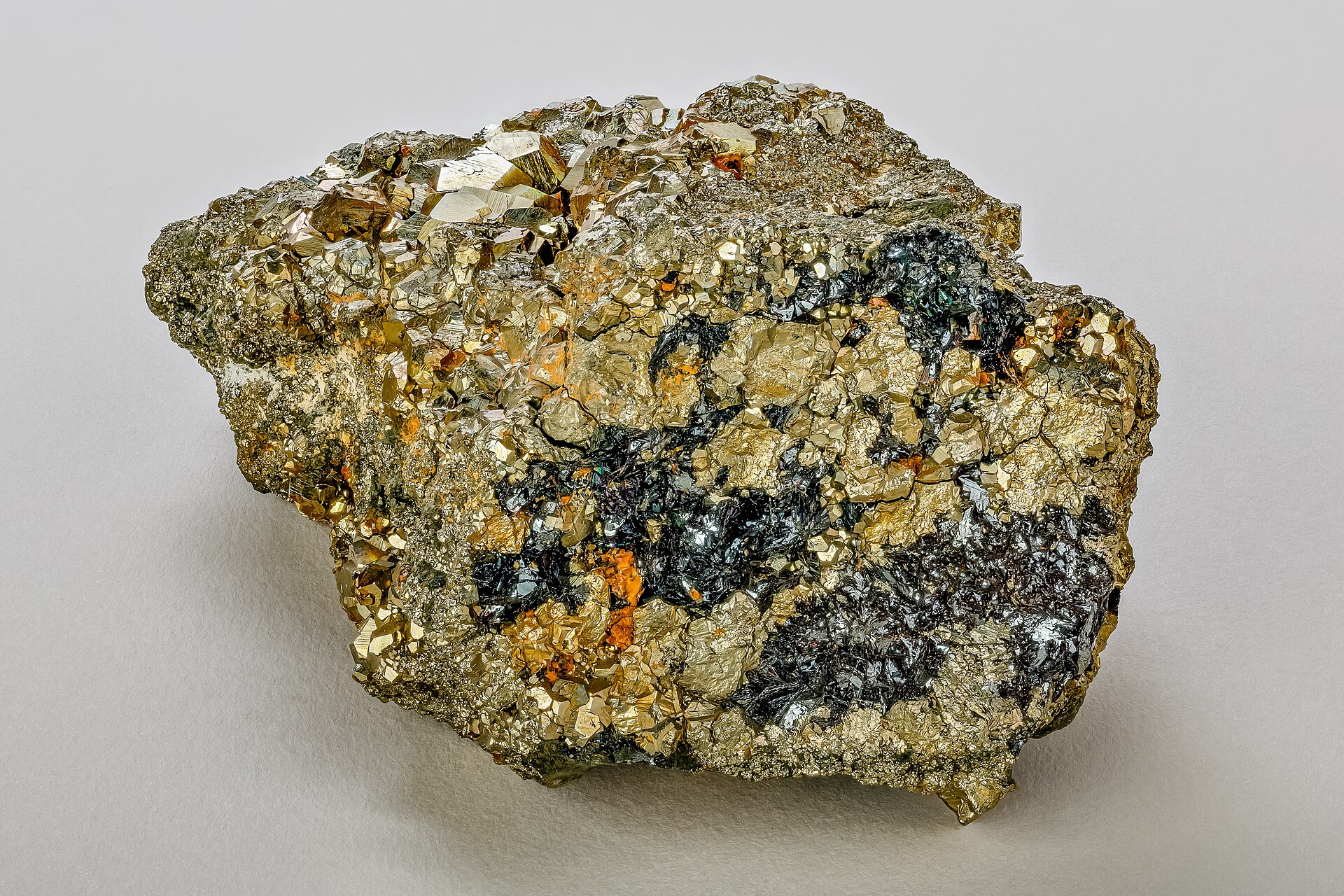
It also grows where hot fluids react with carbonate rock (skarns), and in banded iron formations alongside hematite. Once freed by erosion, its density and durability concentrate it in black sands and placers — and its magnetism makes it easy to winnow out.
Often grows alongside:
What It’s Used For
How to Identify It
Hold a magnet to it — strong attraction is the test. Combine that with a black streak, iron-black color, hardness ~6, and a heavy feel, and you’ve ruled out hematite (red streak, non-magnetic), ilmenite (weakly magnetic) and chromite (brown streak).
| Looks like… | But differs because… | Quick test |
|---|---|---|
| Hematite | Streaks cherry-red (magnetite streaks black) and is usually non-magnetic | Streak |
| Ilmenite | Only weakly magnetic at best, streaks brownish-black, and rarely forms such perfect octahedra | Magnet strength |
| Maghemite | Also magnetic, but streaks brown rather than black and is much rarer | Streak |
| Chromite | At most faintly magnetic, streaks brown, and is slightly lighter | Streak + magnet |
Where It’s Found
Notable localities for fine specimens:
Gallery
Photographs from Wikimedia Commons contributors — click a credit on the main image for the source and license.
Related Minerals
Others in the same family and minerals it commonly grows alongside.
References & Further Reading
- Dana’s New Mineralogy, 8th ed. Oxides — spinel group.
- Mindat.org — Magnetite mineral data and locality records.
- Wikipedia — Magnetite.
Last reviewed 2026-09-14 · How to cite this page.