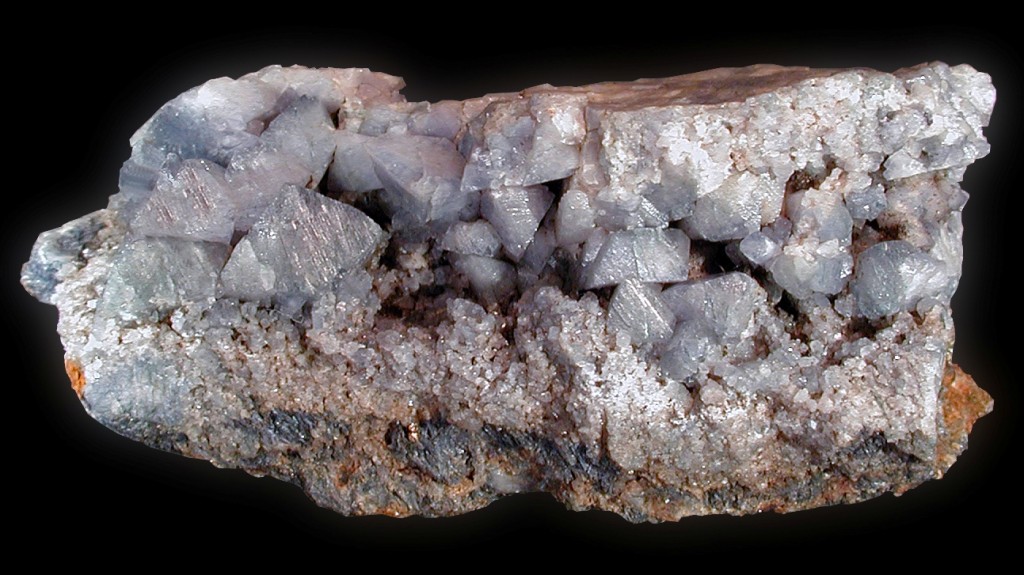
Lawsonite Locality: Reed Station, Tiburon Uplands Nature Preserve, Tiburon Peninsula, Marin County, California, USA Original description: Pale blue lawsonite c — Photo: Kelly Nash · CC BY 3.0
Lawsonite
A hydrous calcium-aluminium sorosilicate — a key mineral of blueschist-facies rocks and a water carrier into subduction zones.
Intro adapted from Wikipedia (CC BY-SA).
Lawsonite is an IMA-recognized mineral species in the silicate class, with the chemical formula CaAl₂(Si₂O₇)(OH)₂·H₂O.
It crystallizes in the orthorhombic crystal system (space group Cmcm). It is a member of the Lawsonite structural group.
Key properties: Mohs hardness 7–7.5; specific gravity 3.05–3.12; typically blue or gray or colorless or brown; White streak; Vitreous, greasy luster; refractive index 1.677; optically biaxial.
IMA symbol Lws, grandfathered status — known before the IMA’s founding, named in 1895.
Formed at high pressures and low temperatures, especially in low-grade regionally metamorphosed glaucophane schists; formed from plagioclase during saussuritization of gabbros and diabases; rarely in eclogites.
It is found associated with Pumpellyite, epidote, garnet, crossite, muscovite, jadeite, glaucophane, quartz, calcite.
The name refers to Professor Andrew Cowper Lawson (1861–1952), Scottish-American geologist, University of California, Berkeley, California, USA.
Collections: Collector Favorites.