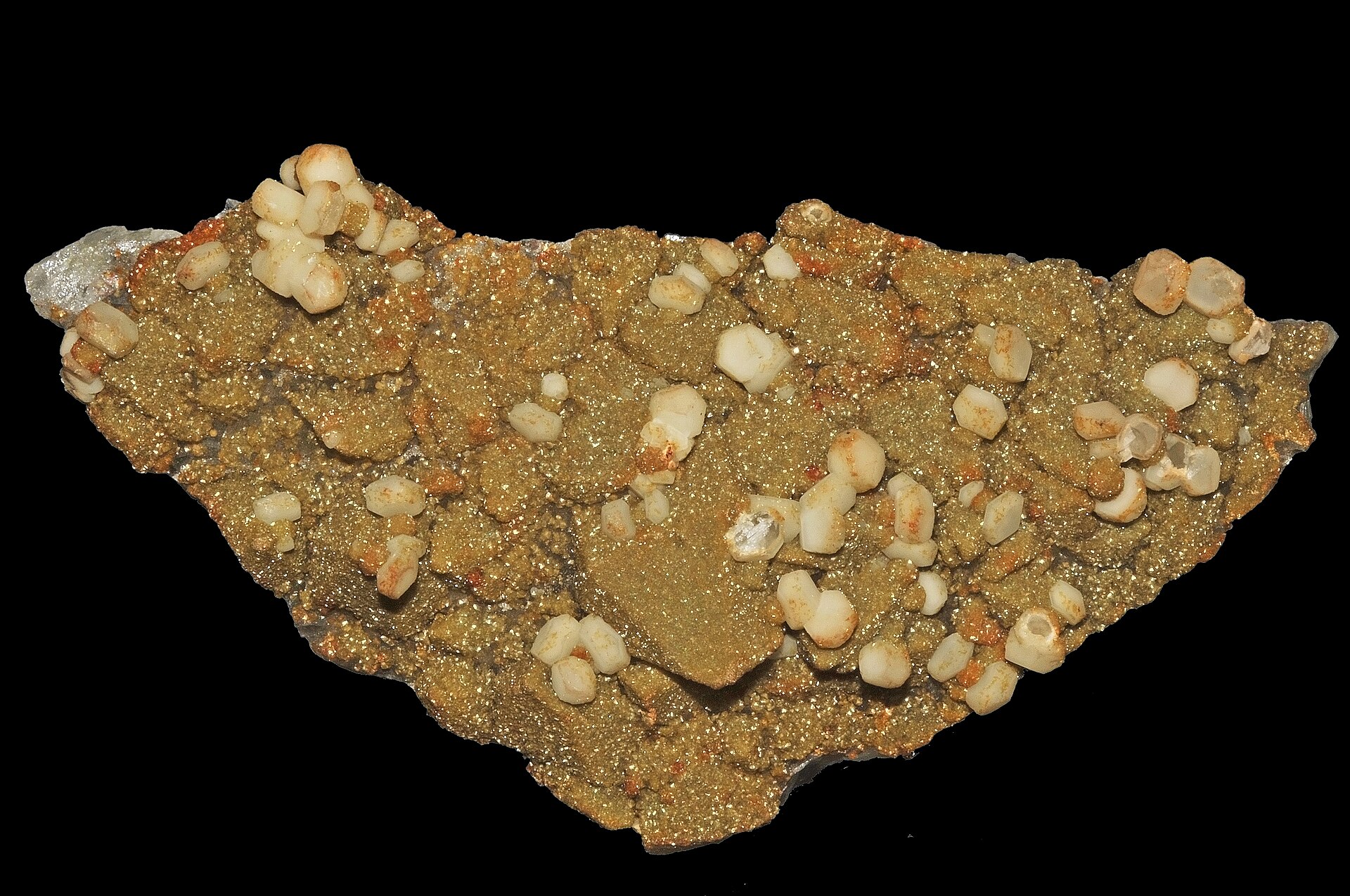
crystals of leucite, crystals of quartz : Samchampi-Samteran alkaline igneous complex, Karbi Anglong District, Assam, India — Photo: Parent Géry · CC BY-SA 3.0
Leucite
A potassium-aluminium feldspathoid of silica-poor volcanic rocks — white trapezohedral crystals, famously abundant around Rome.
Intro adapted from Wikipedia (CC BY-SA).
Leucite is an IMA-recognized mineral species in the silicate class, with the chemical formula K(AlSi₂O₆).
It crystallizes in the tetragonal crystal system (space group Ia3d). It is a member of the Analcime structural group.
Key properties: Mohs hardness 5.5–6; specific gravity 2.45–2.5; typically white or colorless or gray; white streak; Vitreous luster; refractive index 1.509; optically uniaxial.
IMA symbol Lct, IMA status: approved, named in 1791.
With potassium-rich mafic and ultramafic lavas and hypabyssal rocks, and may almost entirely compose them.
It is found associated with Potassic feldspar, nepheline, analcime, natrolite, kalsilite.
Its name comes from the Greek leucos for white, in allusion to its color.
Collections: Collector Favorites.