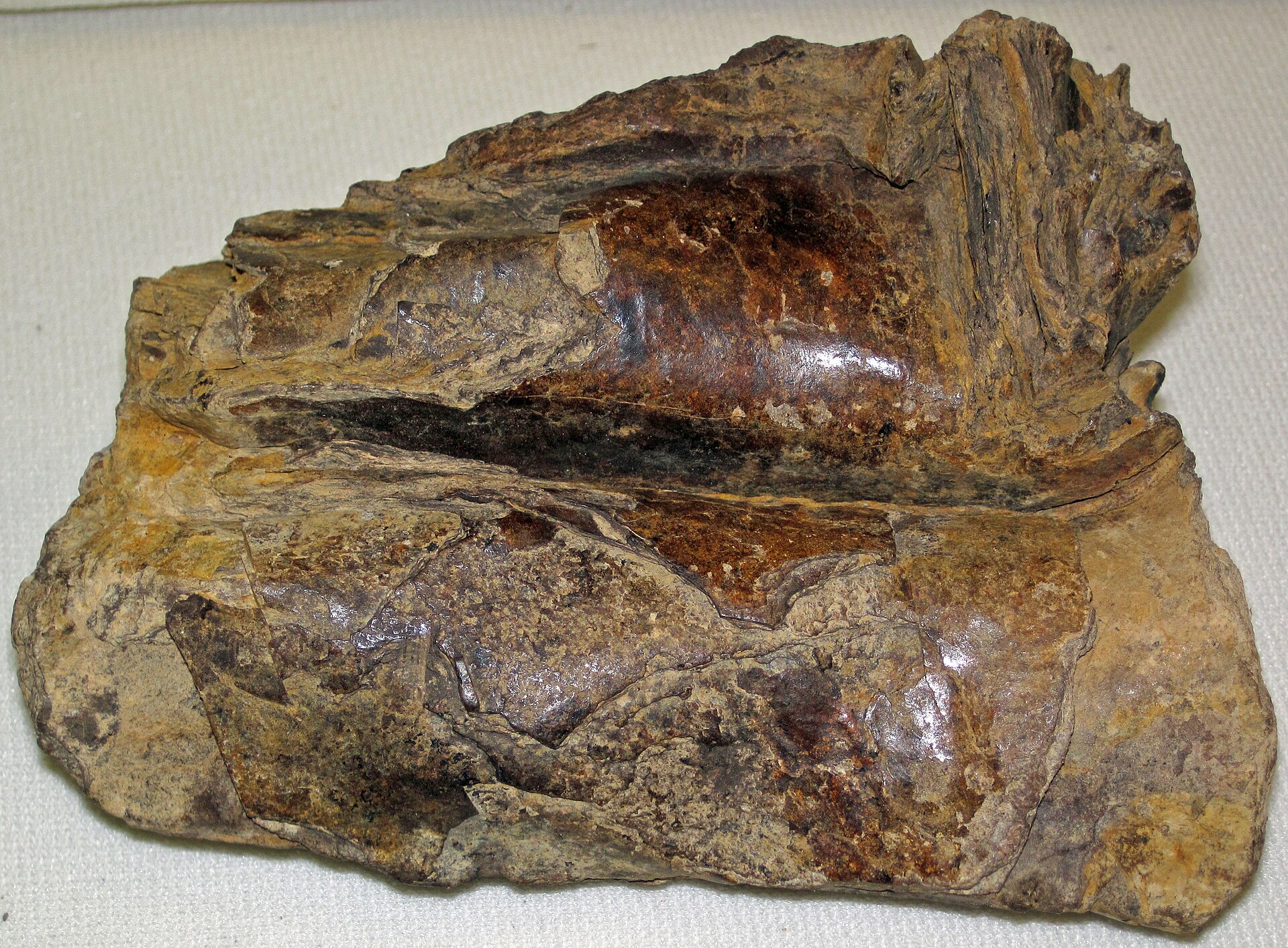
(Wayne State University collection, Detroit, Michigan, USA) A mineral is a naturally-occurring, solid, inorganic, crystalline substance having a fairly definit — Photo: James St. John · CC BY 2.0
Palygorskite
Also known as: Attapulgite.
Attapulgite — a fibrous magnesium-aluminium clay mineral with a channel structure, used for absorbents and fuller's earth.
Intro adapted from Wikipedia (CC BY-SA).
Palygorskite is an IMA-recognized mineral species in the silicate class, with the chemical formula (Mg,Al)₂Si₄O₁₀(OH)·4H₂O.
It crystallizes in the monoclinic crystal system (space group C2/m). It is a member of the Palygorskite, Clay structural group.
Key properties: Mohs hardness 2; specific gravity 1–2.6; typically white or gray or brown; white streak; Earthy to waxy luster; optically biaxial.
IMA symbol Plg, grandfathered status — known before the IMA’s founding, named in 1862.
An alteration product of magnesium silicates in soils and sediments; in lacustrine marls, carbonate rocks, and mafic igneous rocks; in clay gouge in association with fault movement.
It is found associated with Calcite, dolomite, talc, chlorite, quartz, \chalcedony, " \opal, " montmorillonite.
The name is taken from the type locality, Palygorskaya, Russia.
Collections: Everyday Minerals.