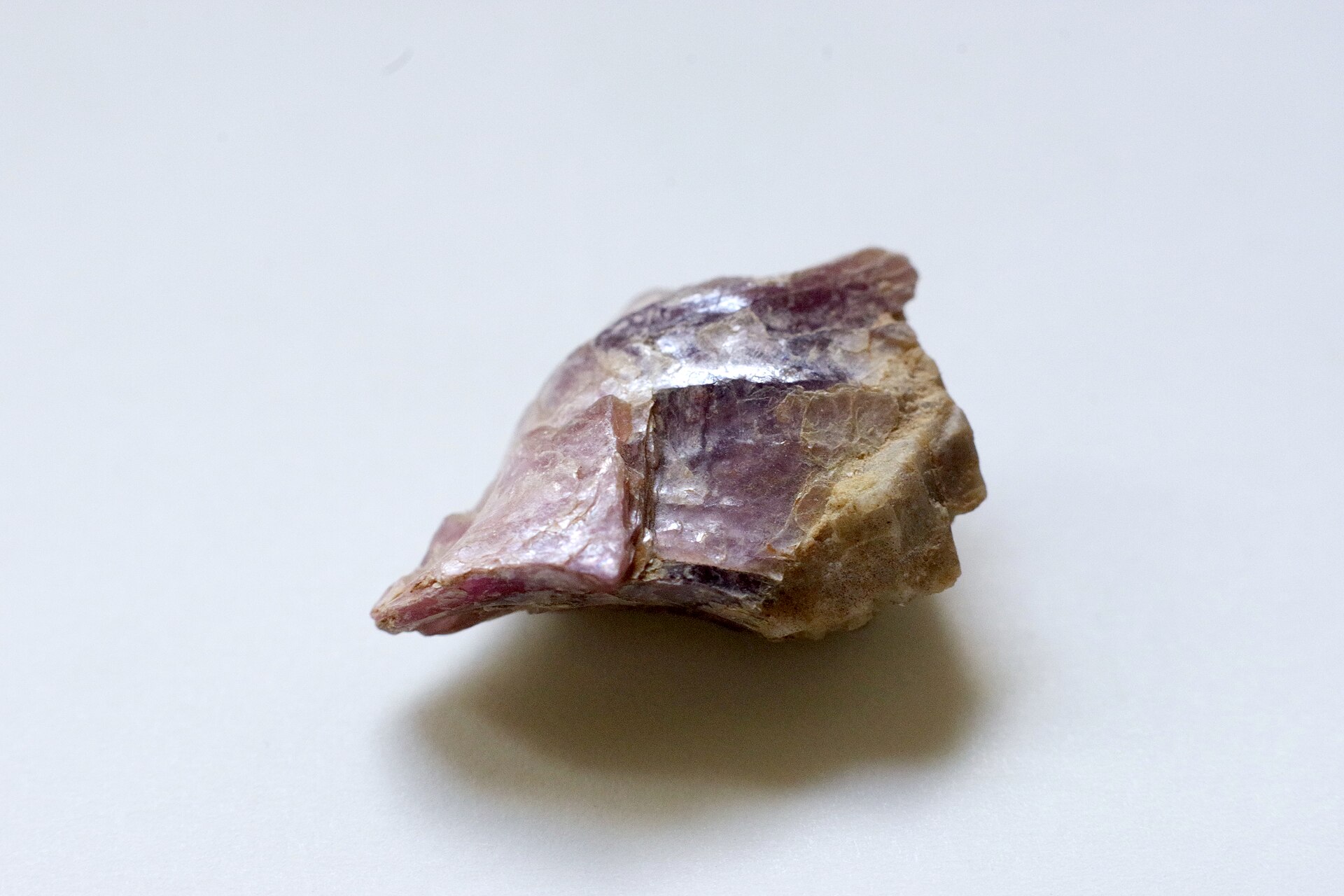
lepidolite K(Li,Al,Rb)3(Al,Si)4O10(F,OH)2 locality: Rožná, Czech Republic photo (c) 2020 Jan Helebrant <a href="http://www.juhele.blogspot.com" rel="norefer — Photo: Jan Helebrant · CC BY-SA 2.0
Polylithionite
Also known as: Lepidolite.
The lithium end-member of the lepidolite mica series — a pale trioctahedral mica of lithium pegmatites.
Intro adapted from Wikipedia (CC BY-SA).
Polylithionite is an IMA-recognized mineral species in the silicate class, with the chemical formula KLi₂AlSi₄O₁₀F₂.
It crystallizes in the monoclinic crystal system (space group C2/c). It is a member of the Mica structural group.
Key properties: Mohs hardness 2.5–3; specific gravity 2.58–2.82; typically pink or purple or colorless; white streak; Pearly to waxy when fine-grained luster; optically biaxial.
IMA symbol Pln, IMA status: approved, named in 1884.
Found in irregular segregations and veinlets, as a late-stage and metasomatic replacement mineral, in syenite pegmatites in a differentiated alkalic massif (Lovozero massif, Russia).
It is found associated with Microcline, natrolite, taeniolite, steenstrupine, aegirine, analcime, epistolite.
Its name comes from the Greek poly, for many or much, and in allusion to its high LITHIum content.
Collections: Collector Favorites.