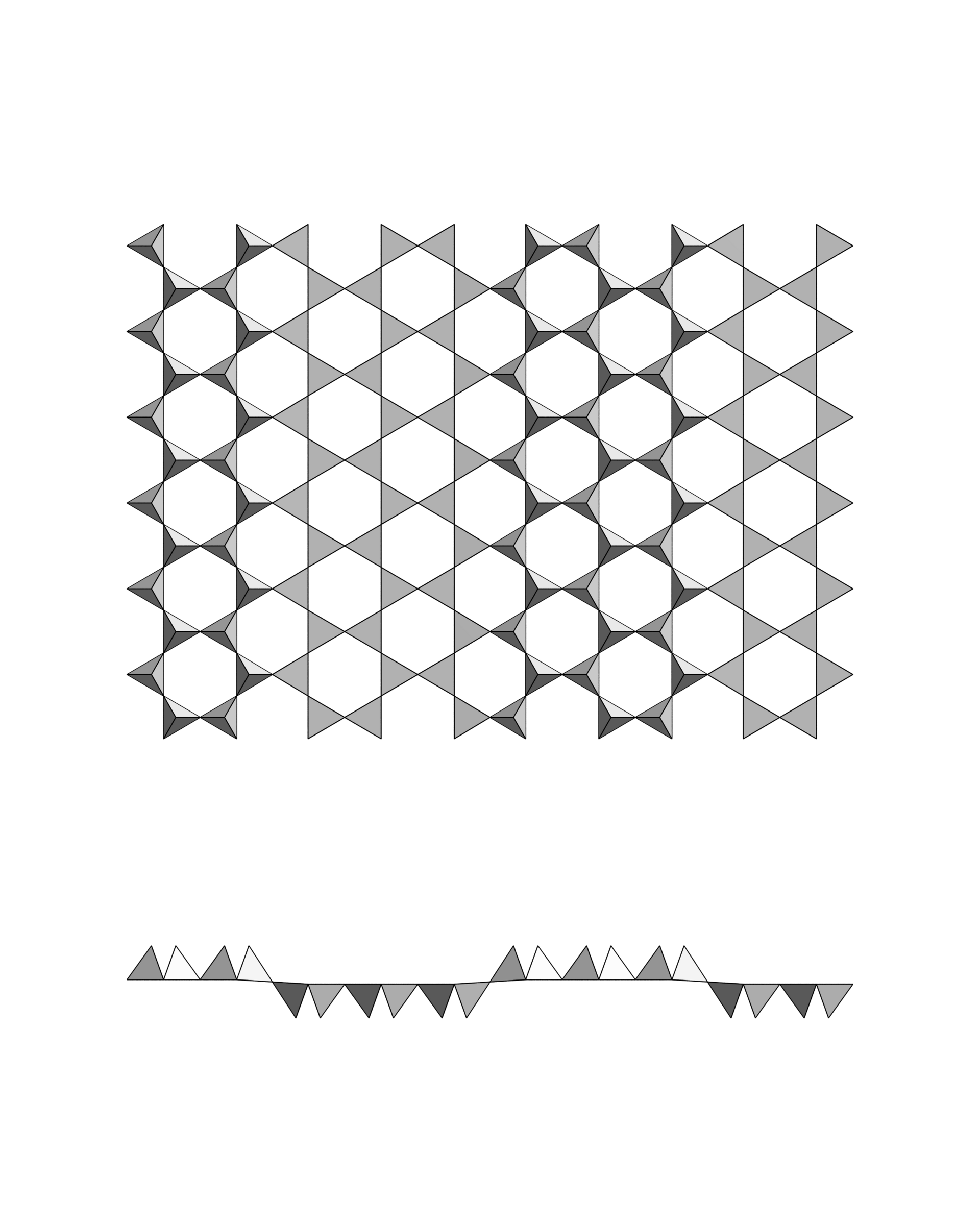
Sepiolite silicate sheet Data from: Brauner K., Preisinger A. (1956): Struktur und Entstehung des Sepioliths, Tschermaks Mineralogische und Petrographische Mitt — Photo: Bubenik · CC BY-SA 3.0
Sepiolite
Also known as: Meerschaum.
Sepiolite, also known in English by the German loanword meerschaum ( MEER-shawm, -shəm; German: [ˈmeːɐ̯ʃaʊm] ; meaning "sea foam"), is a soft white clay mineral, often used to make tobacco pipes (known as meerschaum pipes). A complex magnesium silicate, a typical chemical formula for which is Mg4Si6O15(OH)2·6H2O, it can be present in fibrous, fine-particulate, and solid forms.
Intro adapted from Wikipedia (CC BY-SA).
Sepiolite is an IMA-recognized mineral species in the silicate class, with the chemical formula Mg₄Si₆O₁₅(OH)₂·6H₂O.
It crystallizes in the orthorhombic crystal system (space group Pncn). It is a member of the Sepiolite, Clay structural group.
Key properties: Mohs hardness 2–2.5; specific gravity 2; typically white or gray or yellow; white streak; Dull luster; refractive index 1.523; optically biaxial.
IMA symbol Sep, grandfathered status — known before the IMA’s founding, named in 1847.
A sedimentary clay mineral; also in serpentine.
It is found associated with \Opal, " dolomite.
Its name comes from the Greek for cuttle-fish, the bone of which resembles the mineral in being light and porous.
Collections: Collector Favorites.