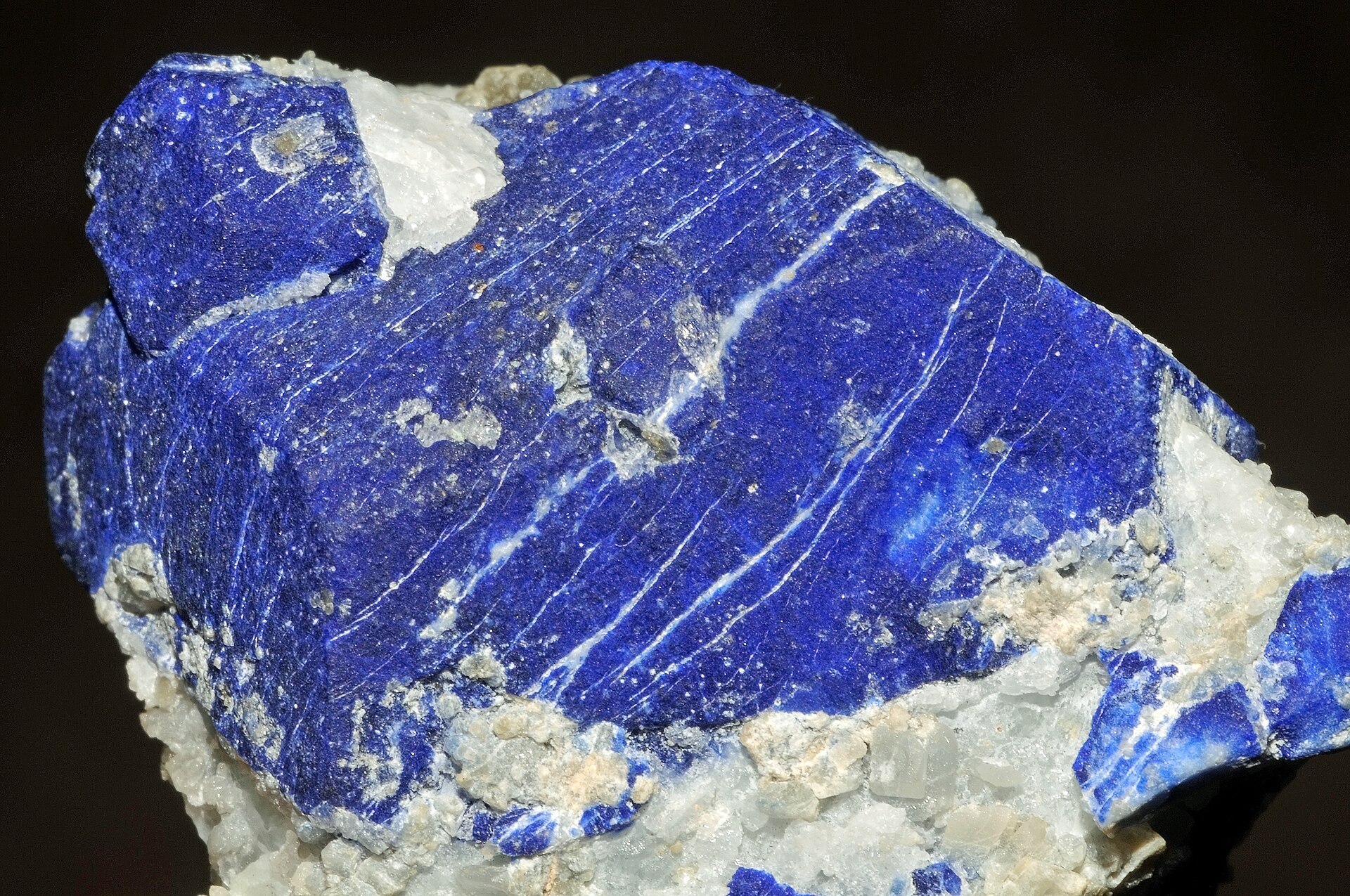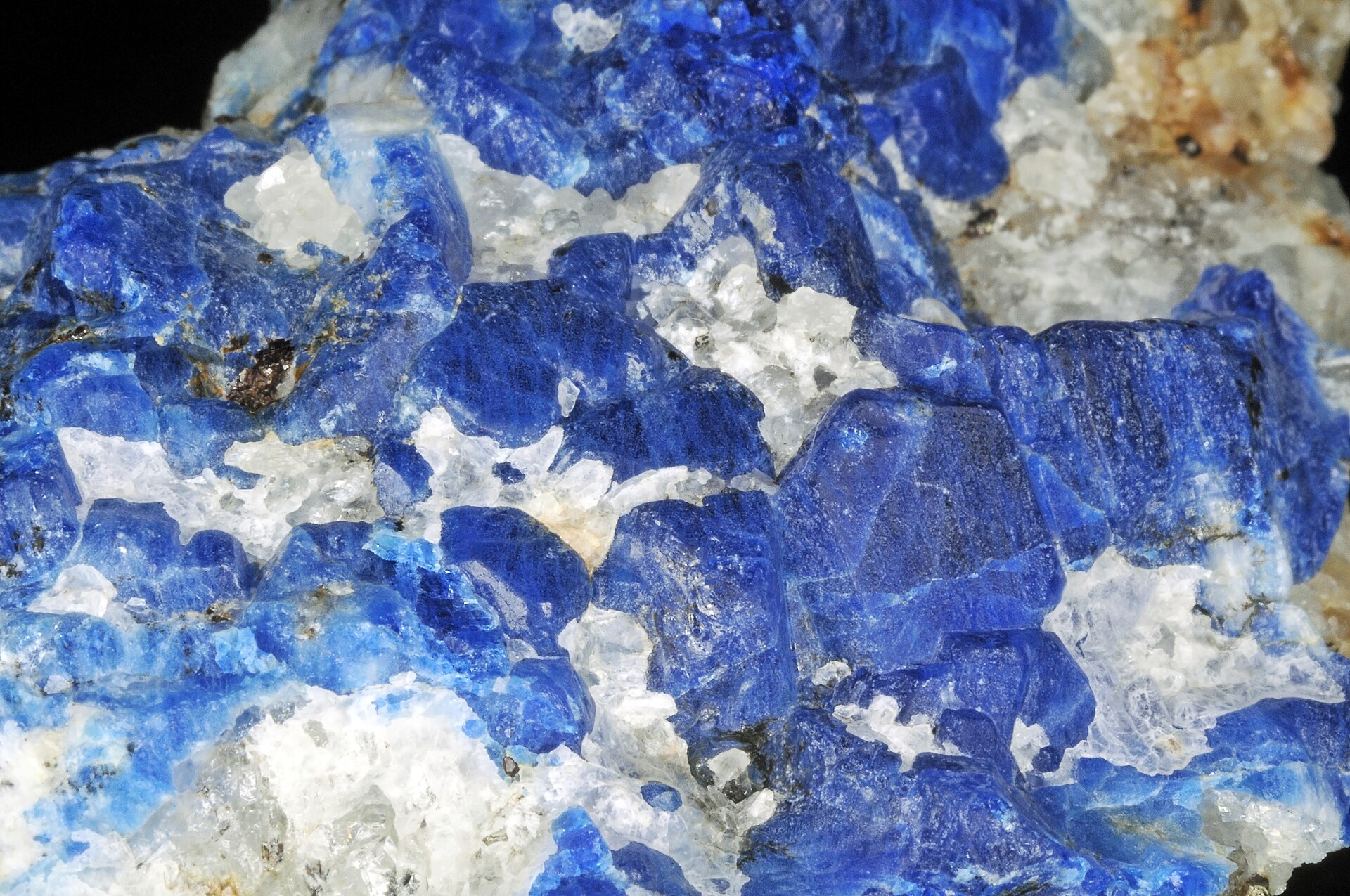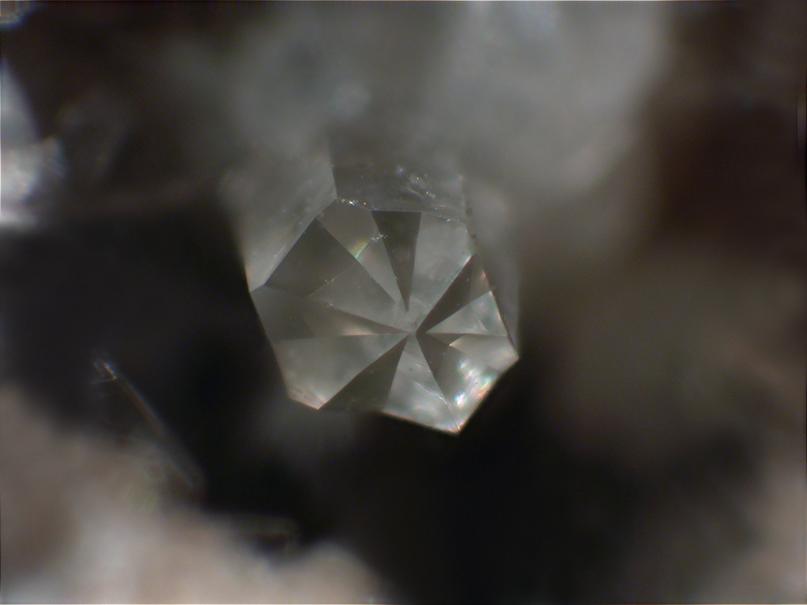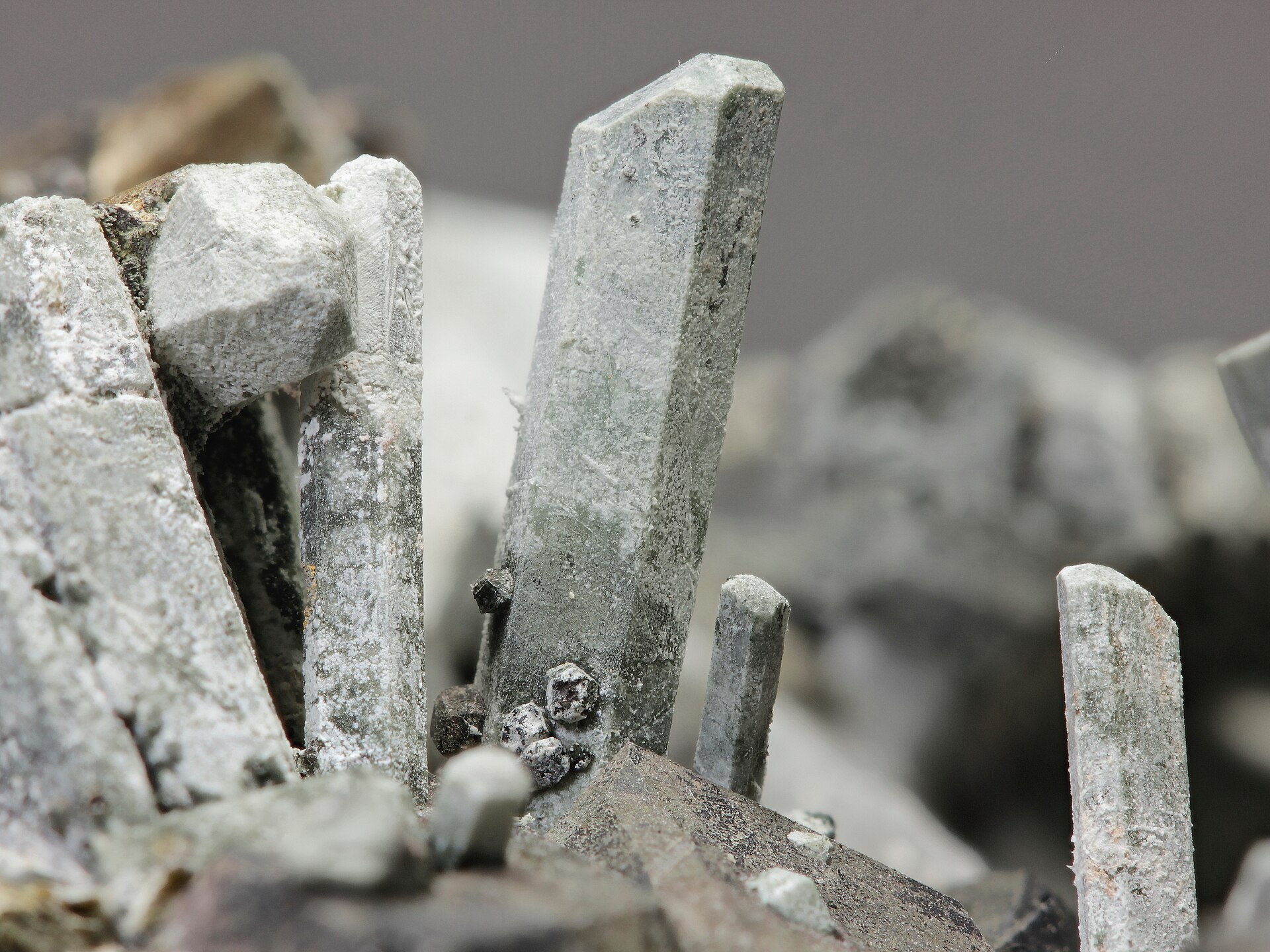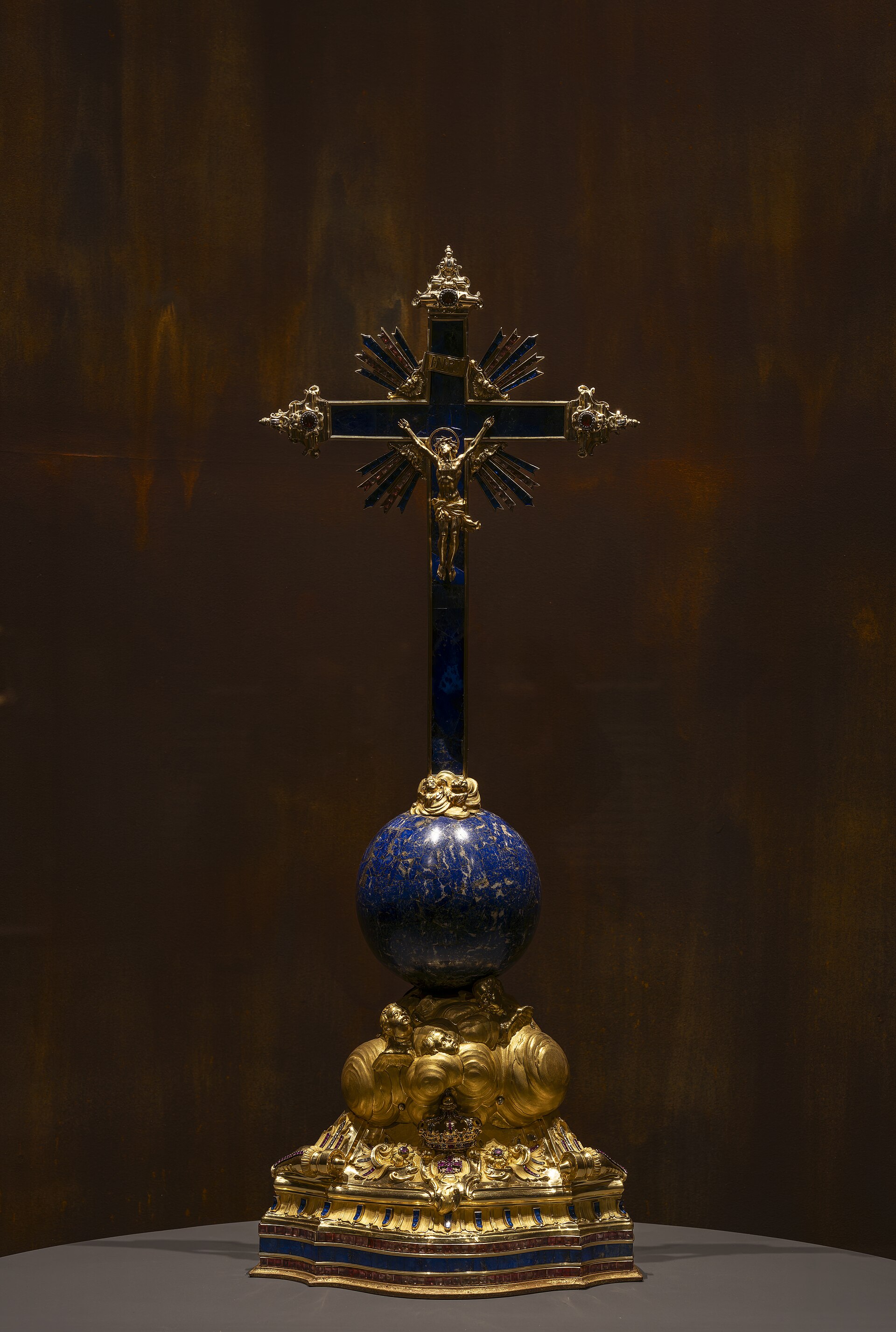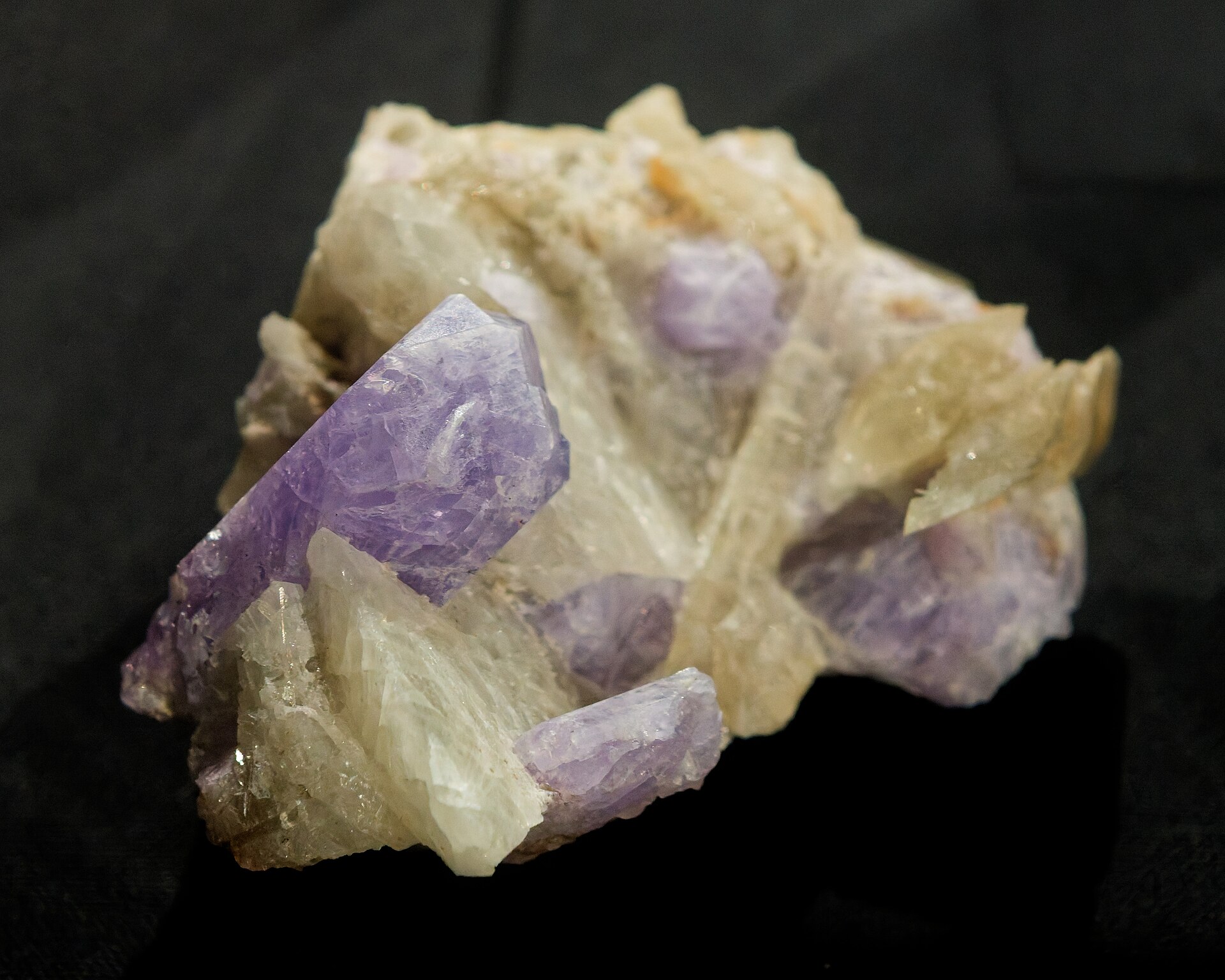
Sodalite — Photo: Marie-Lan Taÿ Pamart · CC BY 4.0
What is Sodalite?
Sodalite is the sodium-chlorine feldspathoid — Na₈Al₆Si₆O₂₄Cl₂ — whose royal-blue masses masquerade as lapis lazuli. It was known but unremarkable until 1891, when vast blue deposits were found at Bancroft, Ontario — just as a royal visit made 'Princess sodalite' a sensation.
Its sulfur-cage cousin hackmanite does something no other common mineral does: freshly exposed surfaces are violet, fade to white in light, and re-darken in the dark — reversible tenebrescence.
Physical Properties
The full data table is in the panel alongside. Here’s what those numbers actually mean.
Color. Cl⁻ in cage structures with S³⁻ radicals gives the blue.
Hackmanite. A sulfur-bearing variety that changes color with light — tenebrescence.
Occurrence. Only in silica-poor alkaline rocks — nepheline syenites and their pegmatites.
What It’s Used For
How to Identify It
| Looks like… | But differs because… | Quick test |
|---|---|---|
| Lapis Lazuli | A rock — pyrite flecks and calcite veins set it apart; sodalite is one mineral | Texture |
| Lazurite | Deeper azure, sulfide-bearing, in lapis rock | Occurrence |
Where It’s Found
Notable localities for fine specimens:
Gallery
Photographs from Wikimedia Commons contributors — click a credit on the main image for the source and license.
Related Minerals
Others in the same family and minerals it commonly grows alongside.