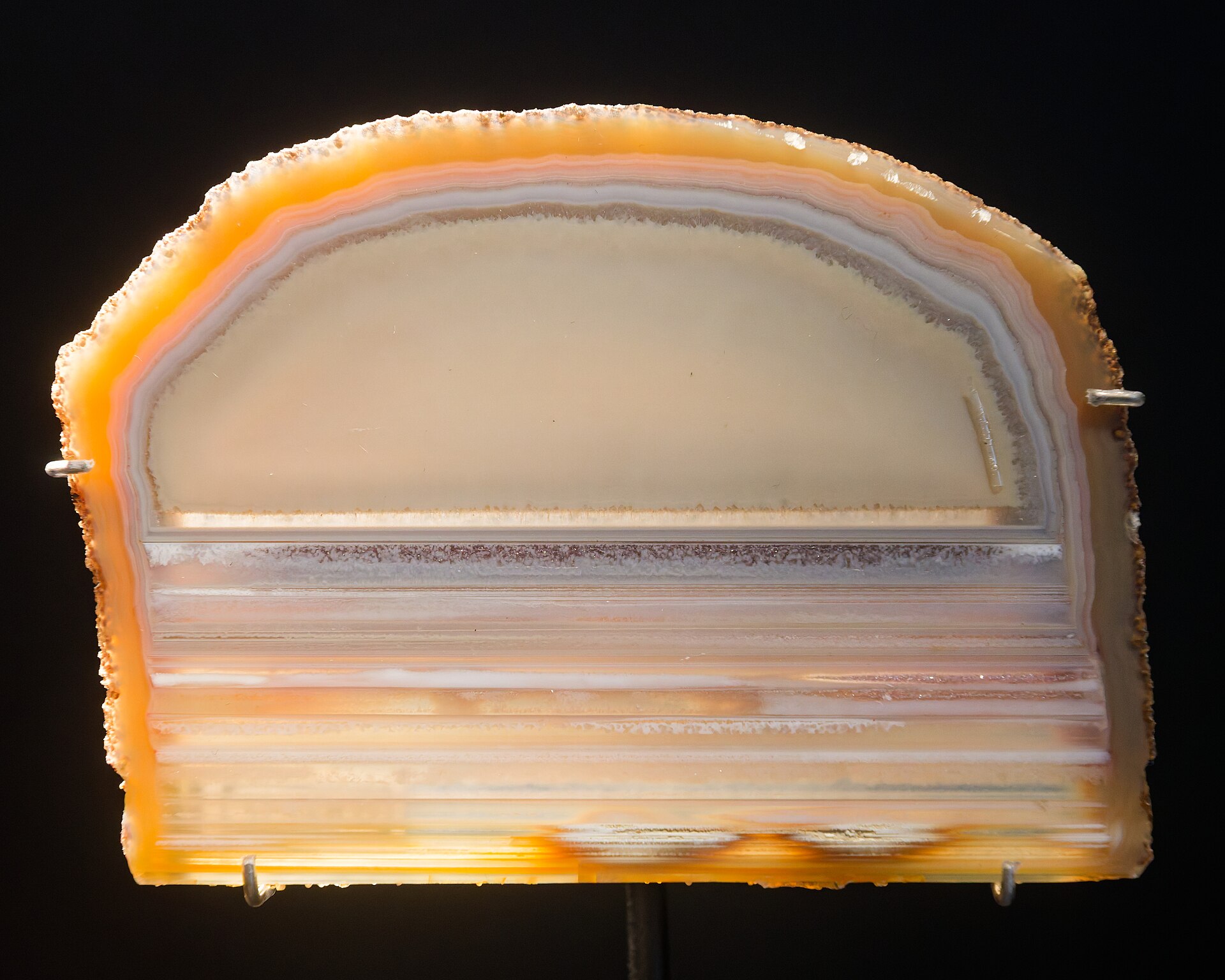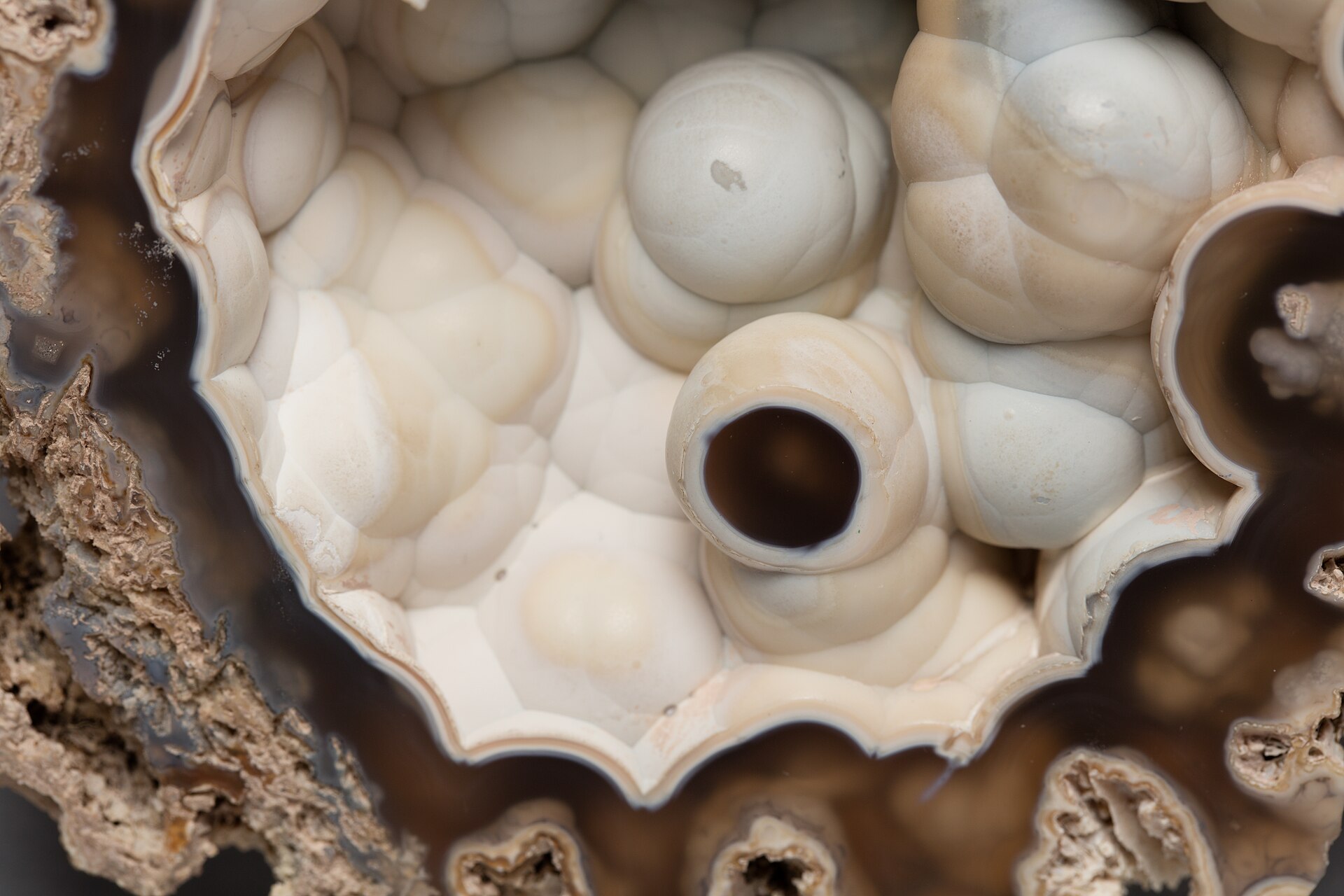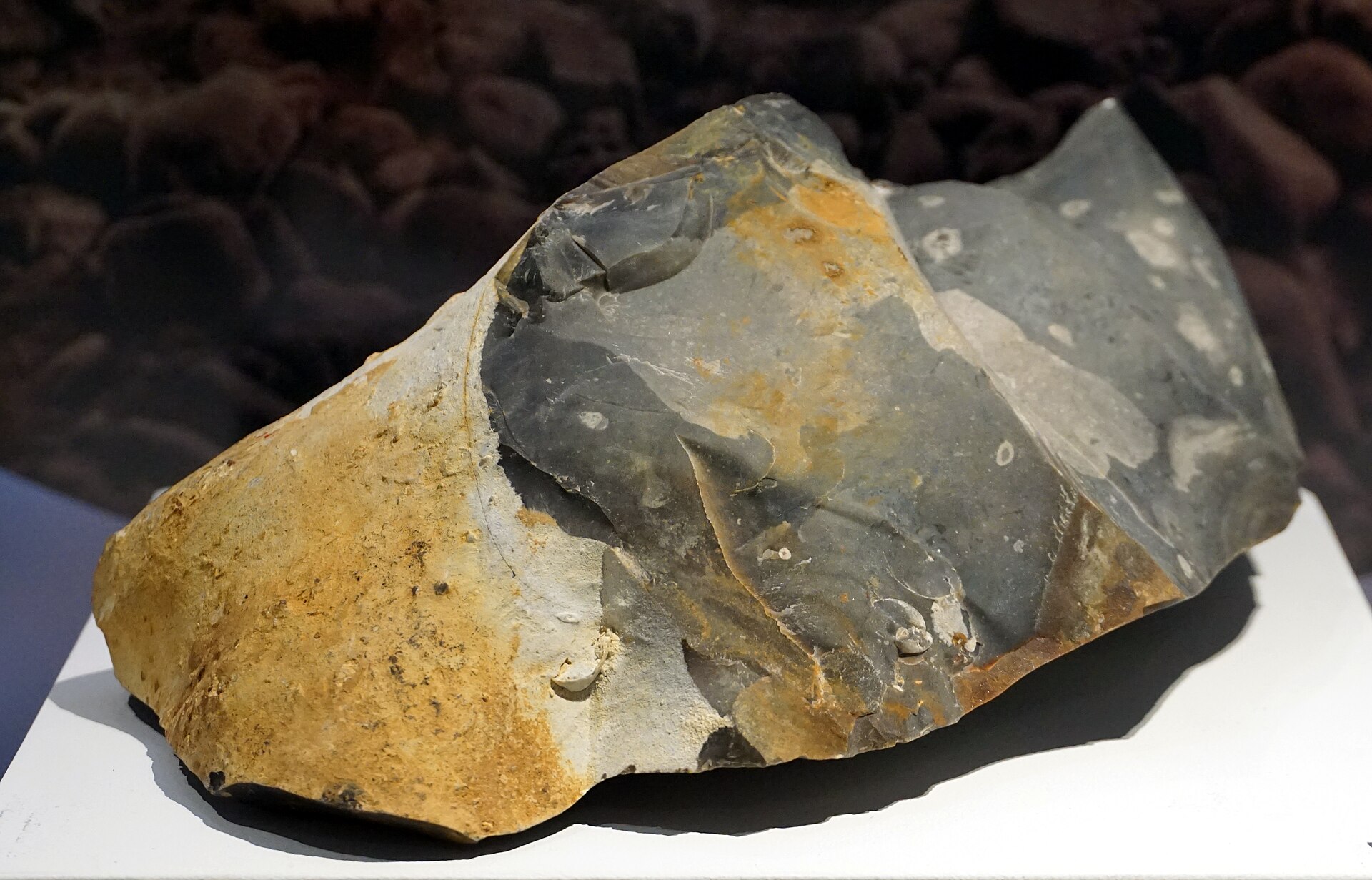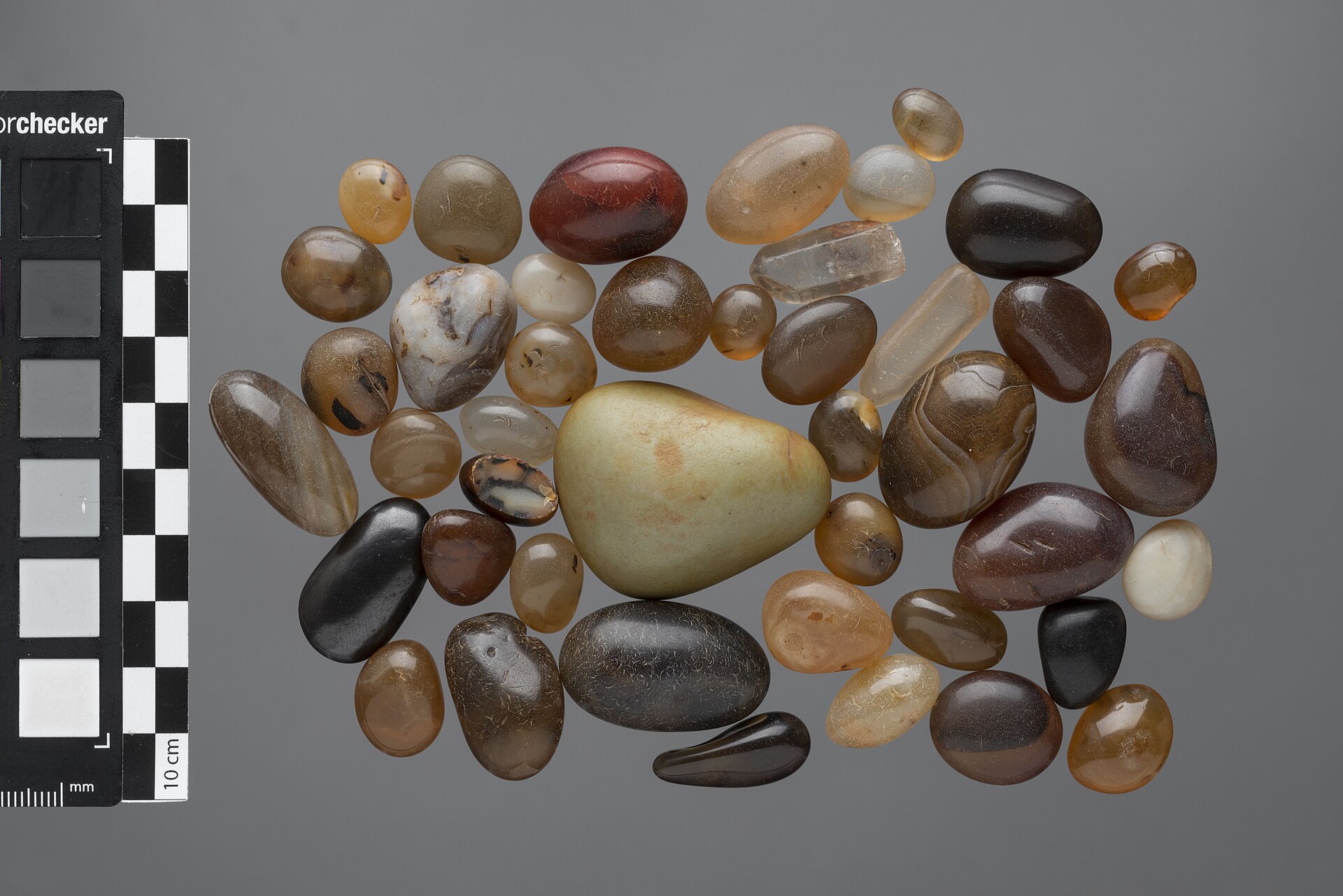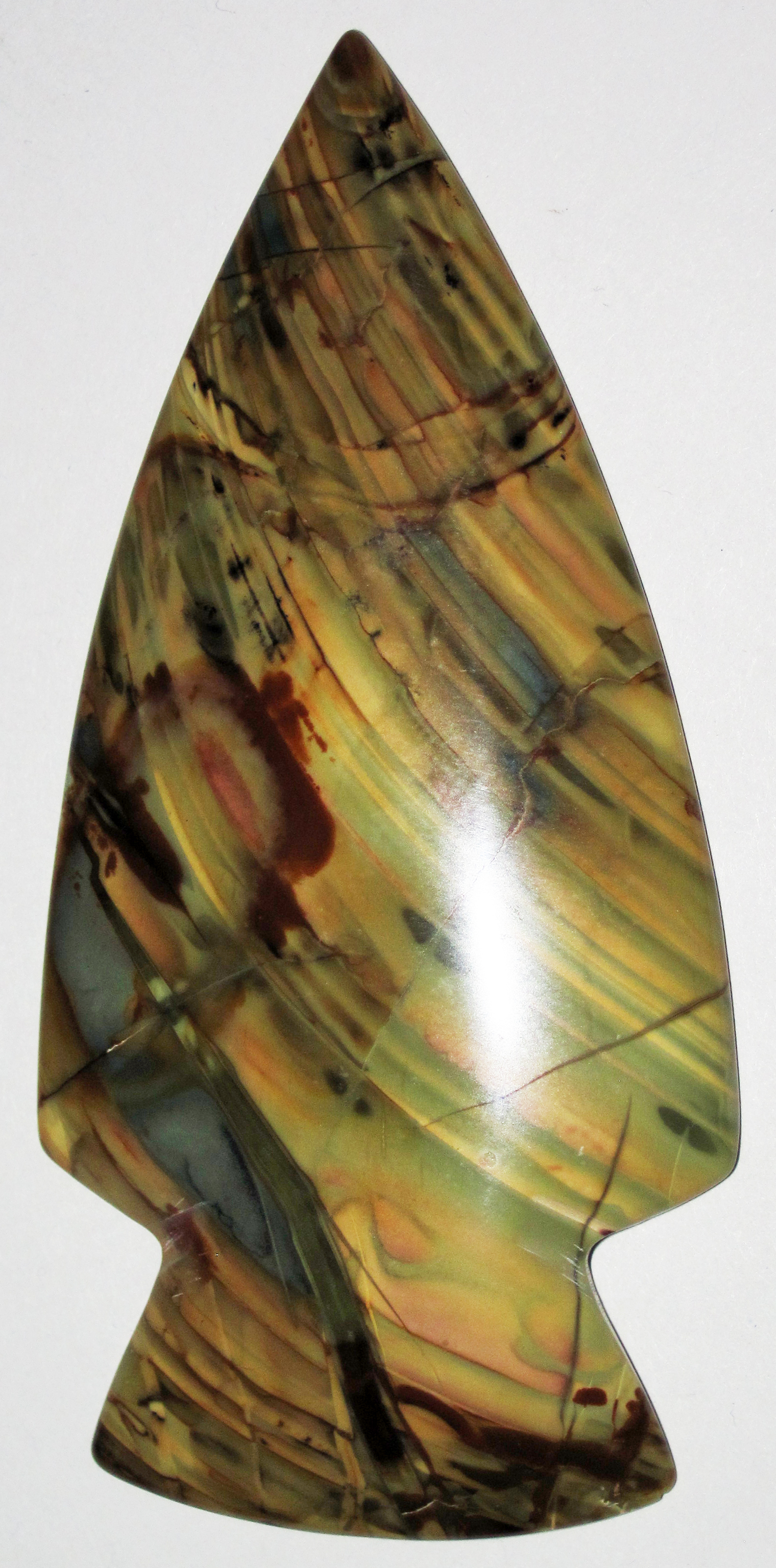
Jasper — Photo: James St. John · CC BY 2.0
What is Jasper?
Jasper is opaque, microcrystalline quartz — SiO₂ — whose colors come from whatever it swallowed while forming: iron oxides for reds and yellows, chlorite for greens, volcanic ash for scenic 'picture' patterns.
Where agate lets light through, jasper blocks it — that opacity plus conchoidal fracture made it a premier flaking stone. Orbicular, brecciated, and picture jaspers are the lapidary staples.
Physical Properties
The full data table is in the panel alongside. Here’s what those numbers actually mean.
Opacity. ~20% foreign material (oxides, clays, ash) makes jasper opaque where agate is clear.
Varieties. Named by pattern — picture, orbicular, brecciated, leopard-skin.
Durability. Pure quartz durability with iron-oxide color — it tumbles and polishes superbly.
What It’s Used For
How to Identify It
| Looks like… | But differs because… | Quick test |
|---|---|---|
| Agate | Translucent to transparent — jasper is fully opaque | Edge translucency |
| Flint | Usually gray-black, duller, nodular in chalk | Color & context |
Where It’s Found
Notable localities for fine specimens:
Gallery
Photographs from Wikimedia Commons contributors — click a credit on the main image for the source and license.
Related Minerals
Others in the same family and minerals it commonly grows alongside.