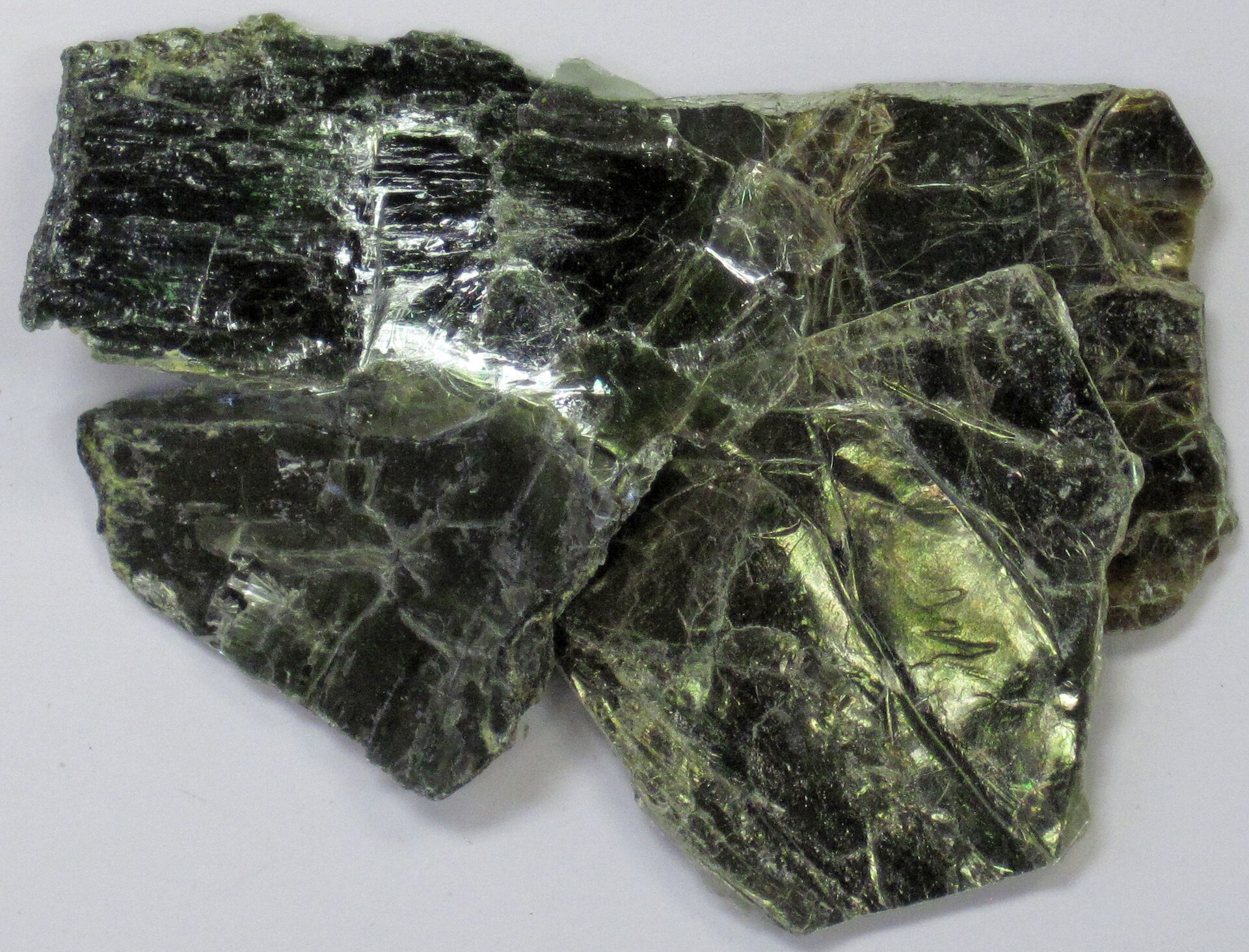
Vermiculite from Idaho, USA. A mineral is a naturally-occurring, solid, inorganic, crystalline substance having a fairly definite chemical composition and havin — Photo: James St. John · CC BY 2.0
Vermiculite
A mica-like clay that expands dramatically when heated — the 'popping' mineral of insulation and potting mixes.
Intro adapted from Wikipedia (CC BY-SA).
Vermiculite is an IMA-recognized mineral species in the silicate class, with the chemical formula Mg₀.₇(Mg,Fe,Al)₆(Si,Al)₈O₂₀(OH)₄·8H₂O.
It crystallizes in the monoclinic crystal system (space group Cc). It is a member of the Clay, Smectite-vermiculite structural group.
Key properties: Mohs hardness 1.5; specific gravity 2.2–2.6; typically brown or yellow or green; white streak; Dull to pearly, bronzy luster; refractive index 1.556; optically biaxial.
IMA symbol Vrm, grandfathered status — known before the IMA’s founding, named in 1824.
An alteration product of biotite or phlogopite, by weathering or hydrothermal action. Formed at the contact between felsic and mafic or ultramafic rocks such as pyroxenites and dunites; in carbonatites and metamorphosed limestones.
It is found associated with Corundum, apatite, serpentine, talc; interstratifies with chlorite, biotite.
The name comes from the Latin to breed worms, alluding to the mineral's exfoliation upon rapid heating.
Collections: Everyday Minerals, Collector Favorites.