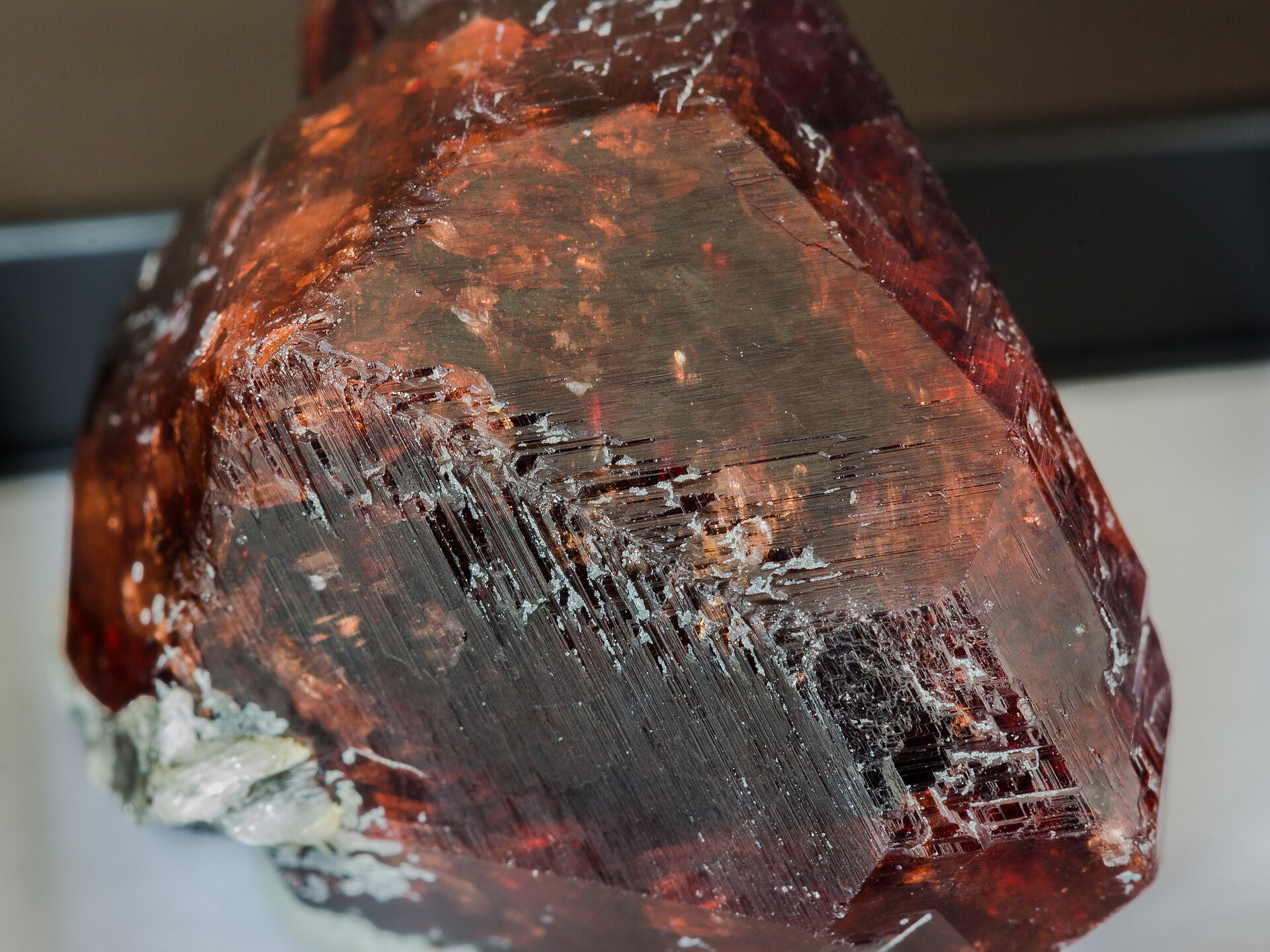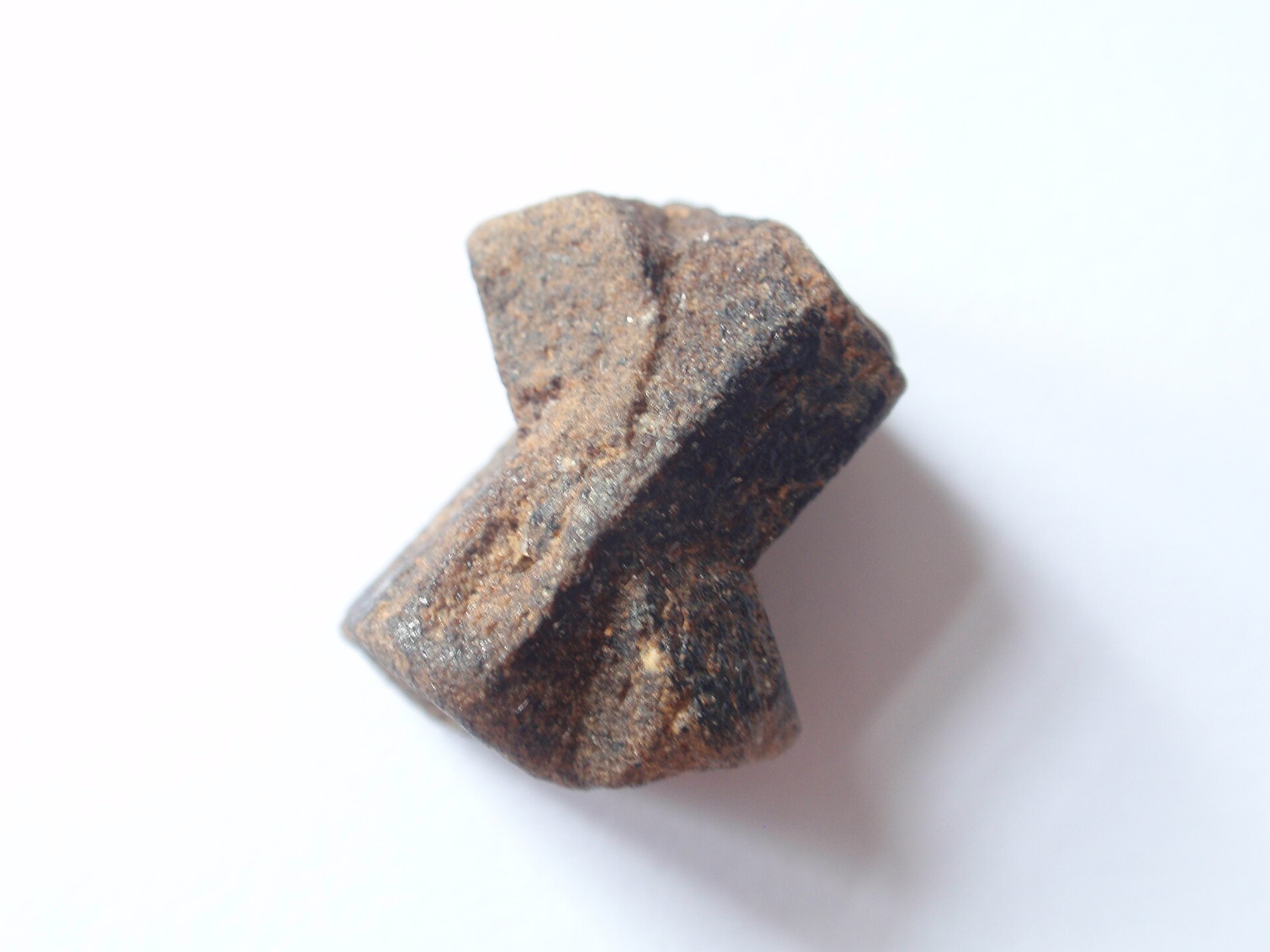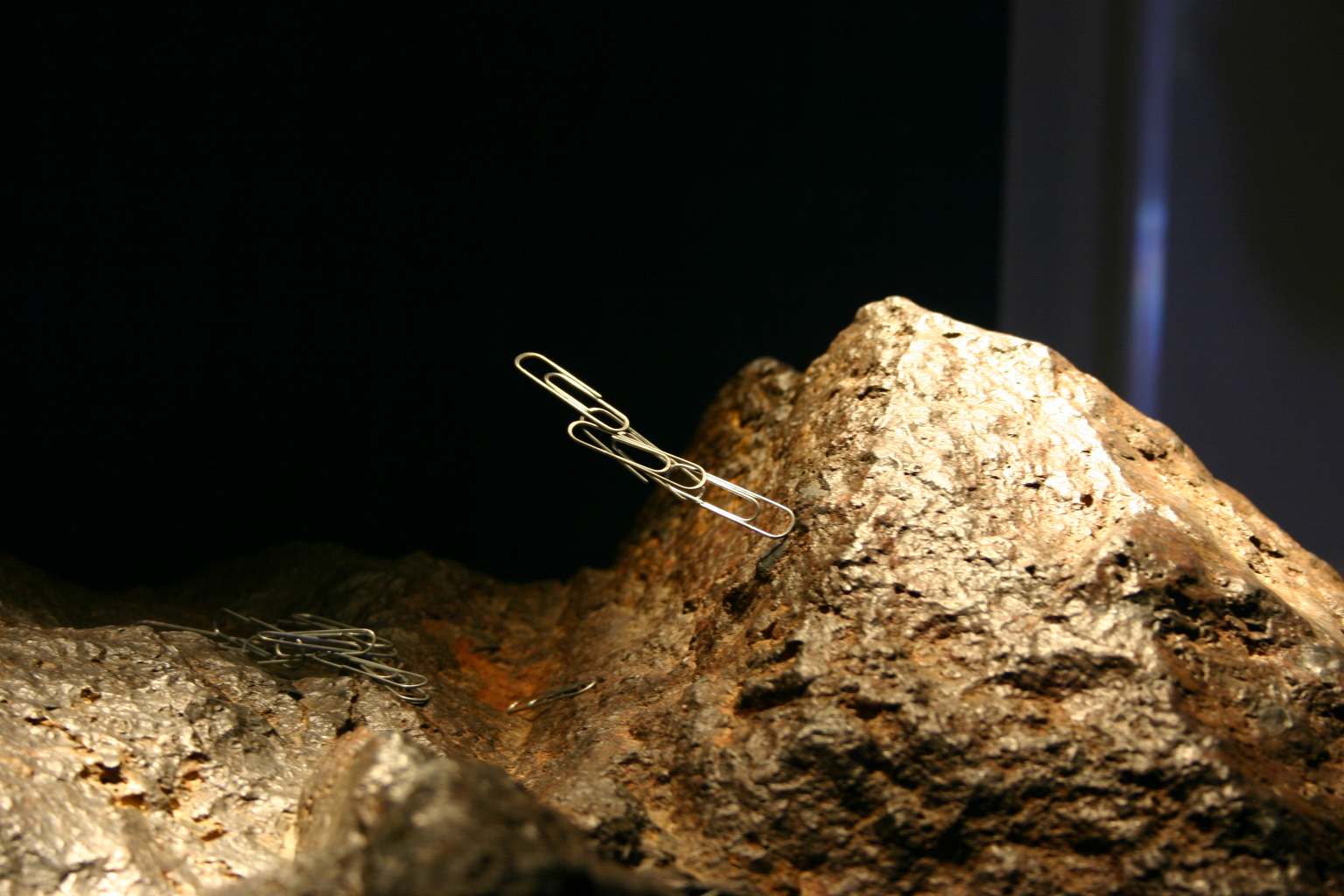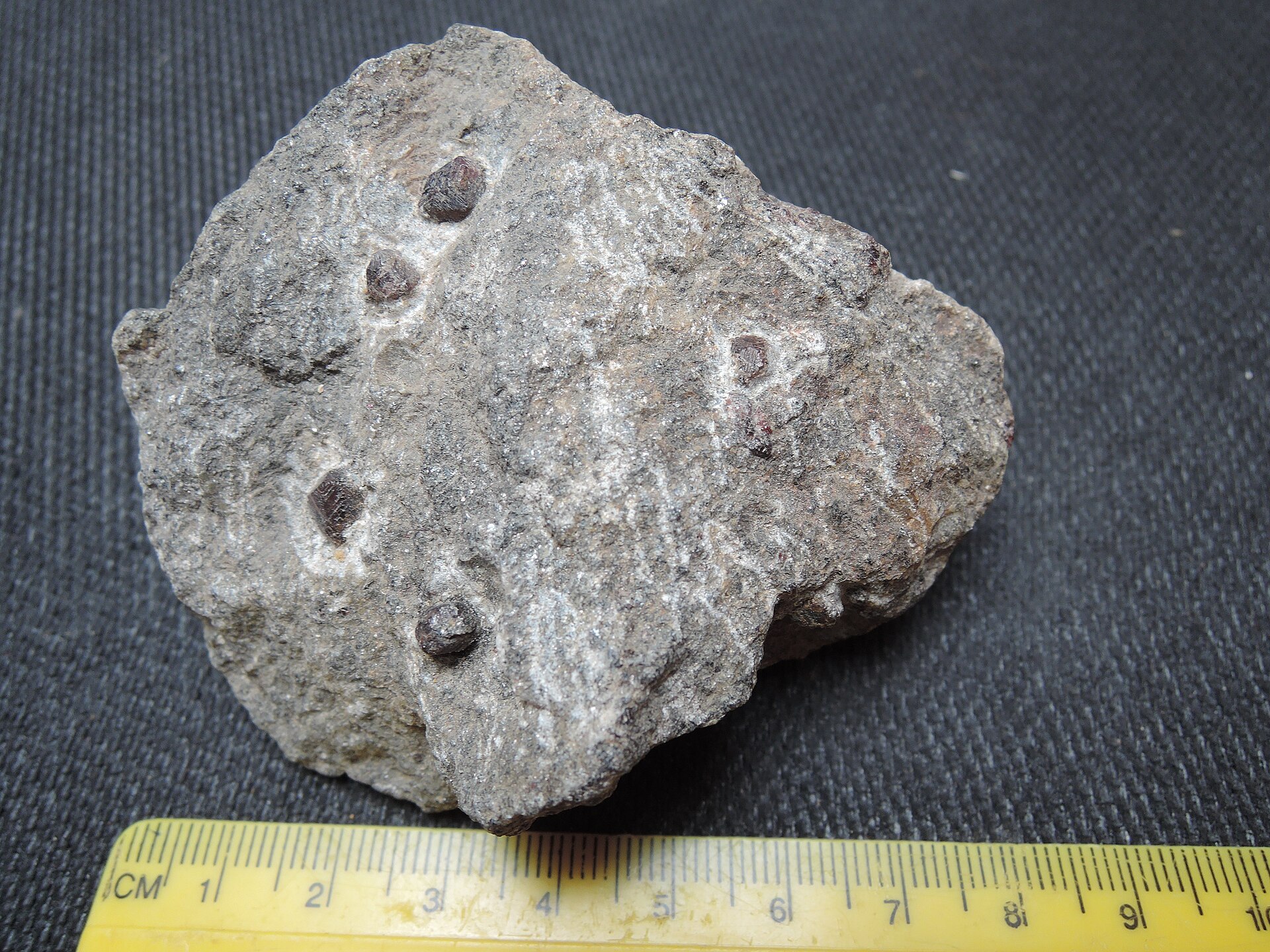
Almandine — Photo: Jan Helebrant (Juhele_CZ on Flickr) https://www.flickr.com/people/96541566@N06/ · CC BY-SA 2.0
What is Almandine?
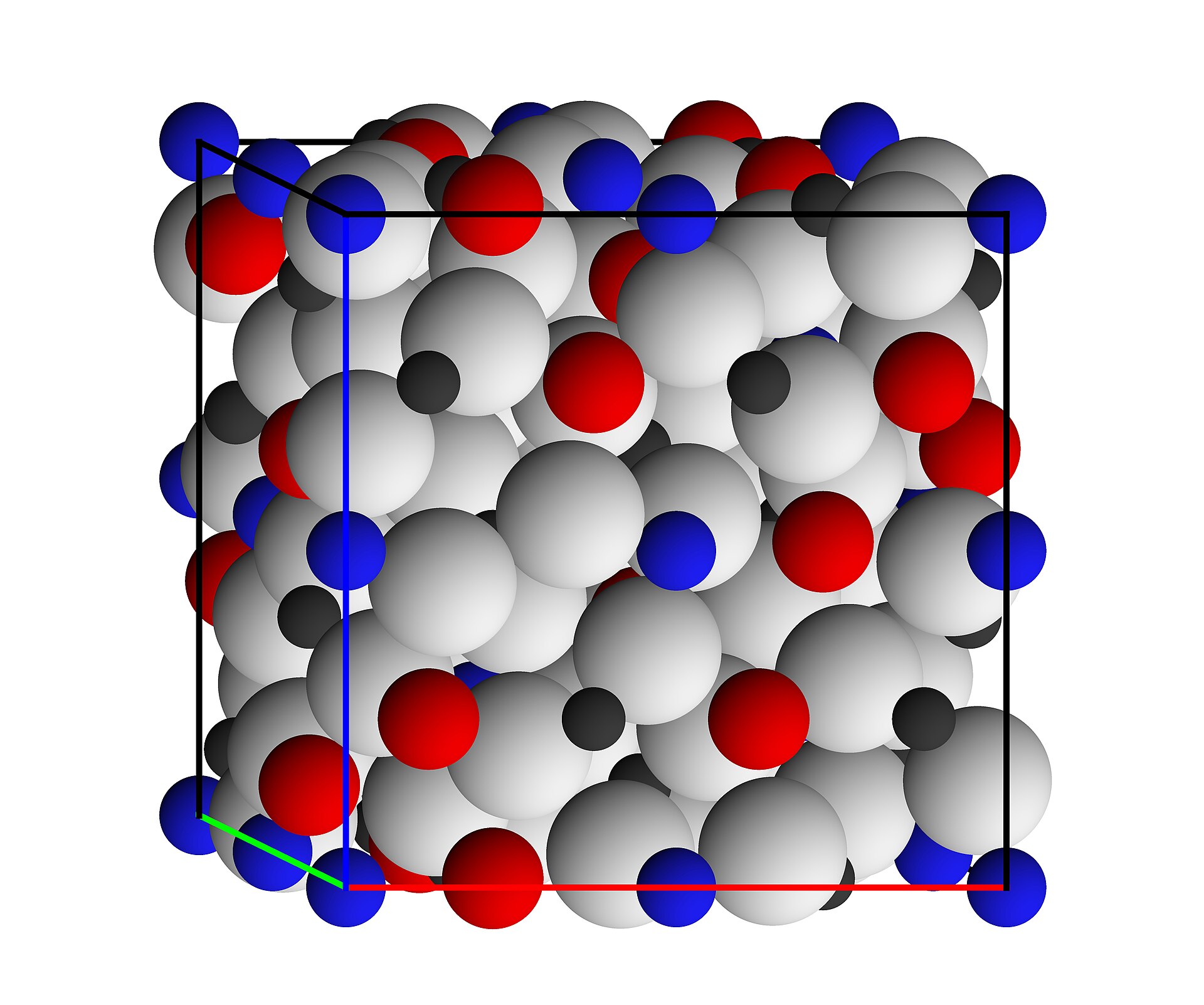
Almandine is the iron-aluminum garnet — Fe₃Al₂(SiO₄)₃ — and the most common garnet on Earth. Its twelve-sided crystals stud metamorphic schists by the handful, and its name survives from Alabanda, the Roman cutting center for carbuncle gems.
Garnet chemistry is a tape recorder: the Fe–Mg–Mn–Ca mix frozen into an almandine crystal tells geologists the pressure and temperature at which its host rock cooked. Waterjet cutters slice steel with crushed almandine; your sandpaper may be the same mineral.
Physical Properties
The full data table is in the panel alongside. Here’s what those numbers actually mean.
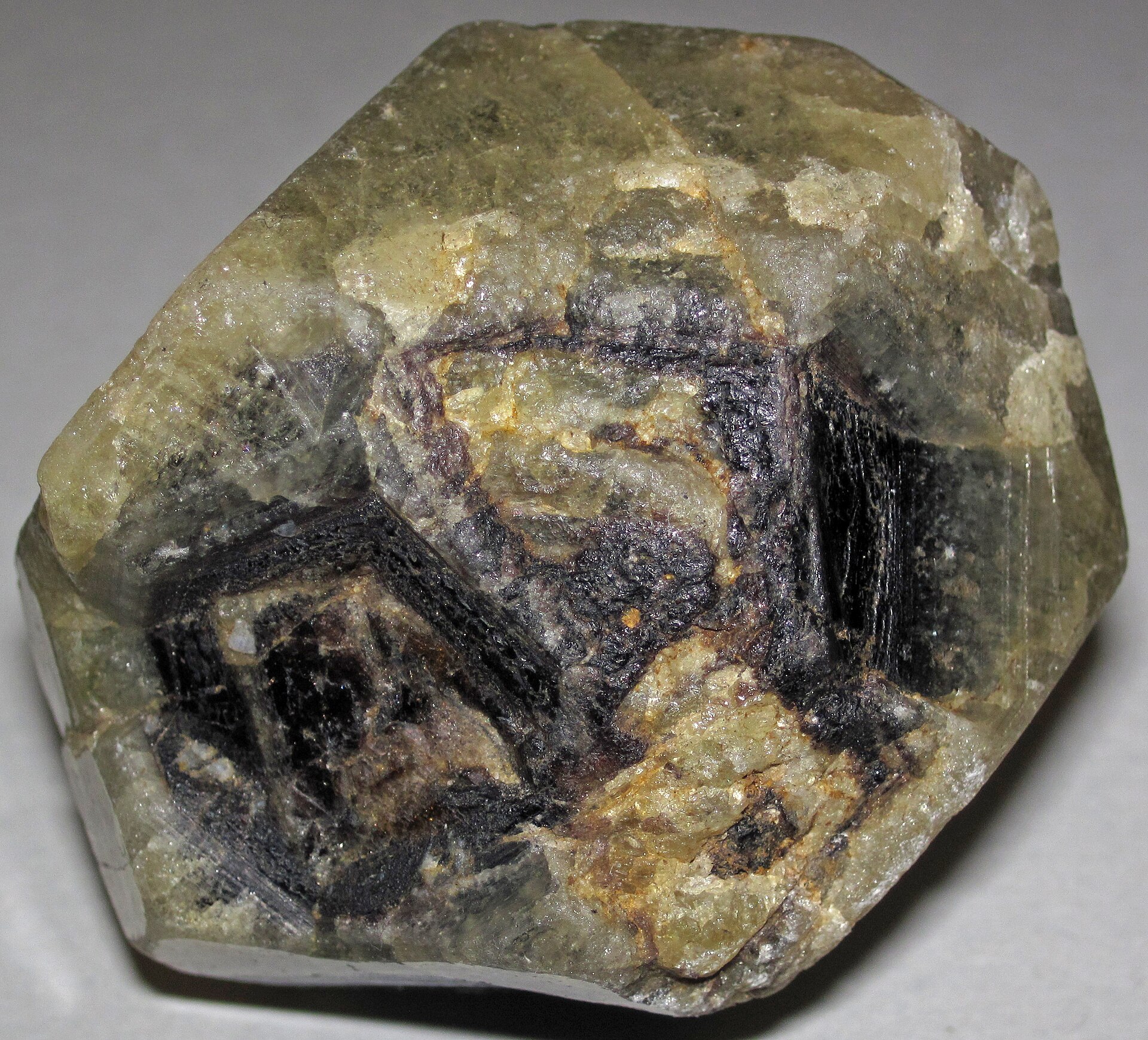
Form. The dodecahedron and trapezohedron are garnet's signatures — no cleavage, so crystals stay whole.
Color. Fe²⁺ gives the deep red; higher Mg pushes toward pyrope's purer crimson.
Geology. Almandine's presence means metamorphism; its zoning records the whole P–T path.
What It’s Used For
How to Identify It
| Looks like… | But differs because… | Quick test |
|---|---|---|
| Pyrope | Purer red, Mg-rich, usually in ultramafic rocks | Occurrence |
| Spinel | Octahedra, black or brighter red, different rocks | Habit |
Where It’s Found
Notable localities for fine specimens:
Gallery
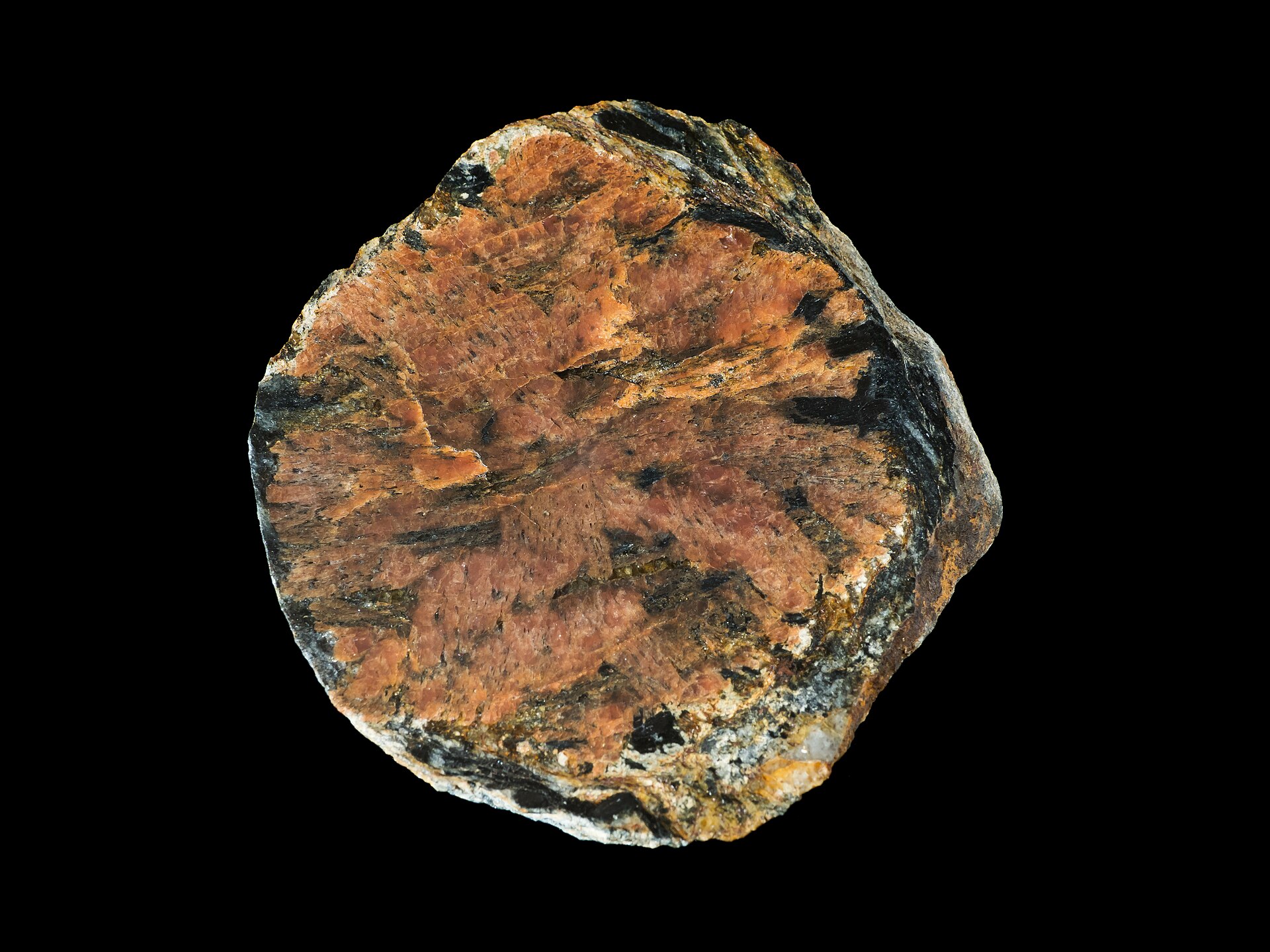
Photographs from Wikimedia Commons contributors — click a credit on the main image for the source and license.
Related Minerals
Others in the same family and minerals it commonly grows alongside.