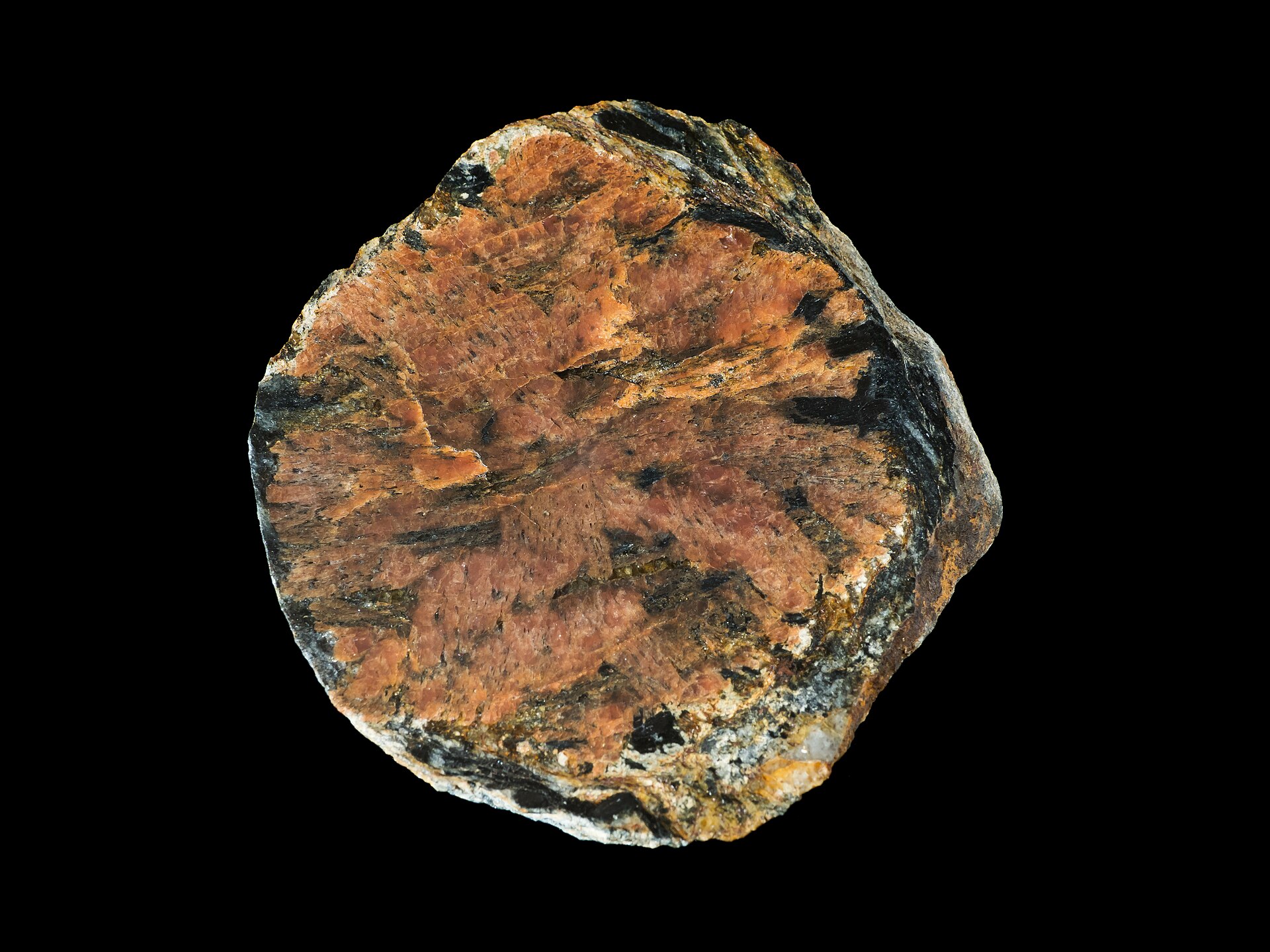
Garnet — one family, almost every color but blue — Photo: Zbynek Burival · CC BY-SA 4.0
What is Garnet?
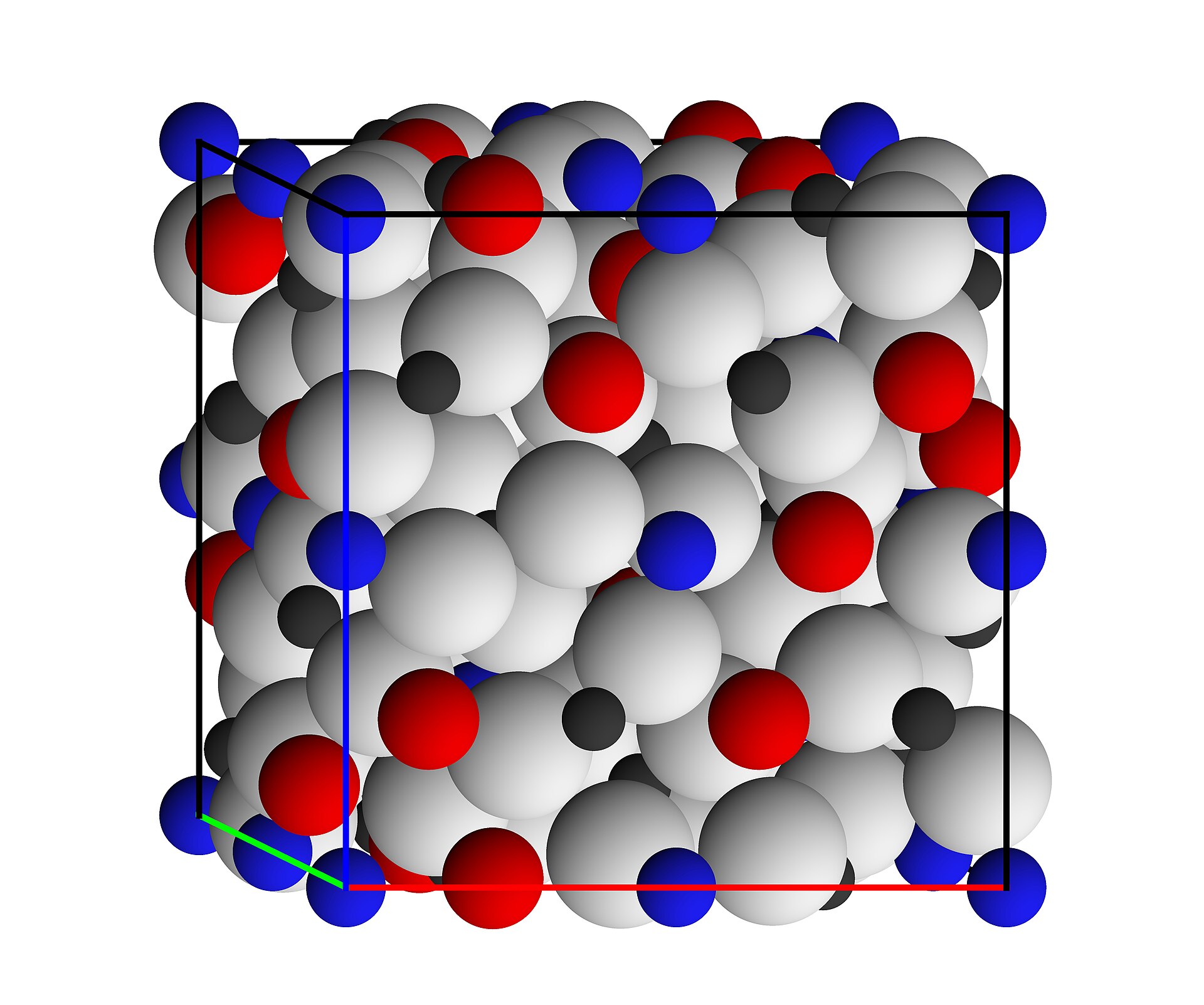
Garnet is not one mineral but a family — a supergroup of nesosilicates that share a single cubic structure and the recipe X₃Y₂(SiO₄)₃. The X sites take a divalent metal (magnesium, ferrous iron, manganese or calcium); the Y sites take a trivalent one (aluminium, ferric iron or chromium). Mix and match those slots and you get the six species everyone knows: almandine, pyrope, spessartine, grossular, andradite and uvarovite.
Mineralogists split the family into two series. The pyralspites — pyrope, almandine and spessartine — carry Mg, Fe²⁺ or Mn²⁺ at X and intergrade freely. The ugrandites — uvarovite, grossular and andradite — carry Ca at X. Between the series sits a wall of limited mixing, which is why names like rhodolite (a pyrope–almandine blend) exist.
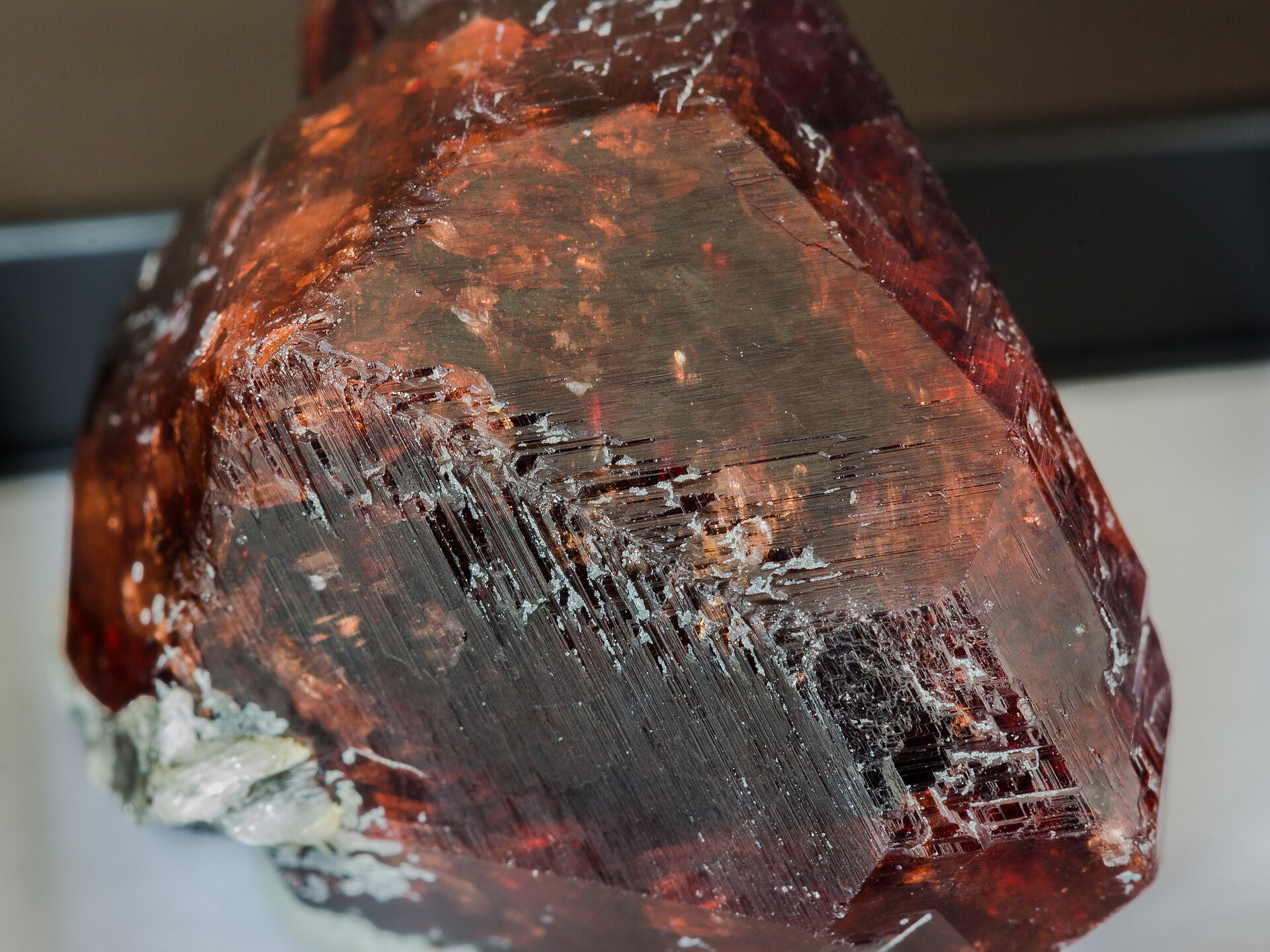
Whatever the member, the look is unmistakable: equant, dodecahedral or trapezohedral crystals with a glassy-to-resinous shine, no cleavage, and a reassuring heft. Garnet comes in every color except true blue — red almandine being so common that 'garnet' has meant 'dark red' since the Middle Ages.
Physical Properties
The full data table is in the panel alongside. Here’s what those numbers actually mean.
Hardness & fracture. All garnets sit between 6.5 and 7.5 on the Mohs scale and have no cleavage — they break in curved conchoidal chips. That combination of hardness and toughness is exactly why crushed garnet became the abrasive industry's mineral of choice.
Optics. Garnets are cubic and should be perfectly isotropic — singly refracting, black between crossed polarizers. In practice many show patchy 'anomalous' birefringence from slight structural strain. Refractive index climbs with iron content: ~1.71 for pyrope, ~1.83 for almandine, ~1.89 for andradite — whose demantoid variety also carries diamond-beating dispersion (fire).
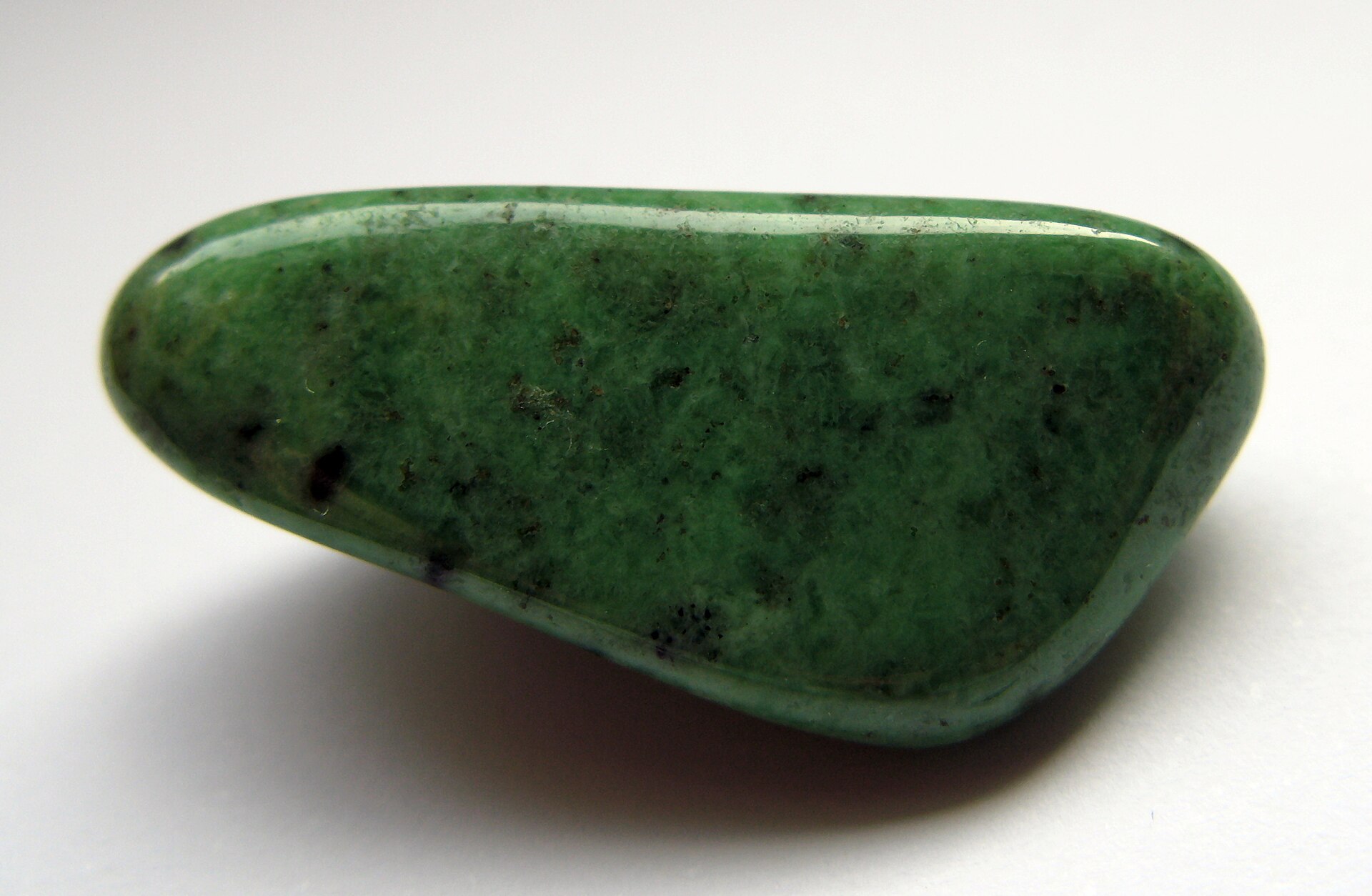
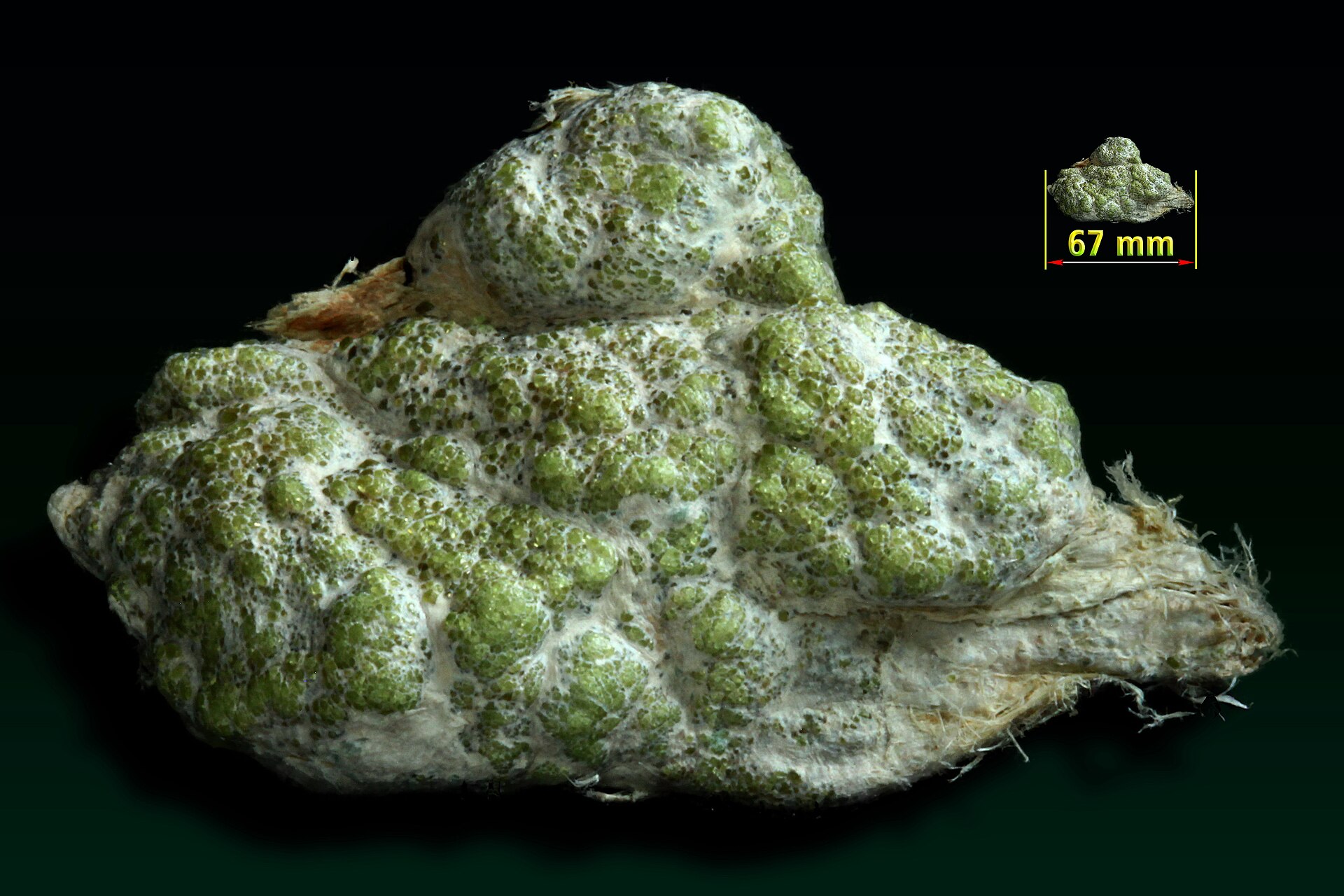
Density & color. Specific gravity runs 3.5–4.3. Iron reddens, manganese oranges, chromium and vanadium green — which is why uvarovite and tsavorite can rival emerald.
Members
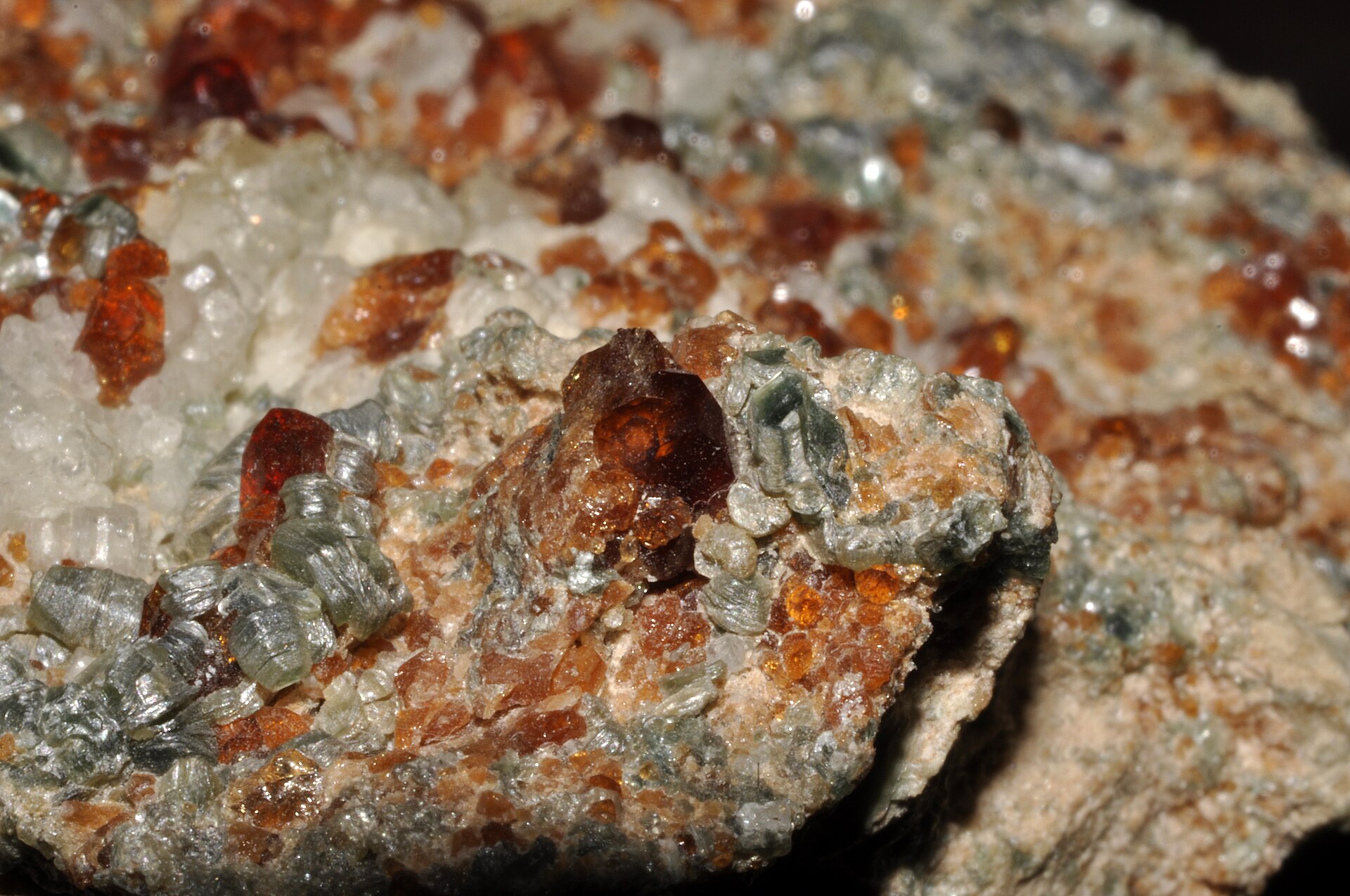
Same chemistry, different faces — trace impurities and how finely it crystallizes give a whole family of familiar stones.
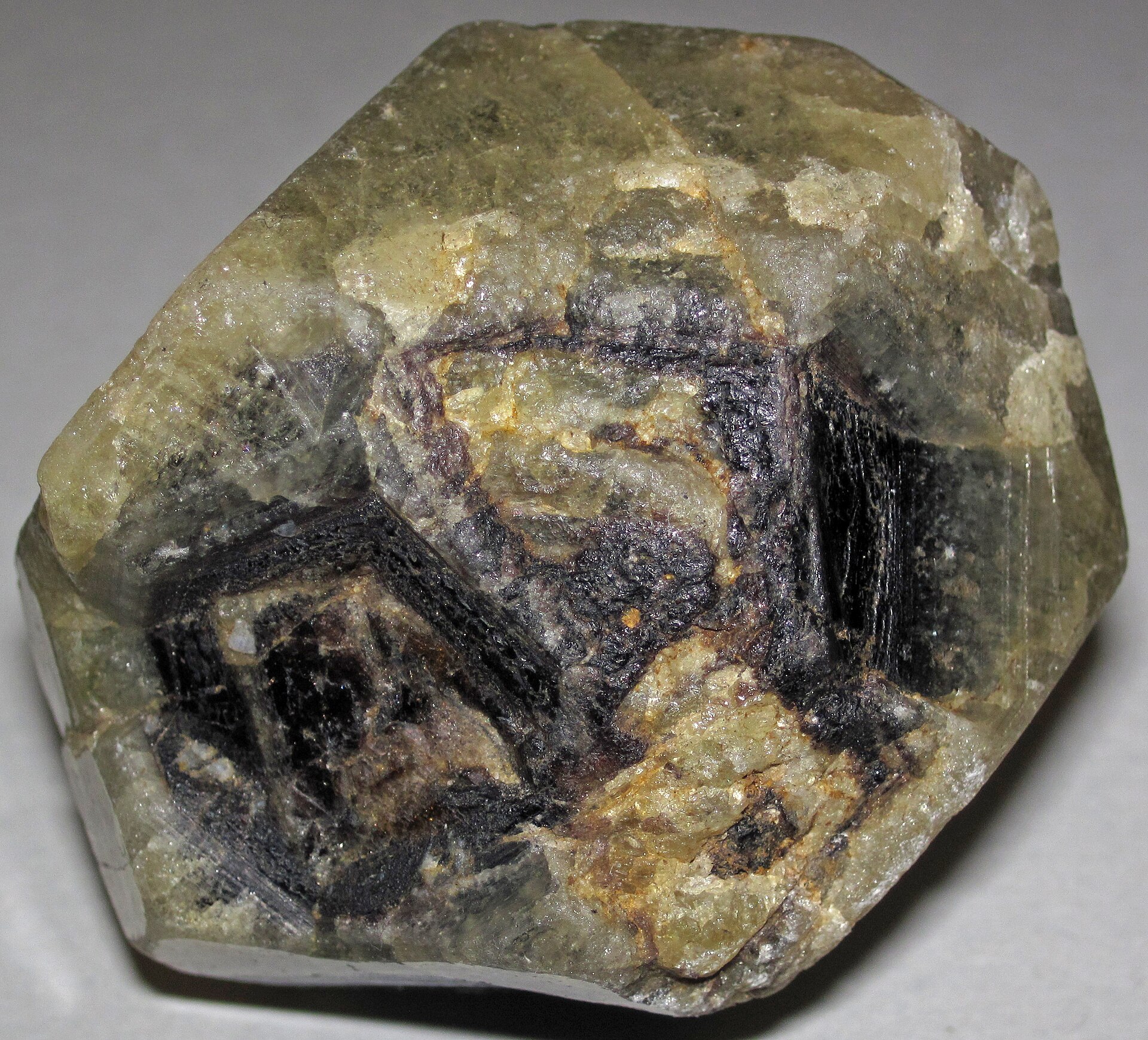
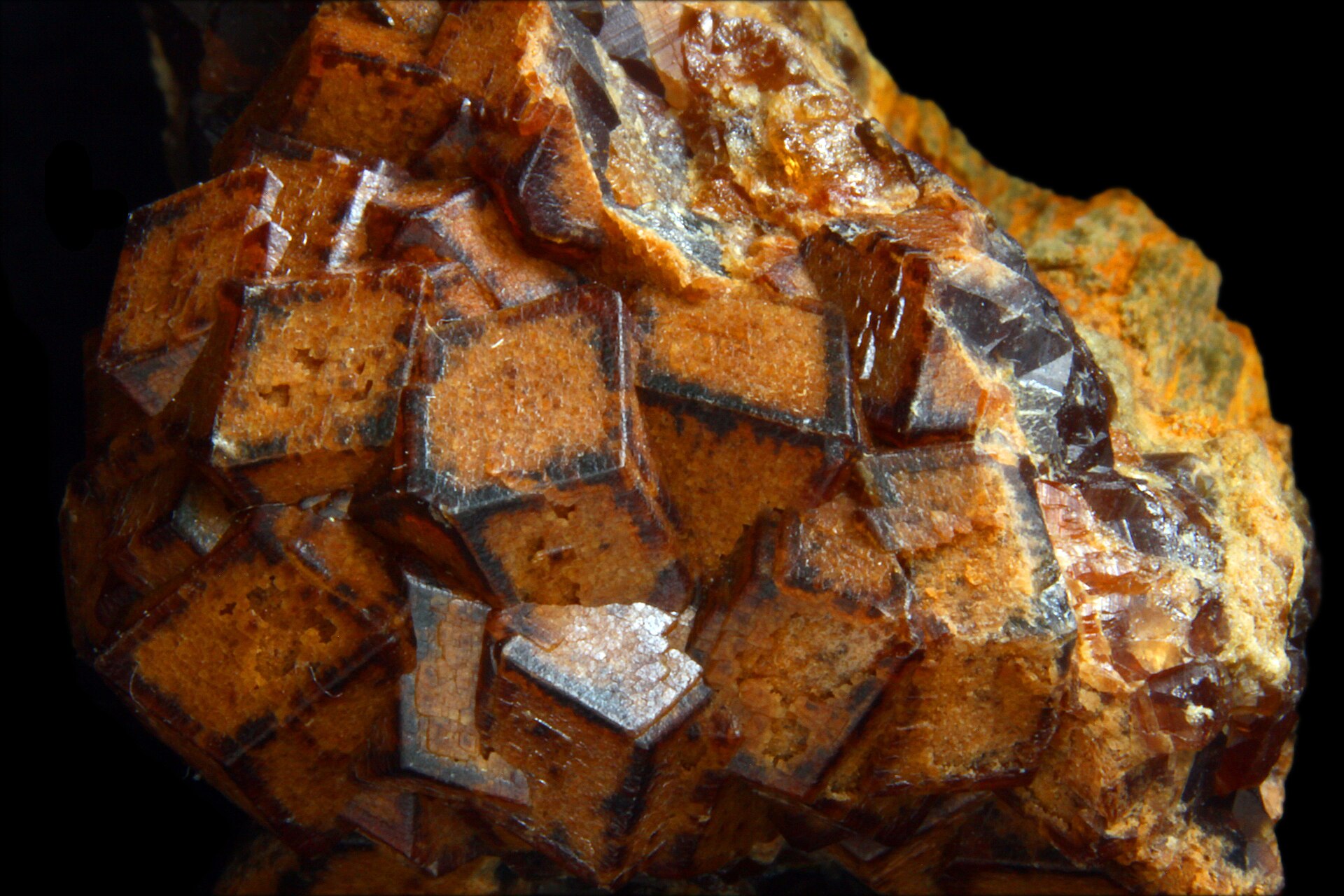
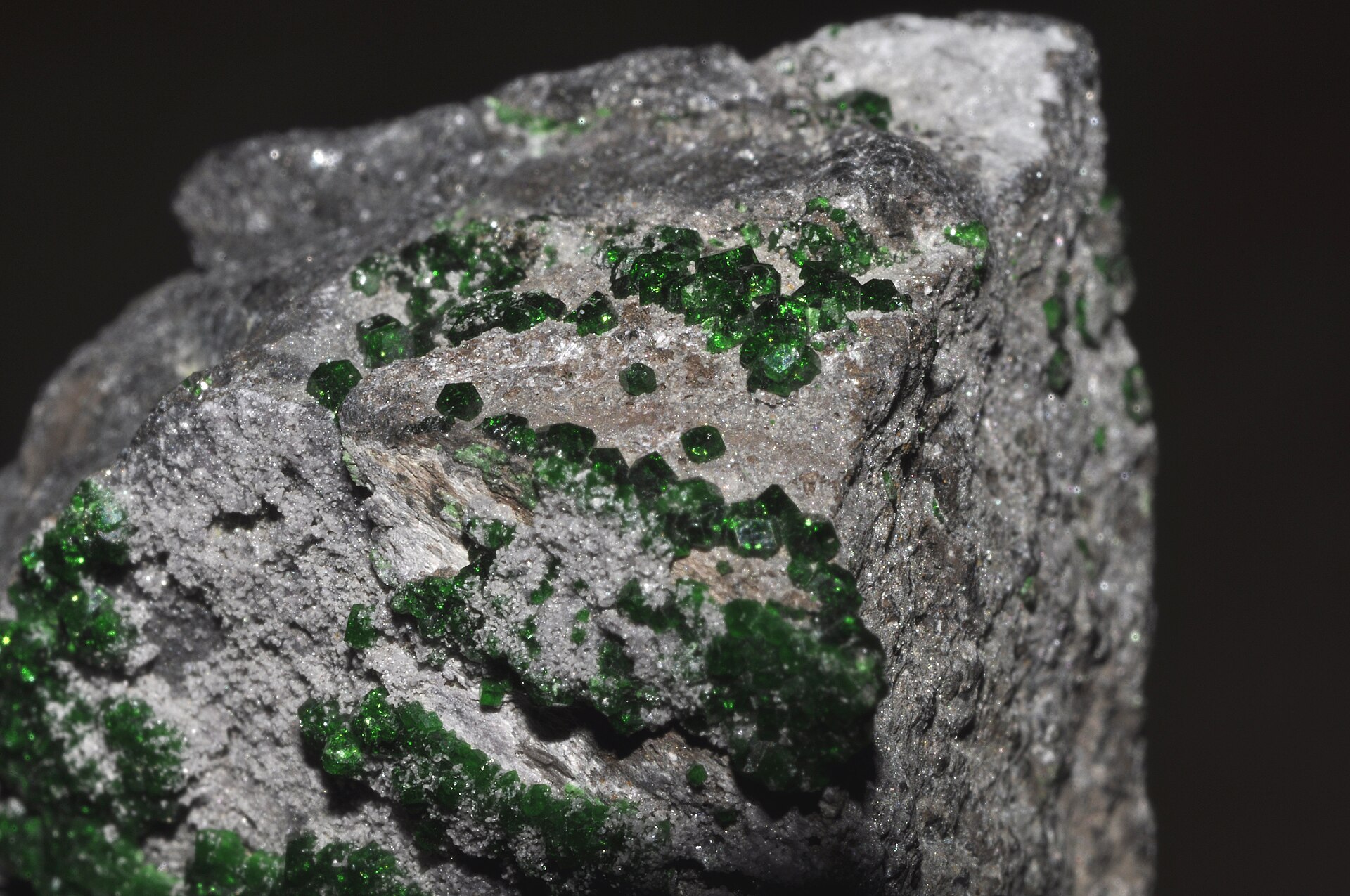
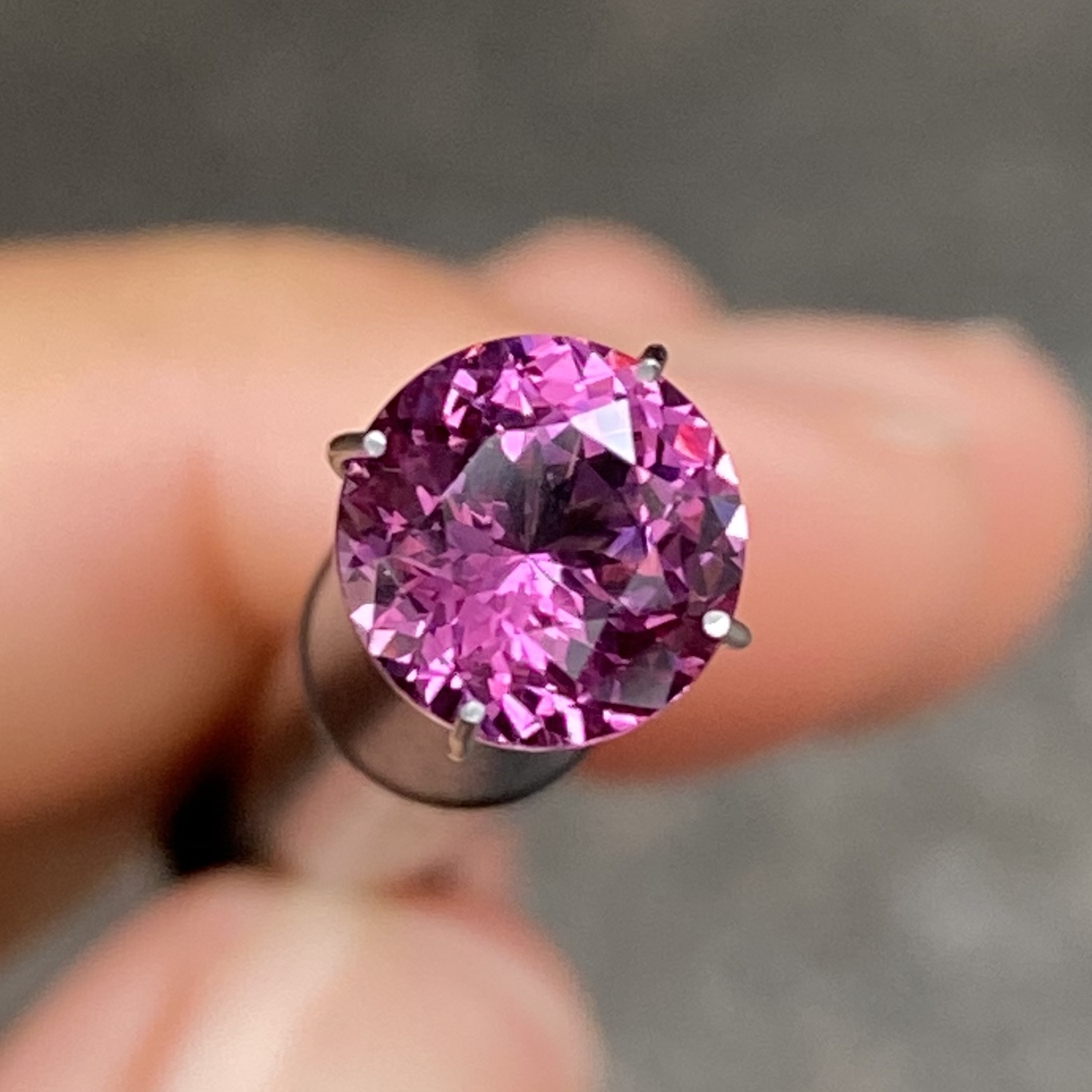
How & Where It Forms
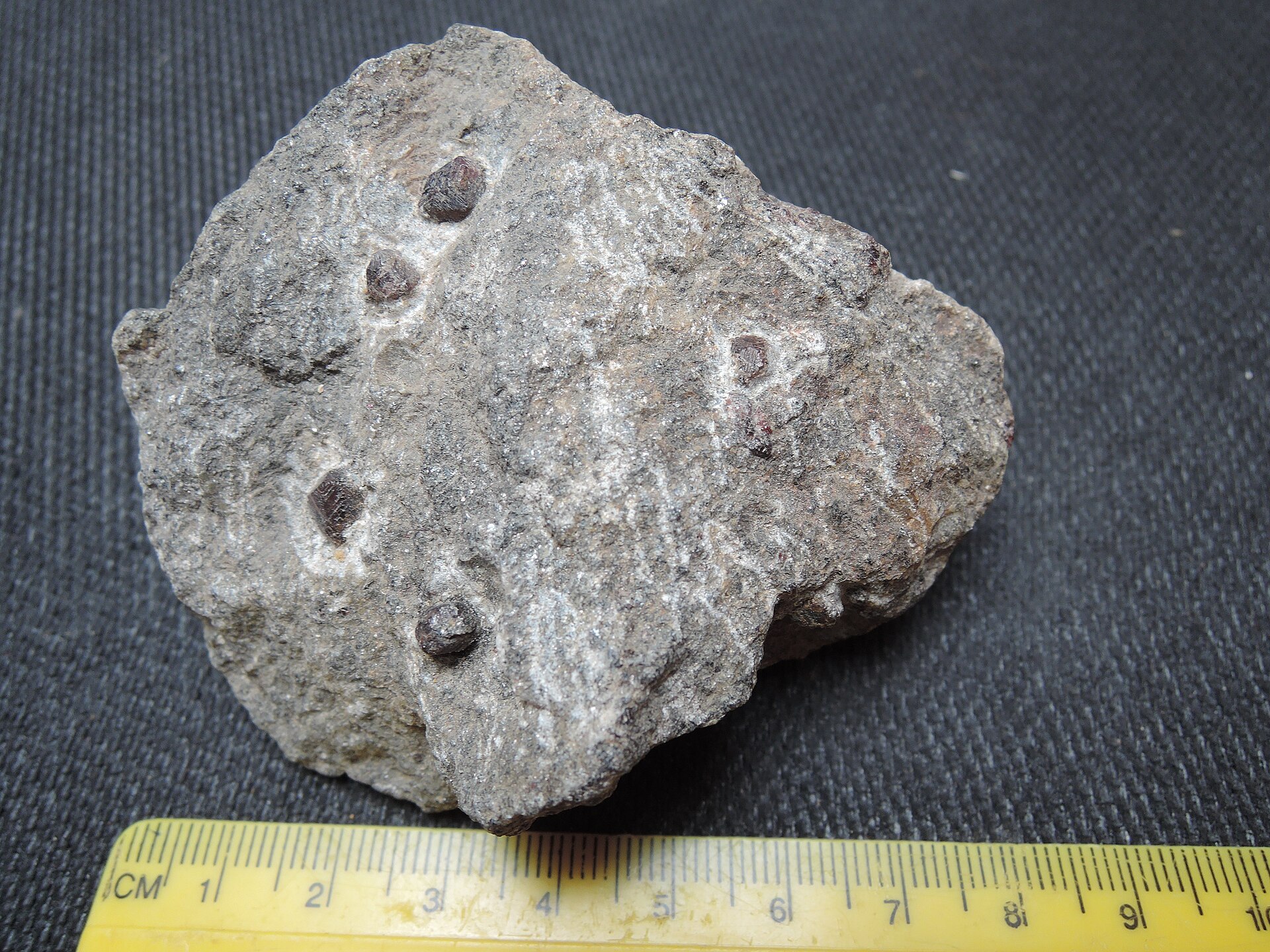
Garnets grow wherever rocks get squeezed and heated. Almandine is the classic index mineral of regional metamorphism, peppering schists and gneisses. Pyrope lives in the mantle — eclogites, peridotites and kimberlite xenoliths, where it rides up with diamonds. Grossular and andradite favor skarns — marble cooked by intruding magma — while spessartine likes granitic pegmatites and manganese-rich rocks. Rare uvarovite crusts chromium-rich serpentinites. Their durability means garnets also concentrate in stream sands — a field geologist's shortcut to reading a drainage's bedrock.
Often grows alongside:
What It’s Used For
How to Identify It
Think shape and weight: neat dodecahedra/trapezohedra, no cleavage, glassy luster, surprising density. Red spinel is also cubic and isotropic — but it's harder (8) and grows octahedra. Magnetite mimics black melanite — a magnet settles it instantly.
| Looks like… | But differs because… | Quick test |
|---|---|---|
| Spinel | Also cubic and isotropic, but harder (8) and grows octahedra, not dodecahedra | Crystal form & hardness |
| Corundum | Ruby is harder (9), barrel-shaped, and strongly dichroic — garnet is singly refracting | Pleochroism & hardness |
| Magnetite | Black melanite garnet isn't magnetic; magnetite jumps to a magnet | Magnet |
| Tourmaline | Tourmaline forms striated prisms with strong pleochroism; garnet is equant and isotropic | Shape & optical behavior |
Where It’s Found
Notable localities for fine specimens:
Gallery
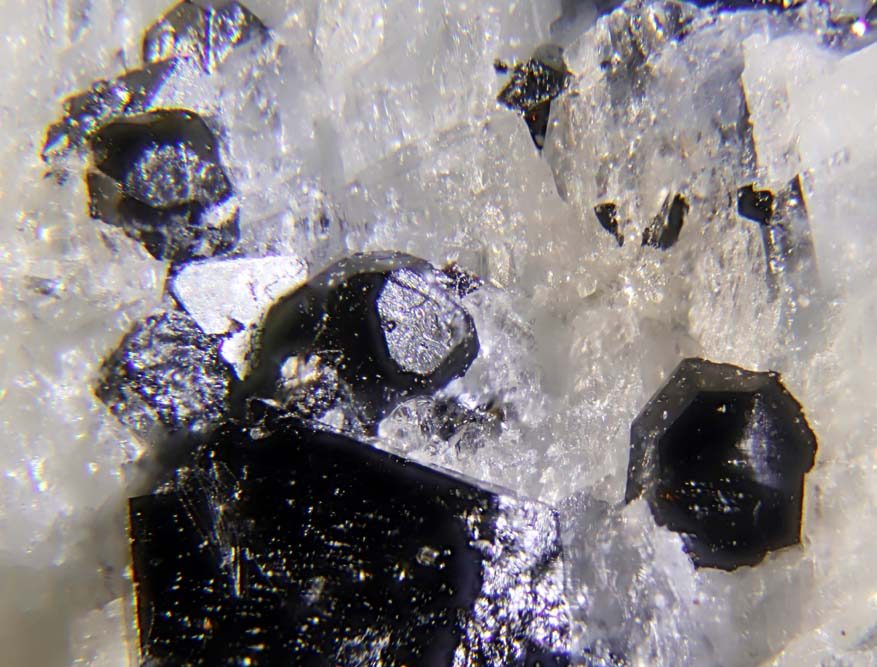
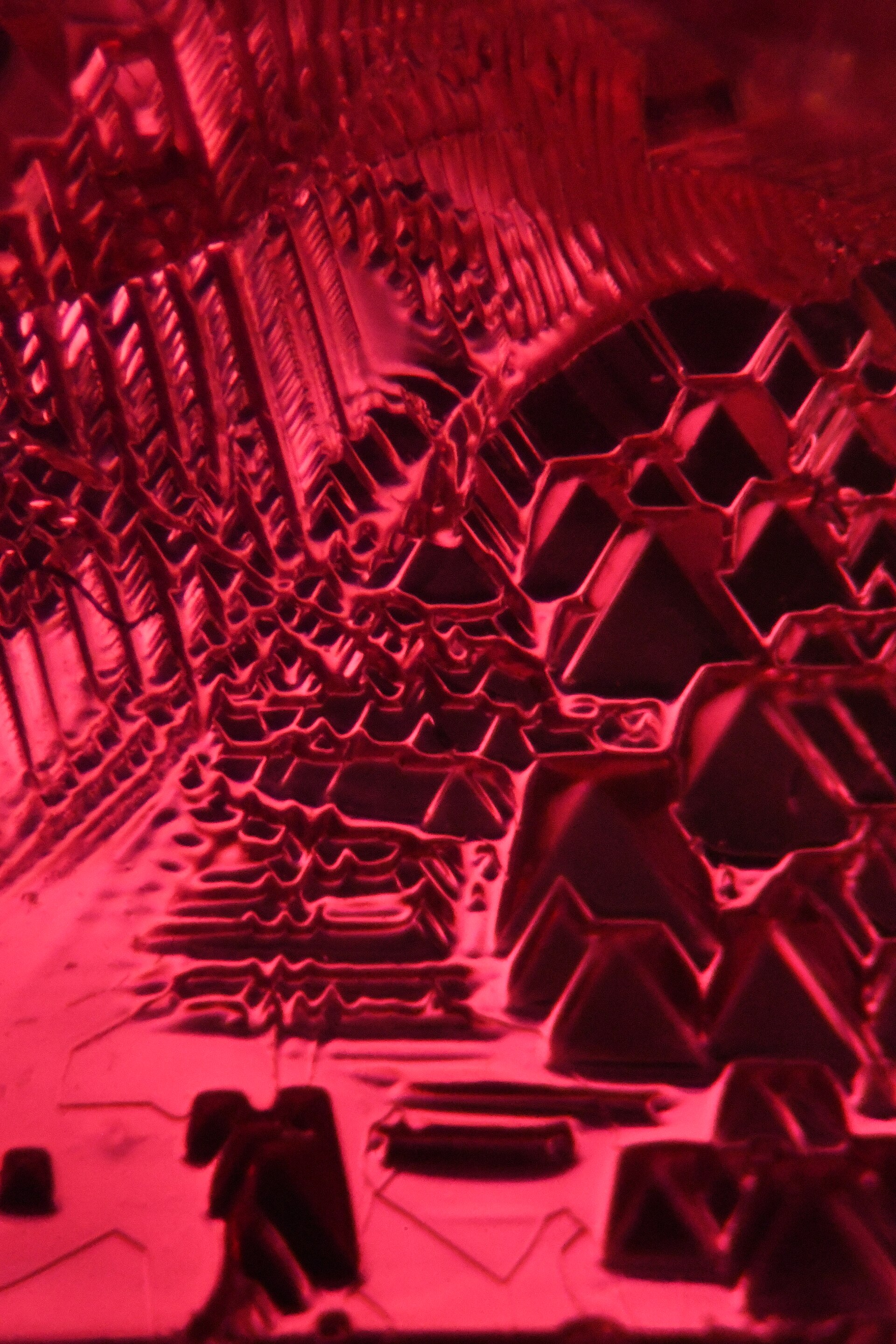
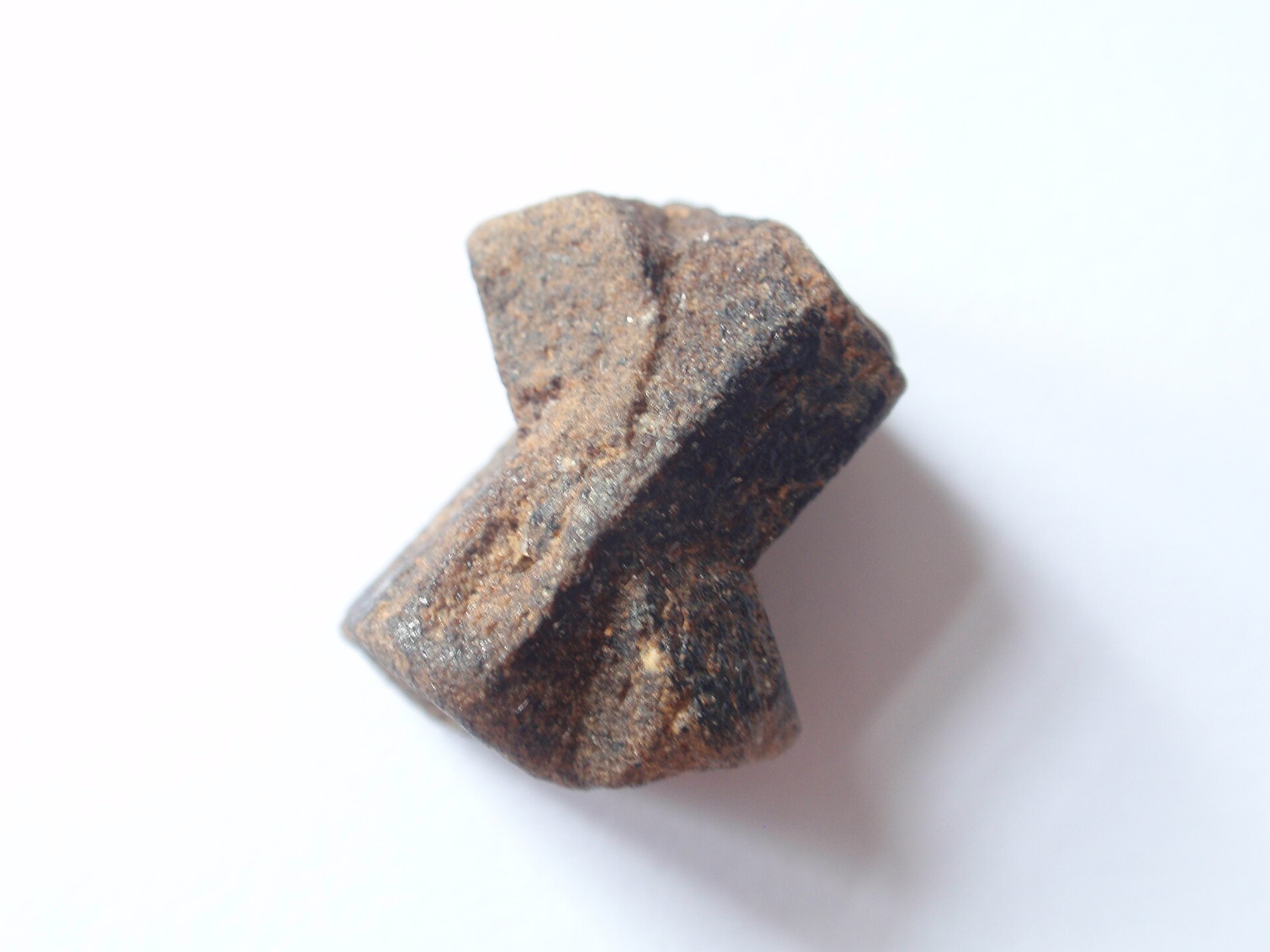
Photographs from Wikimedia Commons contributors — click a credit on the main image for the source and license.
Related Minerals
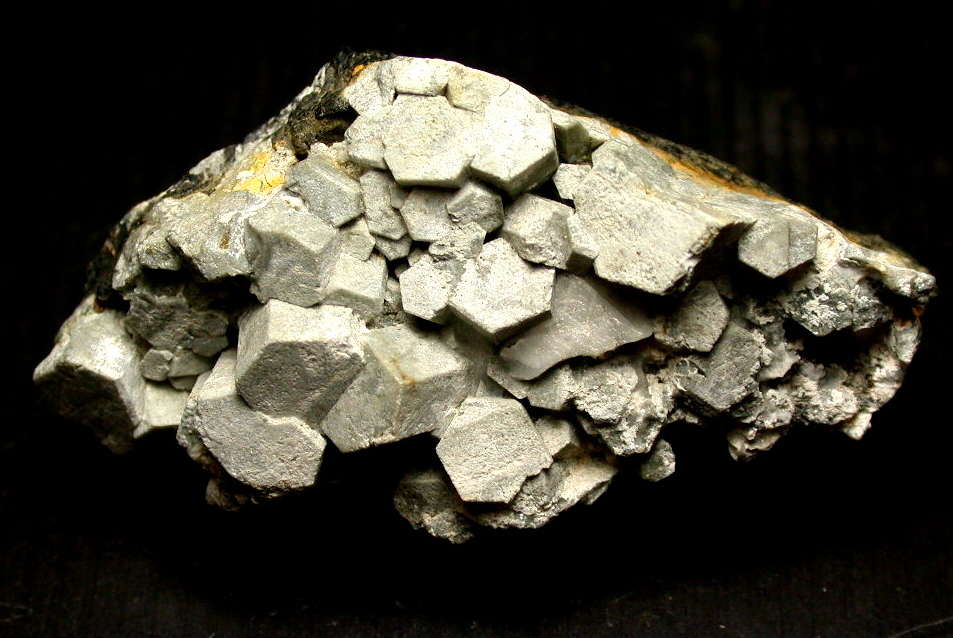
Others in the same family and minerals it commonly grows alongside.
References & Further Reading
- Grew, E.S., et al. (2013) Nomenclature of the garnet supergroup. American Mineralogist 98, 785–811.
- Dana's New Mineralogy, 8th ed. Garnet group, nesosilicates.
- Mindat.org — Garnet group mineral data and locality records.
- Wikipedia — Garnet.
Last reviewed 2026-09-14 · How to cite this page.