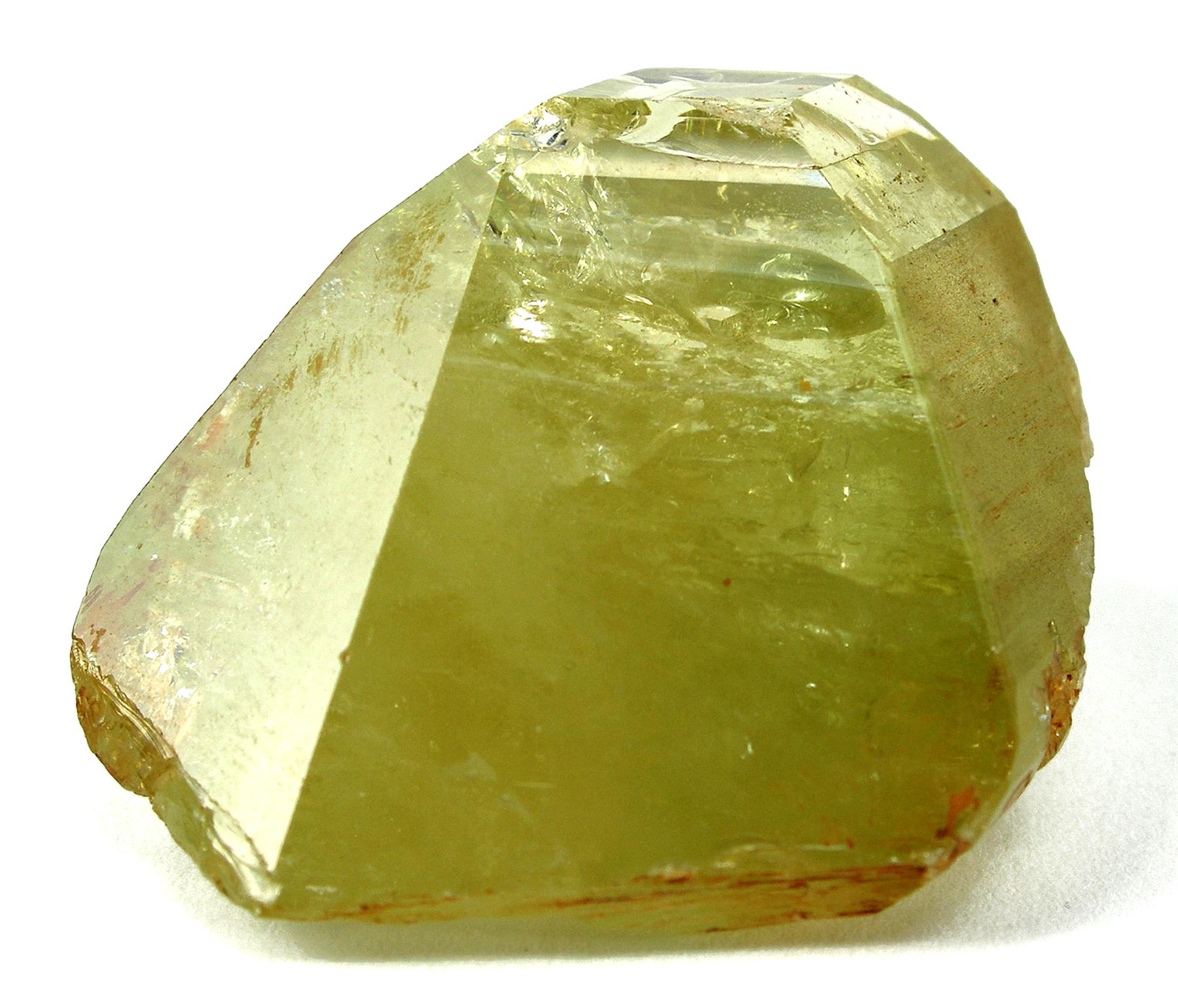
Brazilianite Locality: Conselheiro Pena, Doce valley, Minas Gerais, Southeast Region, Brazil (Locality at mindat.org) Size: miniature, 3.4 x 2.9 x 2.2 cm Brazil — Photo: Robert M. Lavinsky · CC BY-SA 3.0
Brazilianite
A yellow-green phosphate of gem quality found in phosphate-rich pegmatites — named for Brazil, where it was discovered.
Intro adapted from Wikipedia (CC BY-SA).
Brazilianite is an IMA-recognized mineral species in the phosphate class, with the chemical formula NaAl₃(PO₄)₂(OH)₄.
It crystallizes in the monoclinic crystal system (space group P2_1/n).
Key properties: Mohs hardness 5.5; specific gravity 2.98; typically yellow or green; White streak; Vitreous luster; refractive index 1.614; optically biaxial.
IMA symbol Bzl, grandfathered status — known before the IMA’s founding, named in 1945.
A hydrothermal mineral in phosphate-rich zones of granite pegmatites; also in metamorphosed sedimentary deposits.
It is found associated with Muscovite, albite, apatite, tourmaline ([Córrego Frio mine, ] Brazil); whitlockite, apatite, quartz (Palermo #1 mine, New Hampshire, USA); amblygonite.
The name refers to Brazil, the country in which it was first found.
Collections: Collector Favorites, Gemstones, Rare & Remarkable.