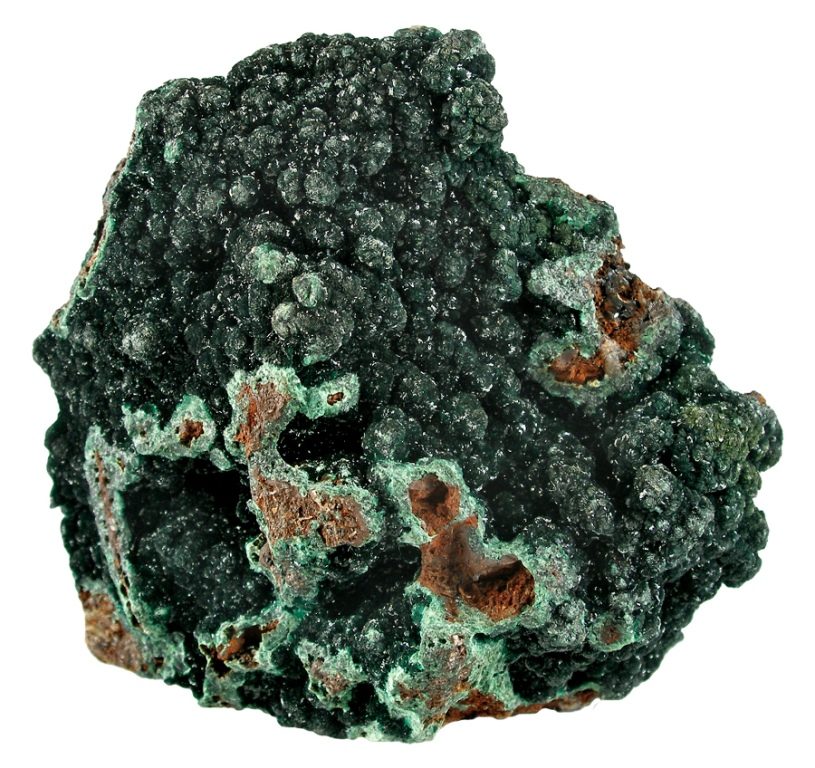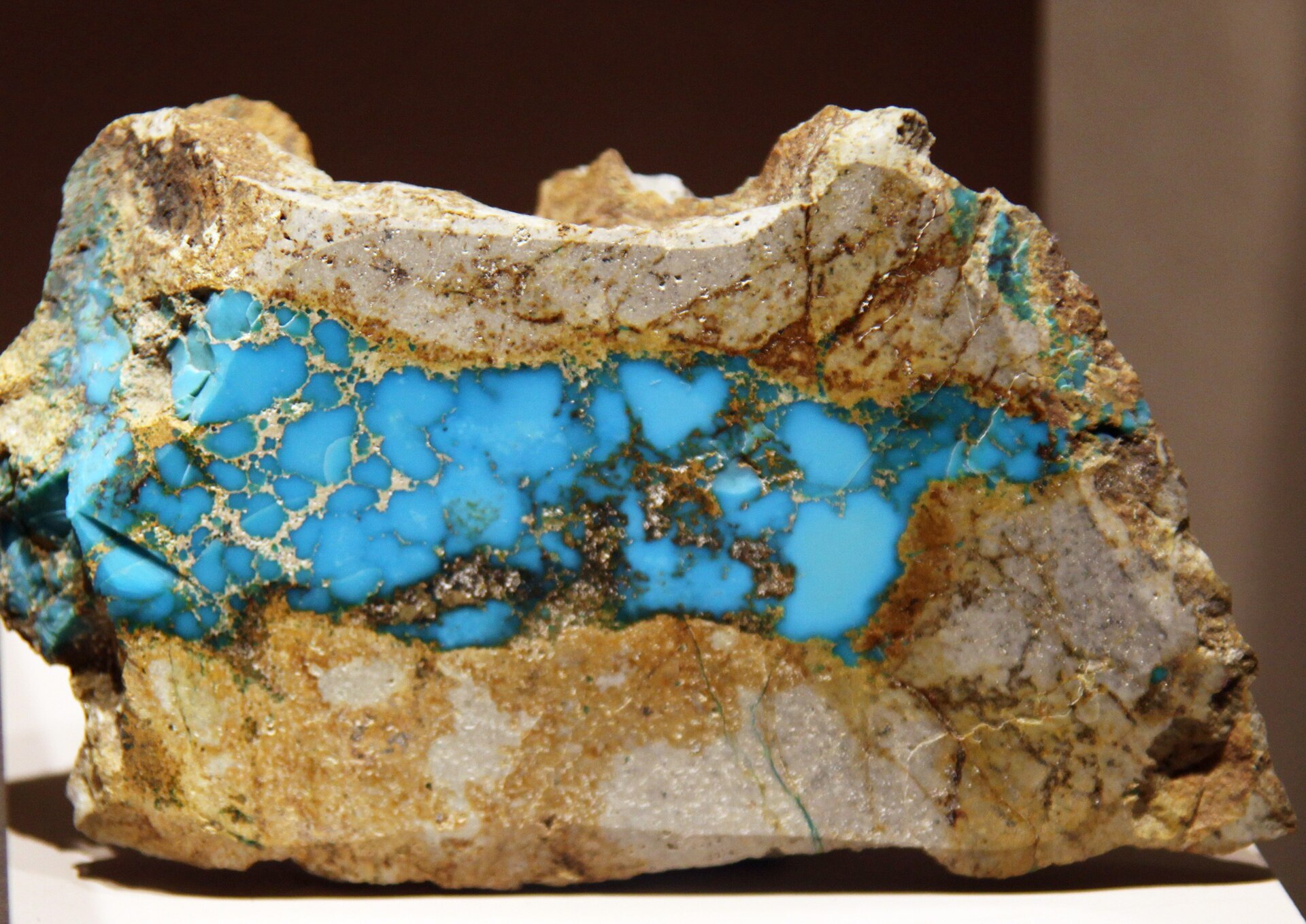
Turquoise — Photo: Tim Evanson from Washington, D.C., United States of America · CC BY-SA 2.0
What is Turquoise?
Turquoise is hydrated copper aluminum phosphate — CuAl₆(PO₄)₄(OH)₈·4H₂O — and one of humanity's oldest gems. Egyptians mined Sinai turquoise before 3000 BCE; Persia's Nishapur stones set the color standard that gave the stone its name ('Turkish stone' — it reached Europe through Turkey).
It forms only where copper deposits weather in arid climates — groundwater carries copper to aluminum phosphate rock in fractures just below the desert surface. Most turquoise is cryptocrystalline; visible crystals are museum-rare (a Virginia find in 1911 is the famous exception).
Physical Properties
The full data table is in the panel alongside. Here’s what those numbers actually mean.
Color. Cu²⁺ gives the blue; iron substitution pushes it toward green.
Porosity. Natural turquoise is porous — much market material is stabilized with resin or dyed (howlite dyed blue is the common fake).
Matrix. Brown-black veining ('spiderweb') is limonite or host rock — prized in Bisbee and Persian grades.
What It’s Used For
How to Identify It
| Looks like… | But differs because… | Quick test |
|---|---|---|
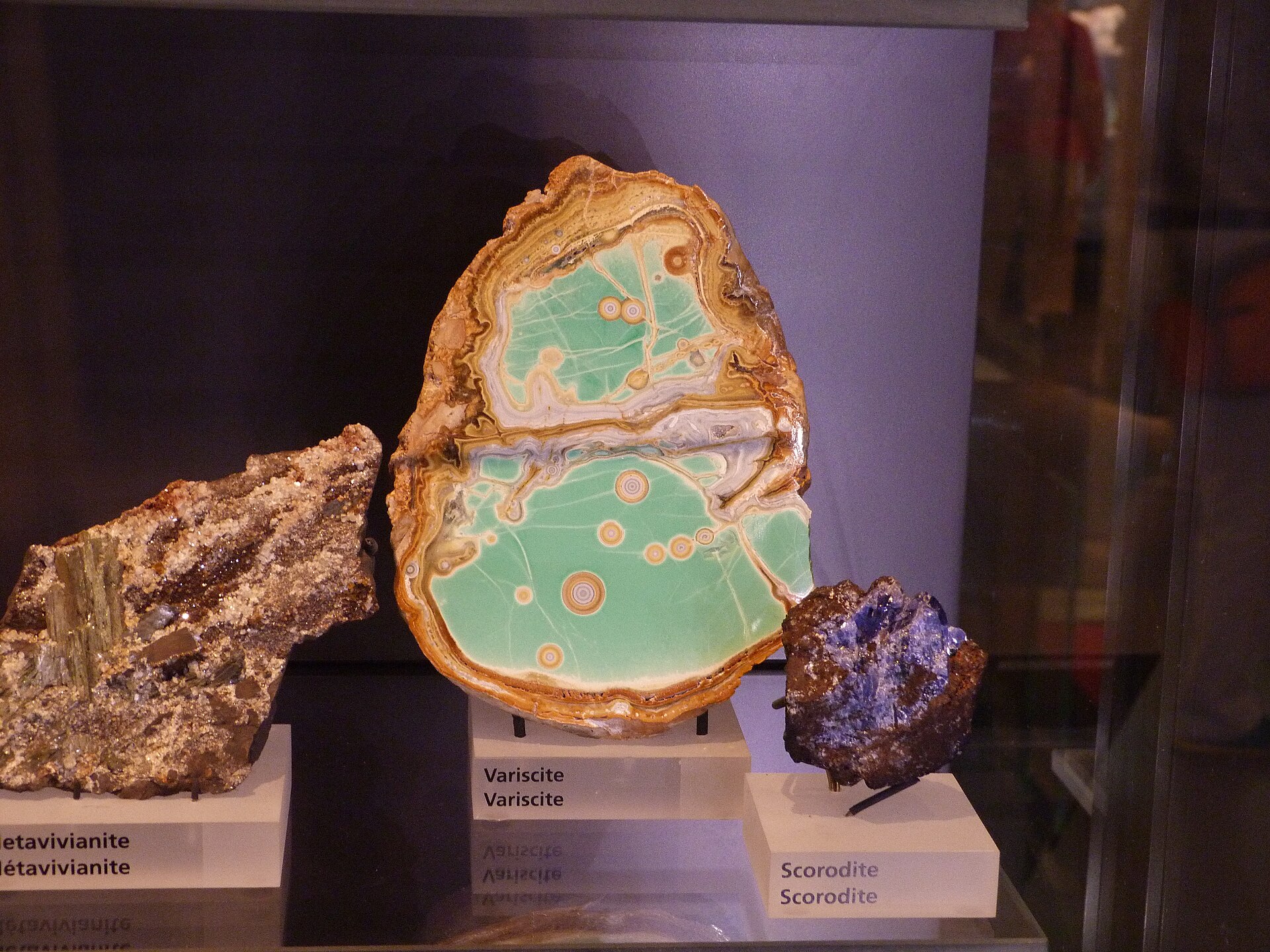
| Variscite | Greener, no copper, different matrix patterns | Color & chemistry |
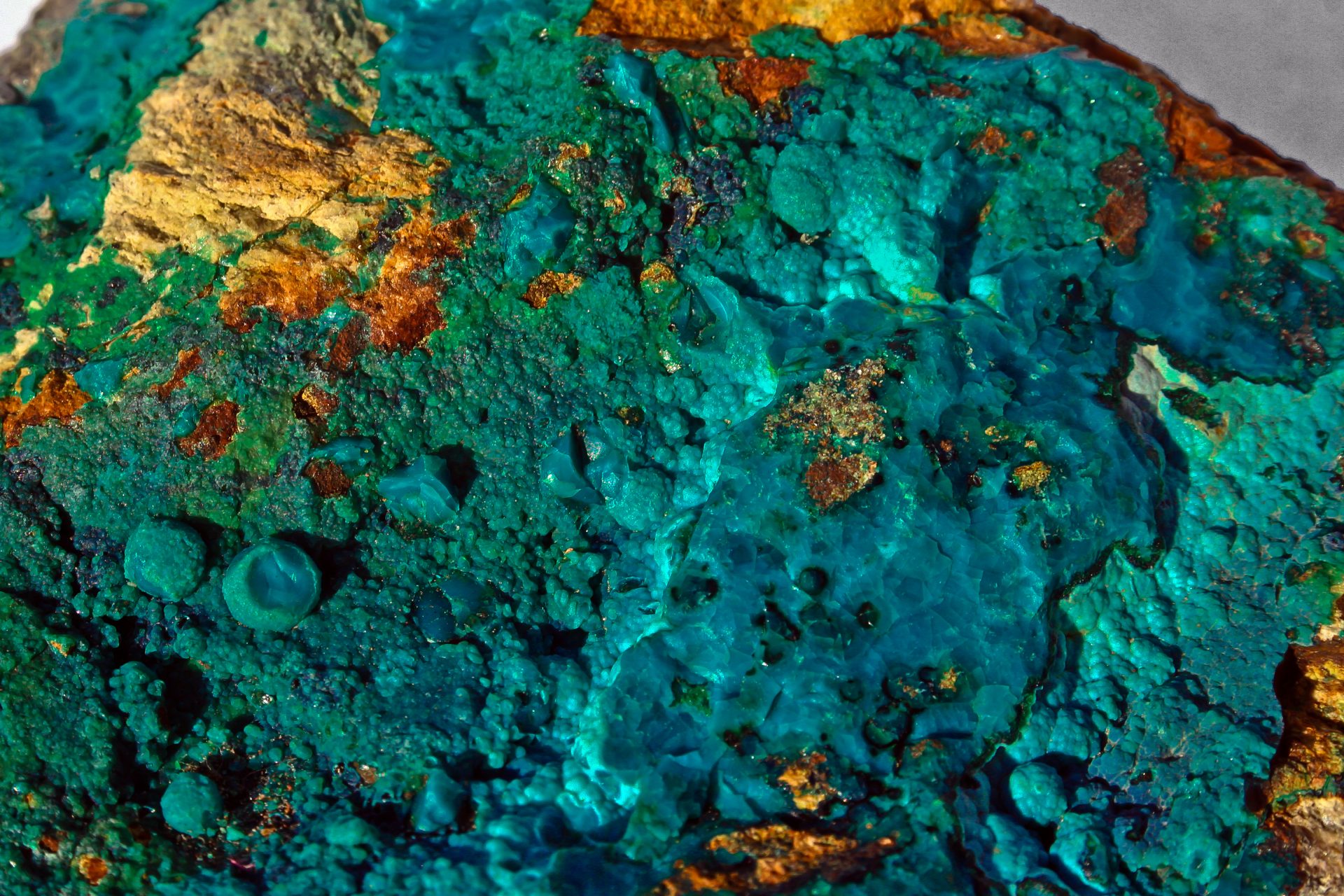
| Chrysocolla | Softer, more vitreous, silicate not phosphate | Hardness & luster |
Where It’s Found
Notable localities for fine specimens:
Gallery
Photographs from Wikimedia Commons contributors — click a credit on the main image for the source and license.
Related Minerals
Others in the same family and minerals it commonly grows alongside.