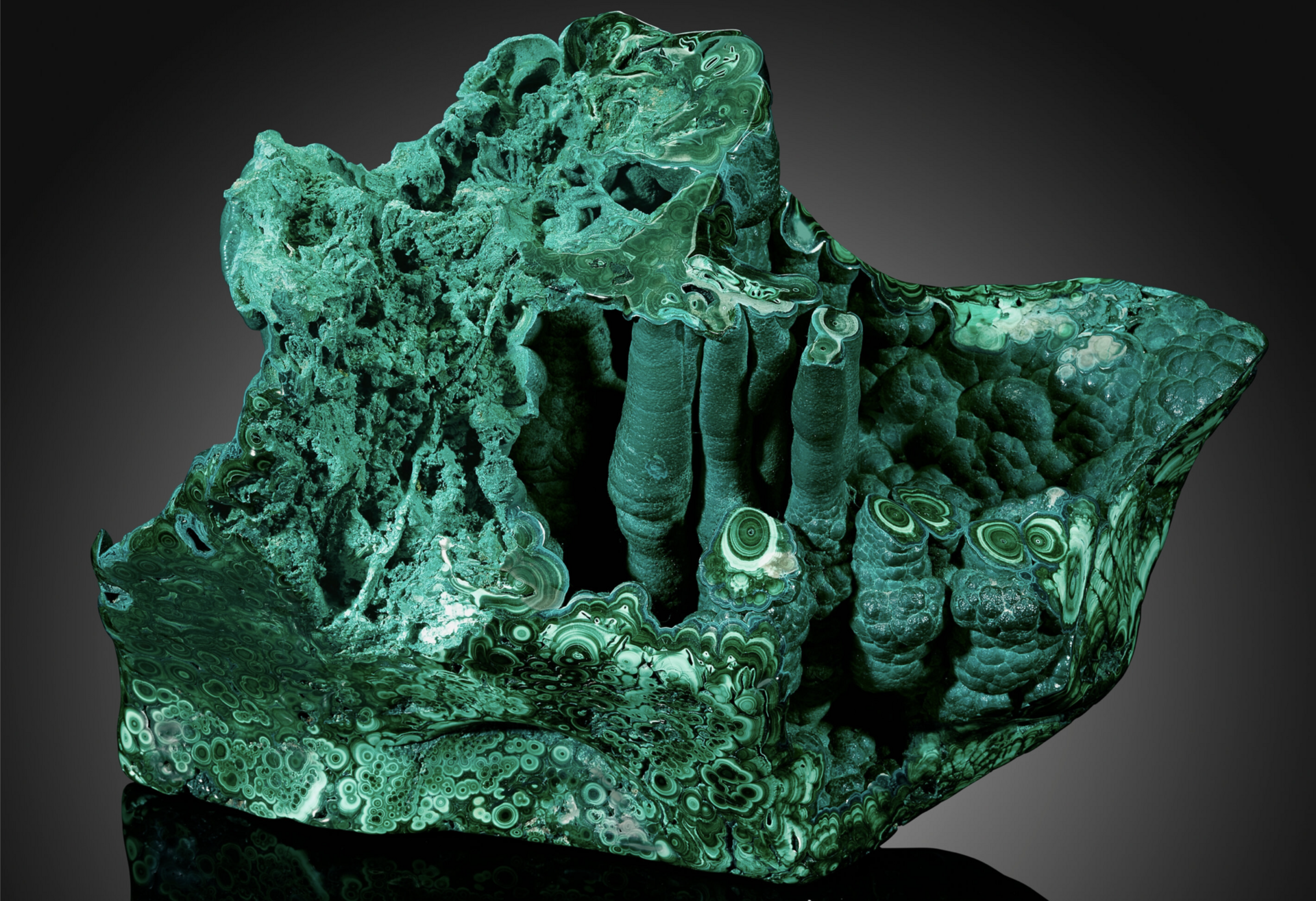
Banded malachite — concentric green rings in a polished stalactite cross-section — Photo: Steve Jurvetson · CC BY 2.0
What is Malachite?
Malachite is a copper carbonate hydroxide — Cu₂(CO₃)(OH)₂ — and one of the most instantly recognizable minerals on Earth. That saturated green, usually arranged in sweeping bands of light and dark, has been mined, carved and ground into pigment for at least 6,000 years.
It is a secondary mineral: it forms when oxygen-rich rainwater and carbonate-bearing groundwater attack copper sulfides near the surface. Almost every copper deposit hosts some malachite in its weathered zone, often growing over — or completely replacing — its blue sibling azurite. Intergrowths of the two are sold as ‘azur-malachite’.
Malachite was once a serious ore of copper; today most of it goes to collectors and lapidaries. It is soft enough to carve yet takes a fine polish, which is why palace rooms, jewelry boxes and green oil paint have all been made from it.
Physical Properties
The full data table is in the panel alongside. Here’s what those numbers actually mean.
Color and banding. The green comes from copper itself — an intrinsic, unchanging ingredient — so malachite never fades. Concentric bands record rhythmic changes in copper supply as the mineral grew layer by layer in open cavities.
Hardness and weight. At Mohs 3.5–4 it scratches easily (a copper coin marks it), yet it is surprisingly dense — around SG 3.6–4 — because of all that copper. A fist-sized lump feels heavier than it looks.
The fizz. Drop dilute hydrochloric acid (or strong vinegar, given time) on malachite and it bubbles: the carbonate group is releasing carbon dioxide. That test separates it from every green lookalike that isn't a carbonate.
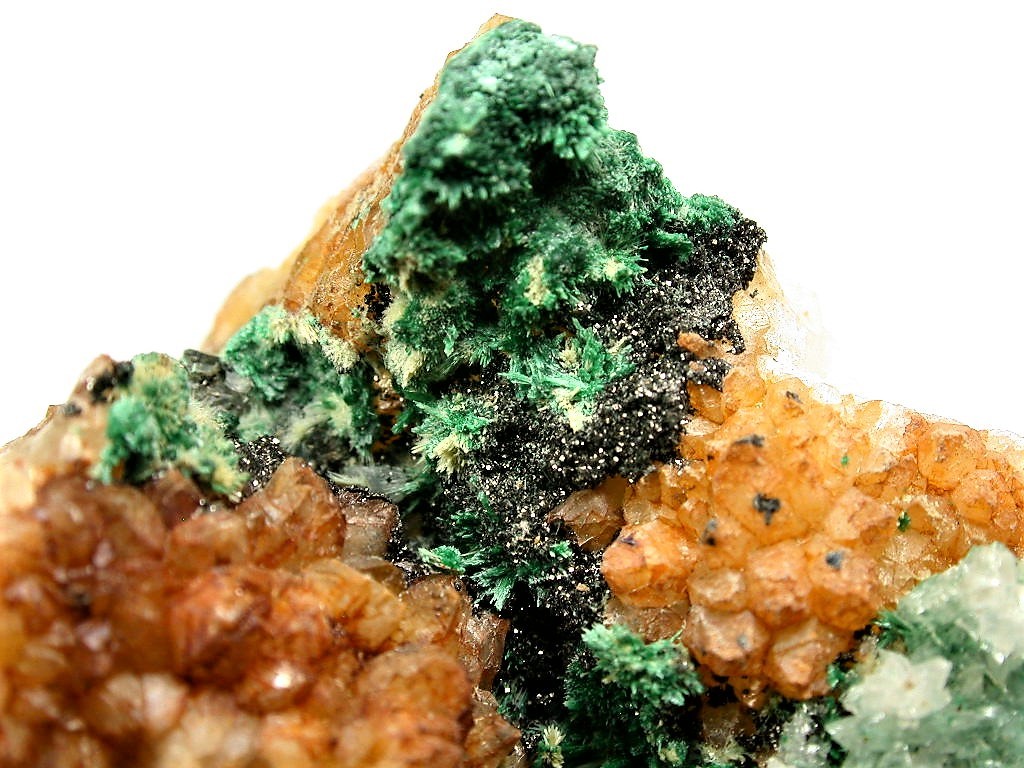
Habit. Well-formed crystals are rare; the typical look is botryoidal — globular, grape-like crusts — or stalactitic columns and velvety fibrous coatings. Polished slabs show the banding best.
How & Where It Forms
Malachite crystallizes in the oxidized zone of copper deposits, where sulfides such as chalcopyrite and bornite break down and the released copper meets carbonate-rich groundwater. It coats fractures, fills cavities as stalactites, and cements gravel into ‘copper sand’.
It is famously unstable-relative: azurite alters to malachite as conditions become wetter, so nature produces pseudomorphs — malachite keeping the sharp shape of a vanished azurite crystal. The great masses of Katanga and the Urals formed where huge sulfide bodies weathered for millions of years.
Often grows alongside:
What It’s Used For
How to Identify It
Green + banded + fizzing in acid is essentially diagnostic. Check that the color is a saturated green (not blue-green like chrysocolla), that it scratches with a knife (H ~4), and that a drop of acid bubbles. Intergrowth with azurite clinches it.
| Looks like… | But differs because… | Quick test |
|---|---|---|
| Chrysocolla | Blue-green and botryoidal or earthy rather than sharply banded; never effervesces | Acid test |
| Brochantite | A copper sulfate, usually darker emerald-green needles or crusts; no fizz | Acid test |
| Pseudomalachite | Copper phosphate of deeper, more uniform green; does not effervesce | Acid test |
| Smithsonite | Can be apple-green but is harder (4–4.5) and forms rounded 'cobbled' crusts | Hardness |
| Dioptase | Harder (5), trigonal emerald-green crystals, no effervescence | Acid & crystal form |
Where It’s Found
Notable localities for fine specimens:
Gallery
Photographs from Wikimedia Commons contributors — click a credit on the main image for the source and license.
Related Minerals
Others in the same family and minerals it commonly grows alongside.
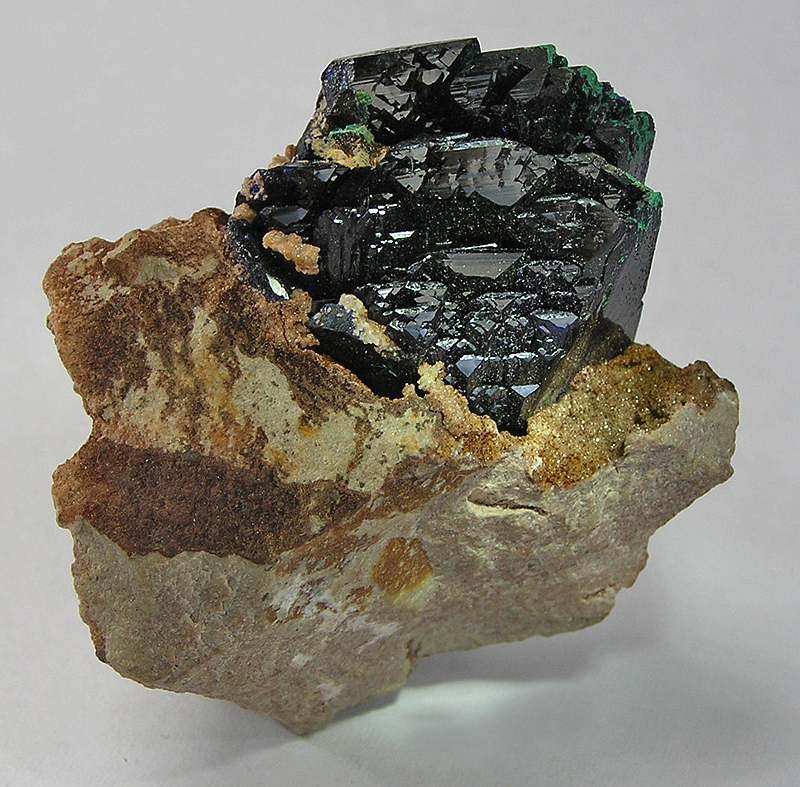
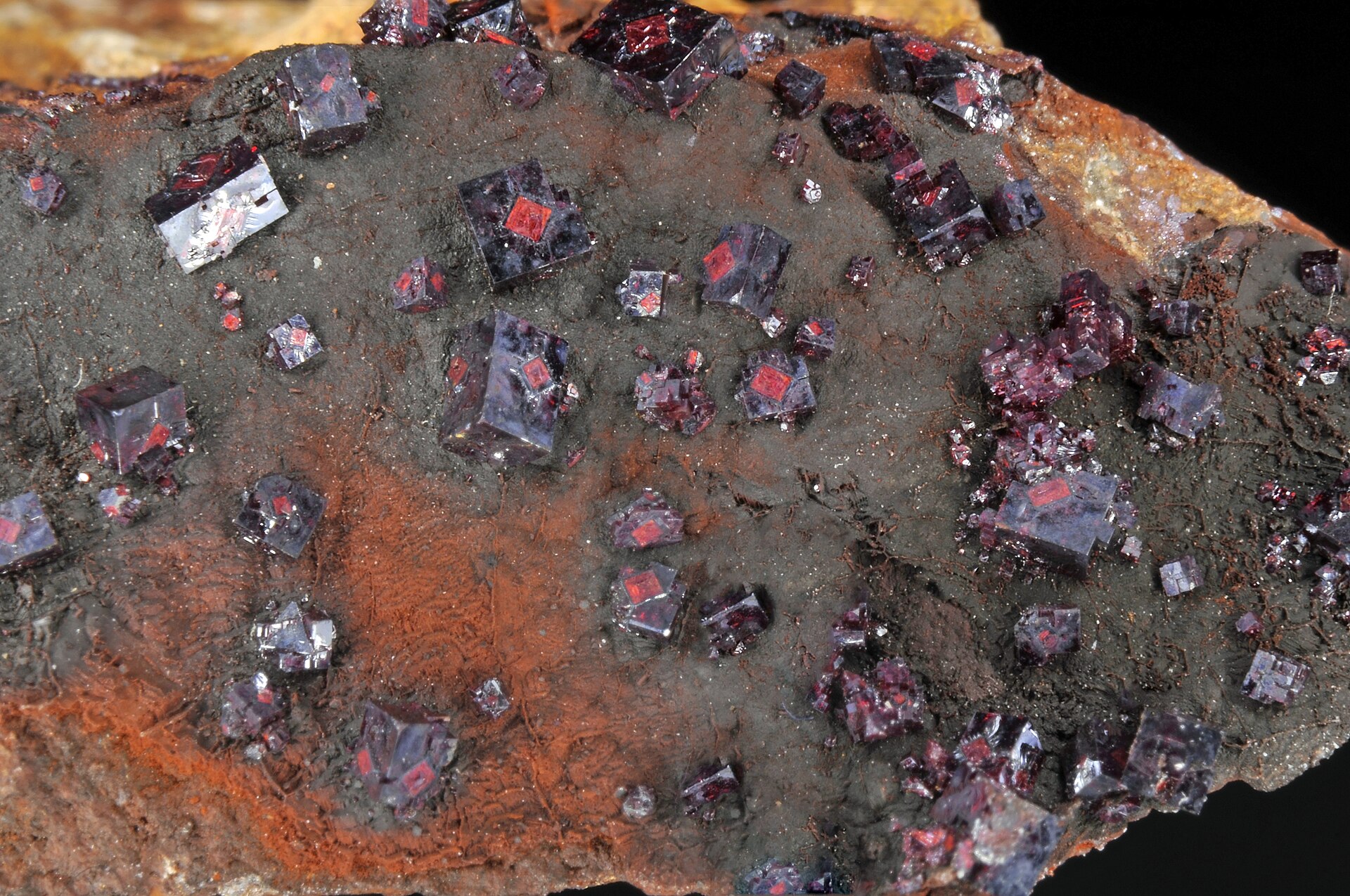
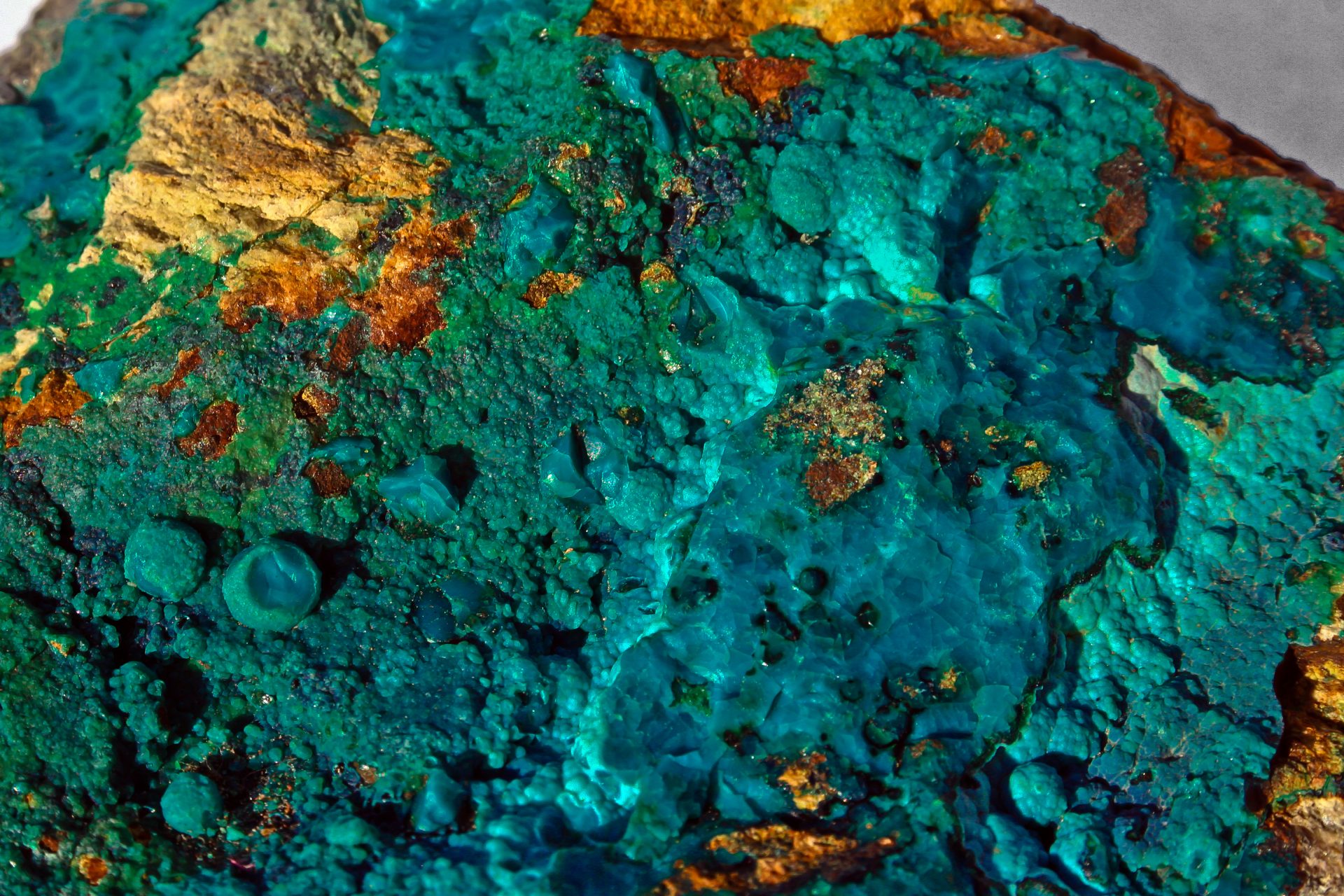
References & Further Reading
- Dana's New Mineralogy, 8th ed. Hydroxyl carbonates.
- Mindat.org — Malachite mineral data and locality records.
- Wikipedia — Malachite.
Last reviewed 2026-09-14 · How to cite this page.