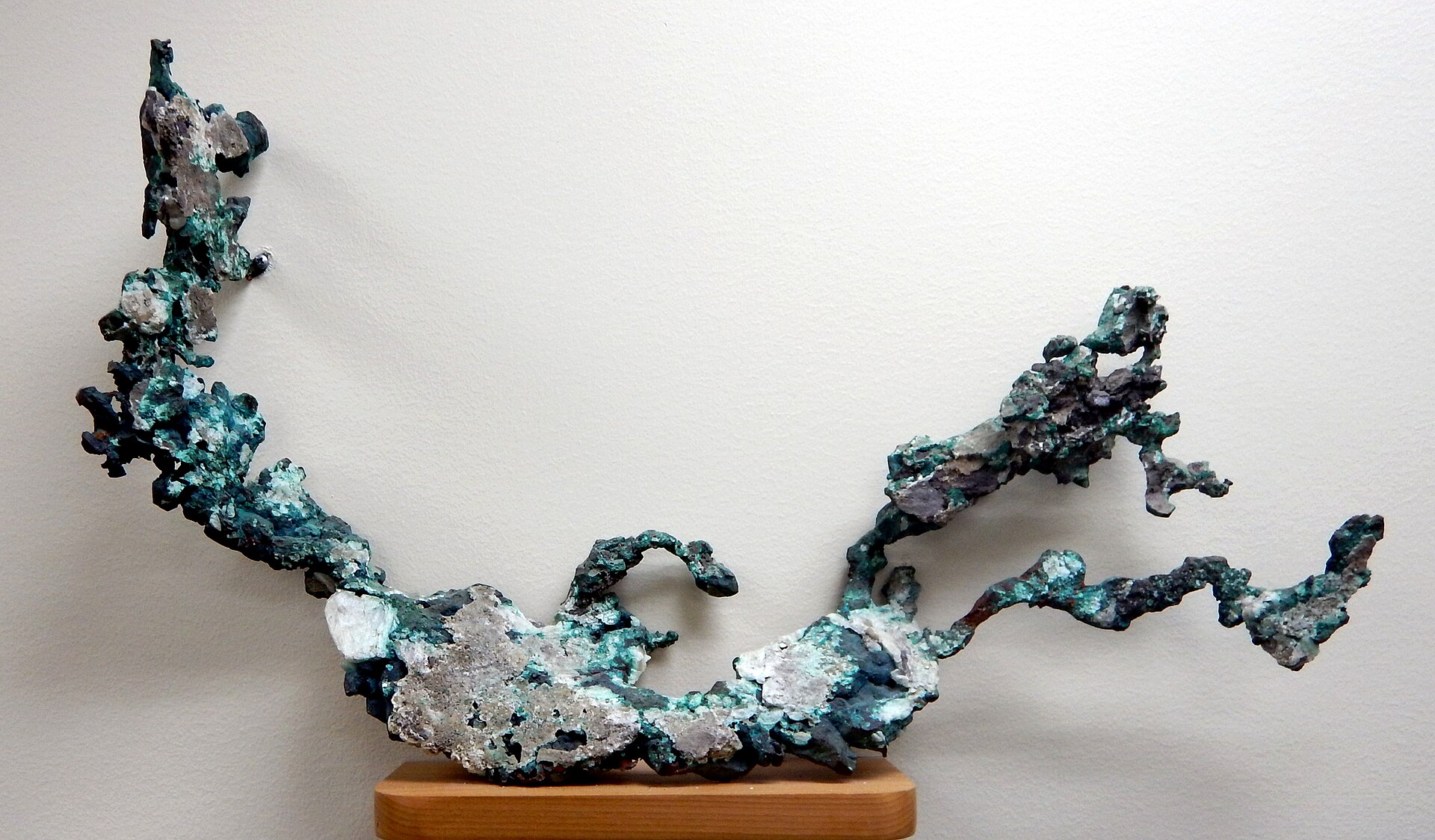
Dendritic native copper — branching metal grown between lava flows — Photo: Mike Beauregard from Canada · CC BY 2.0
What is Copper?
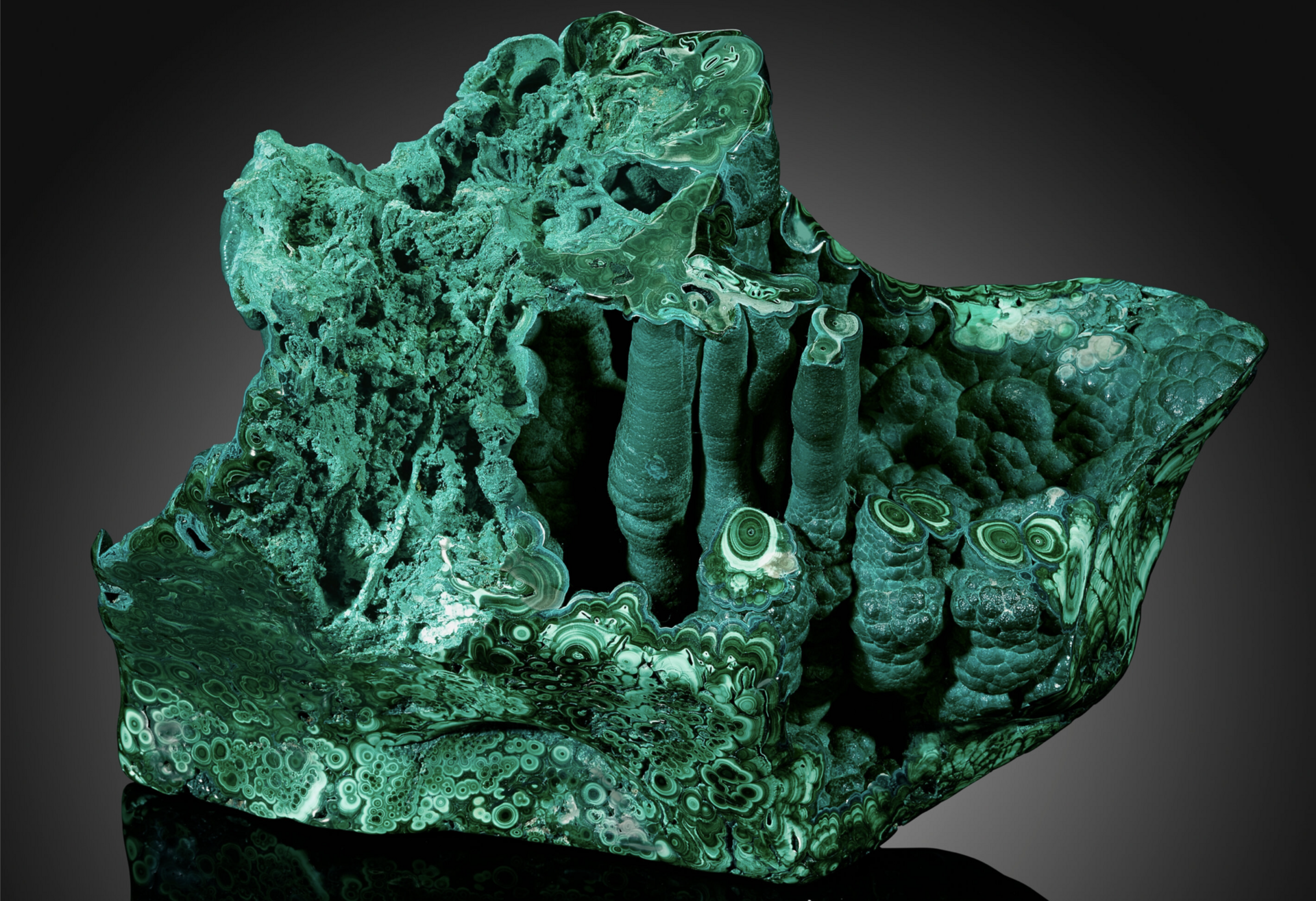
Copper is one of the few metals that occurs in nature as the metal itself — a native element, written Cu. A fresh surface is unmistakable: a warm salmon-red metallic shine that no other common mineral shares. Left out, that surface darkens to brown and eventually grows the famous green ‘patina’ of minerals like malachite — the same chemistry that turned the Statue of Liberty green.
People have worked native copper for at least ten thousand years, simply because it needs no smelting: pick it up, hammer it, and it holds a shape. That malleability made it the first metal of the ancient world, and its conductivity made it the metal of the electric age — after iron and aluminium, it is the most-used industrial metal on Earth.
Most copper ore is actually sulfide minerals like chalcopyrite; native copper is the showpiece form, best known from the lava fields of Michigan’s Keweenaw Peninsula, where glacier-torn masses of nearly pure copper weighed up to hundreds of tonnes.
Physical Properties
The full data table is in the panel alongside. Here’s what those numbers actually mean.
Color and tarnish. No other common mineral has this exact red-metal color. Tarnish goes brown, then green or blue — but the crust is made of secondary minerals, so scratch or bend the specimen and the red metal shows through.
Malleability. Like gold and silver, copper dents and flattens rather than shattering. Hammered or dropped, it tears into ragged hackly edges that look like torn metal — because it is.
Weight and hardness. At ~8.9 g/cm³ it is unmistakably a metal in the hand, and at hardness 2.5–3 a steel knife marks it easily — a combination sulfide lookalikes can’t match.
Conductivity. Copper conducts heat and electricity better than any metal except silver. Hold a specimen and it quickly steals the warmth from your fingers.
How & Where It Forms
Native copper forms where copper-rich fluids are chemically reduced to the metal. The classic setting is ancient lava flows: at Keweenaw, copper precipitated into the gas-bubble cavities and fractures of billion-year-old basalts as hot water moved through them.
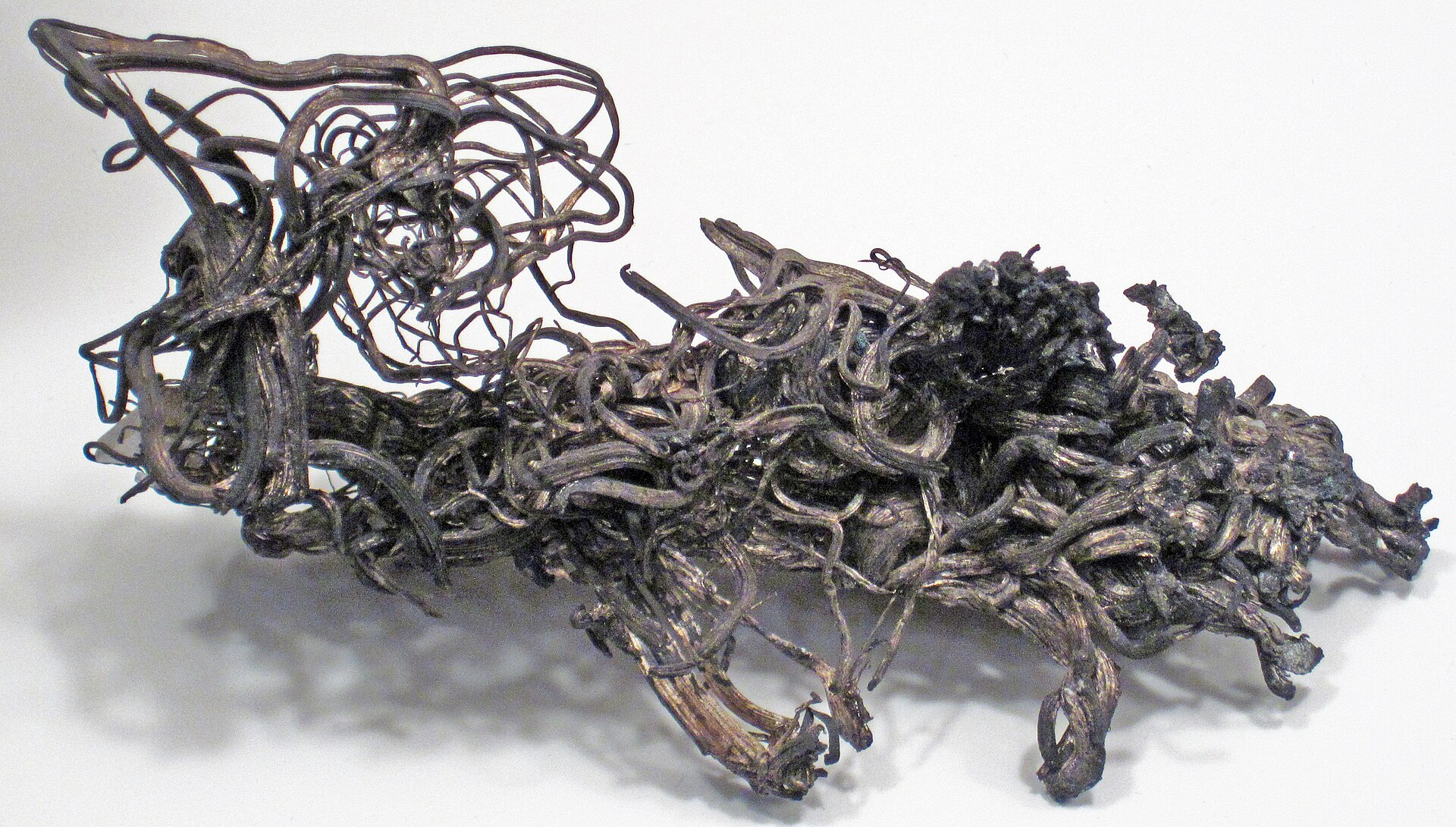
It also grows in the oxidized zone of ordinary copper deposits, where weathering reworks sulfide ore into a soup of copper compounds — some of which land back as pure metal. Water is essential either way: copper is always deposited from fluid, which is why it so often forms branching, dendritic ‘moss’ rather than clean crystals.
Often grows alongside:
What It’s Used For
How to Identify It
Look for the copper-red color on a fresh surface and a green crust on old ones. It is malleable — it bends, dents and flattens where brittle copper minerals like bornite or cuprite crumble — and its streak is metallic red, not black. Heavy, soft, and it conducts: that combination is copper.
| Looks like… | But differs because… | Quick test |
|---|---|---|
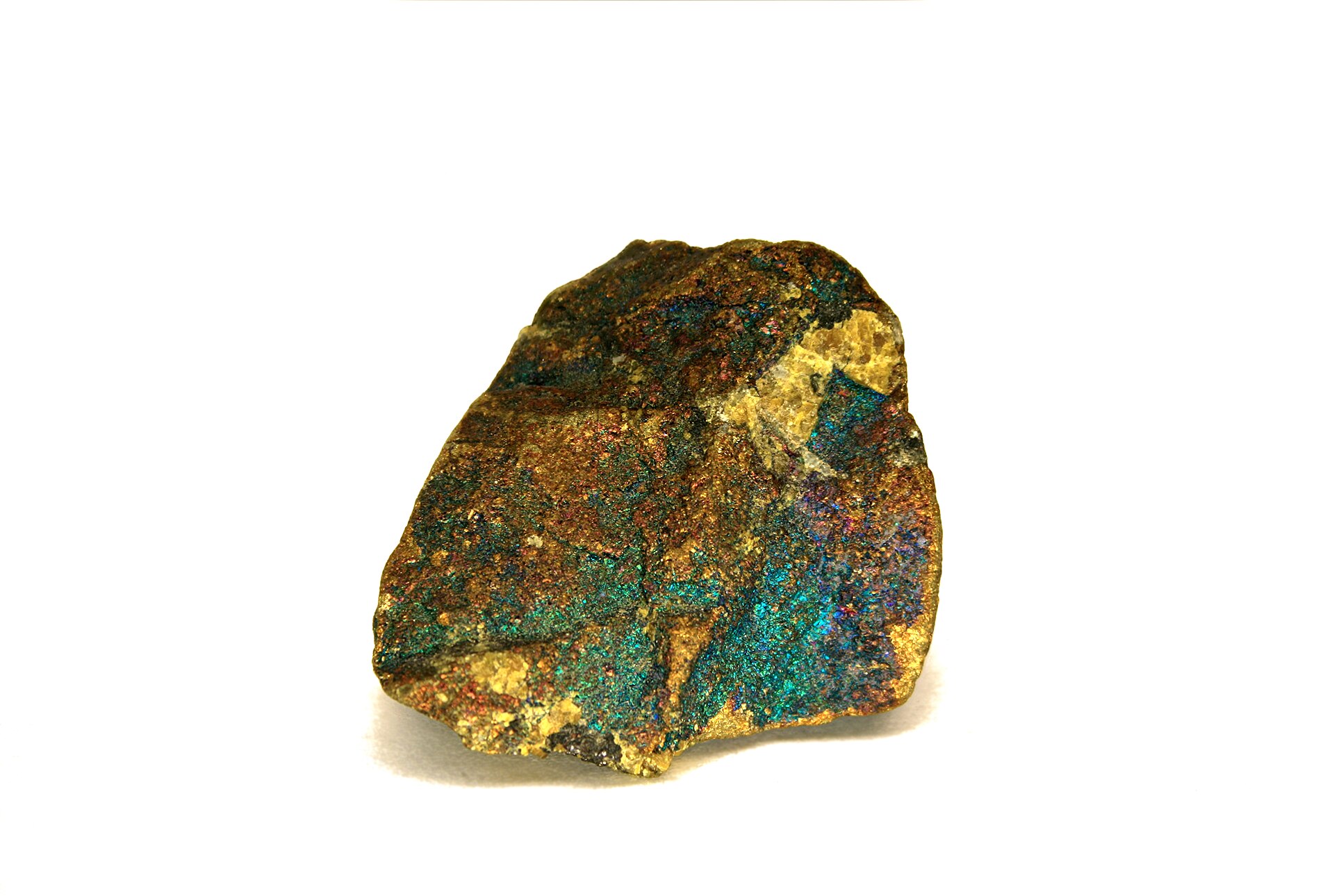
| Bornite | Bronze-to-purple ‘peacock ore’ — brittle (crumbles, never bends) with a gray-black streak | Streak + bend |
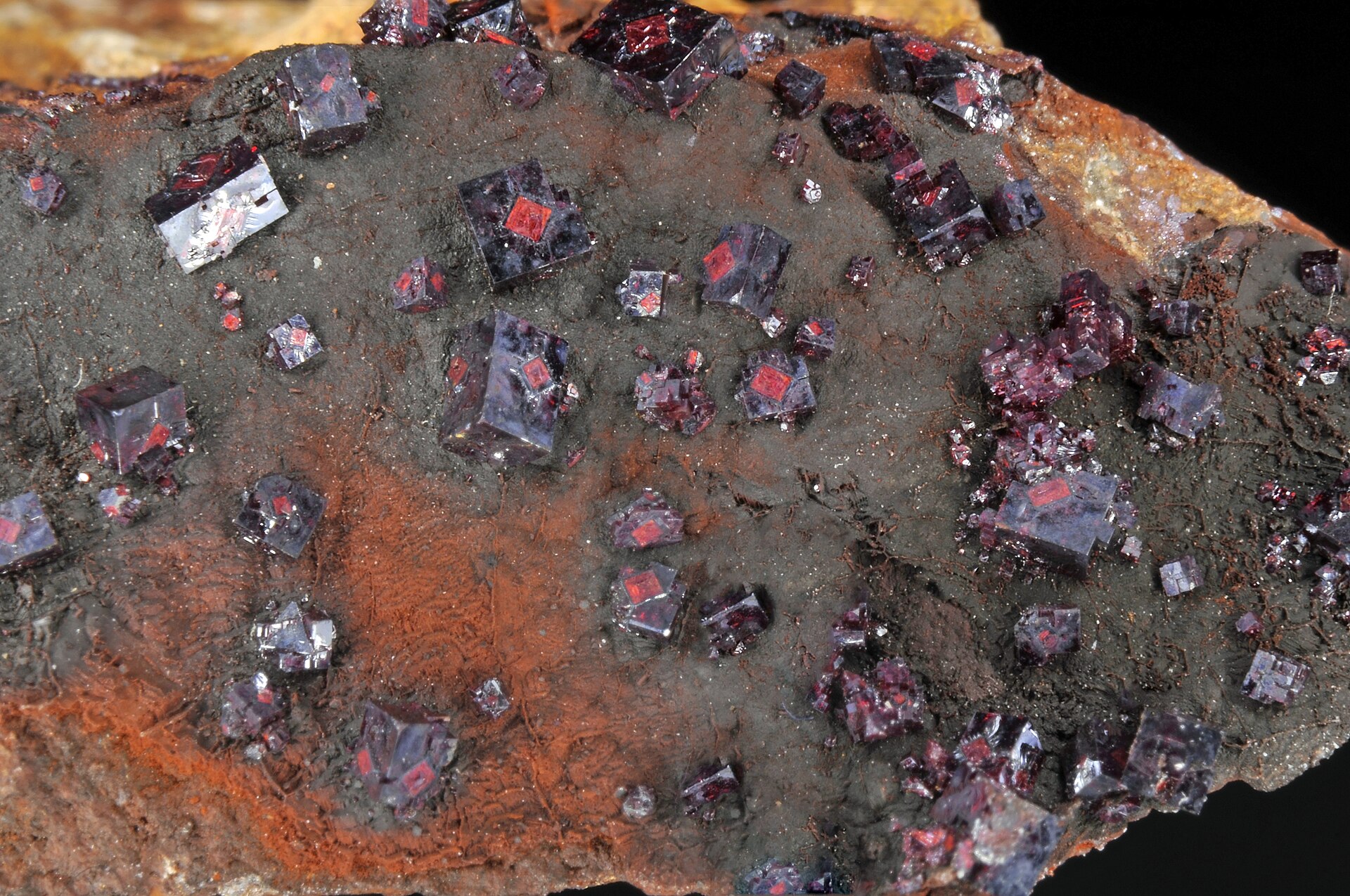
| Cuprite | Red but dull and brittle — an oxide, not a metal; no malleability, darker streak | Bend & luster |
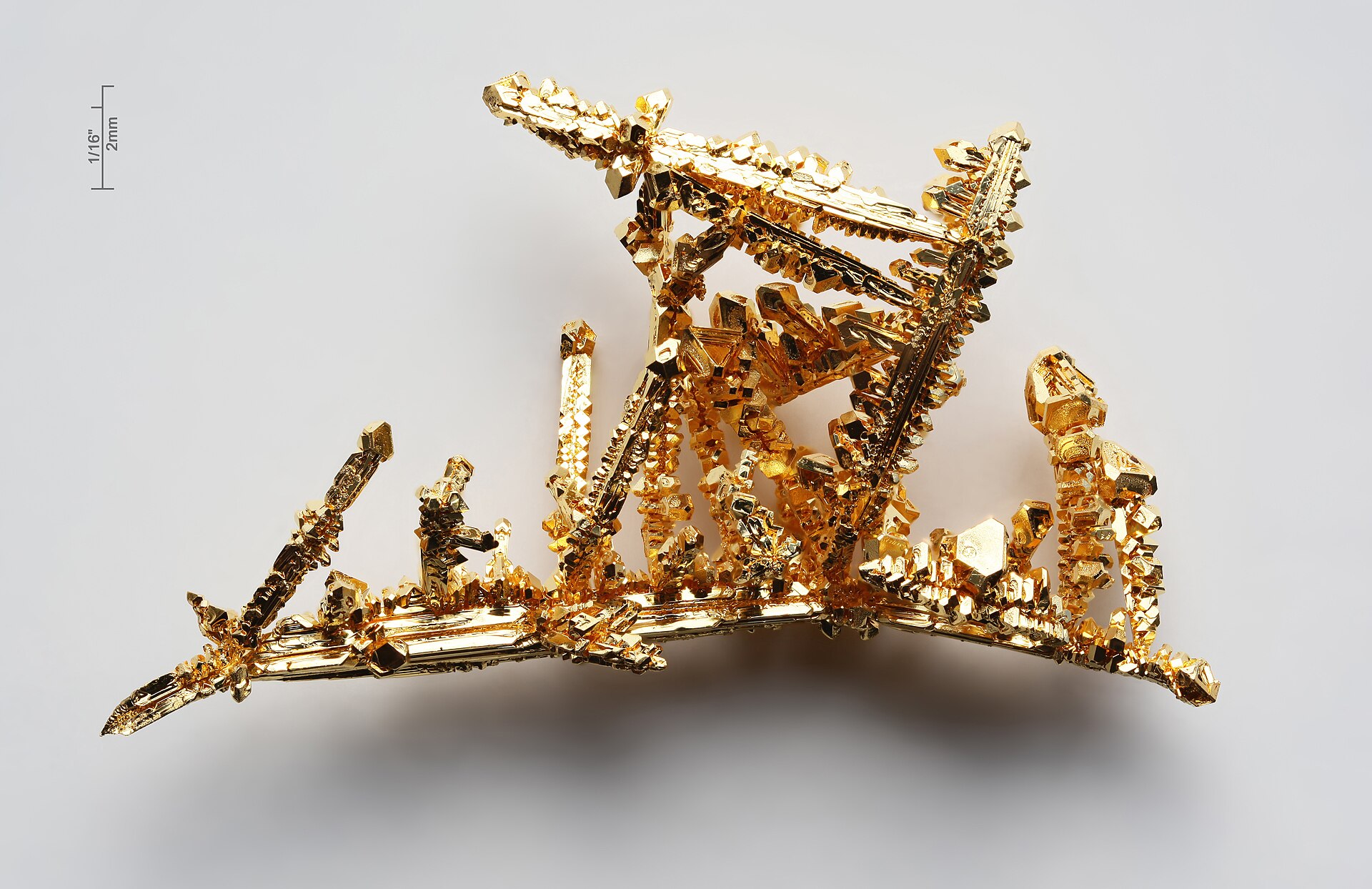
| Silver | Also a malleable native metal, but white and tarnishes black — copper is red and corrodes green | Color & tarnish |
Where It’s Found
Notable localities for fine specimens:
Gallery
Photographs from Wikimedia Commons contributors — click a credit on the main image for the source and license.
Related Minerals
Others in the same family and minerals it commonly grows alongside.
References & Further Reading
- Dana’s New Mineralogy, 8th ed. Native elements — copper group.
- Mindat.org — Copper mineral data and locality records.
- Wikipedia — Native copper.
Last reviewed 2026-09-14 · How to cite this page.