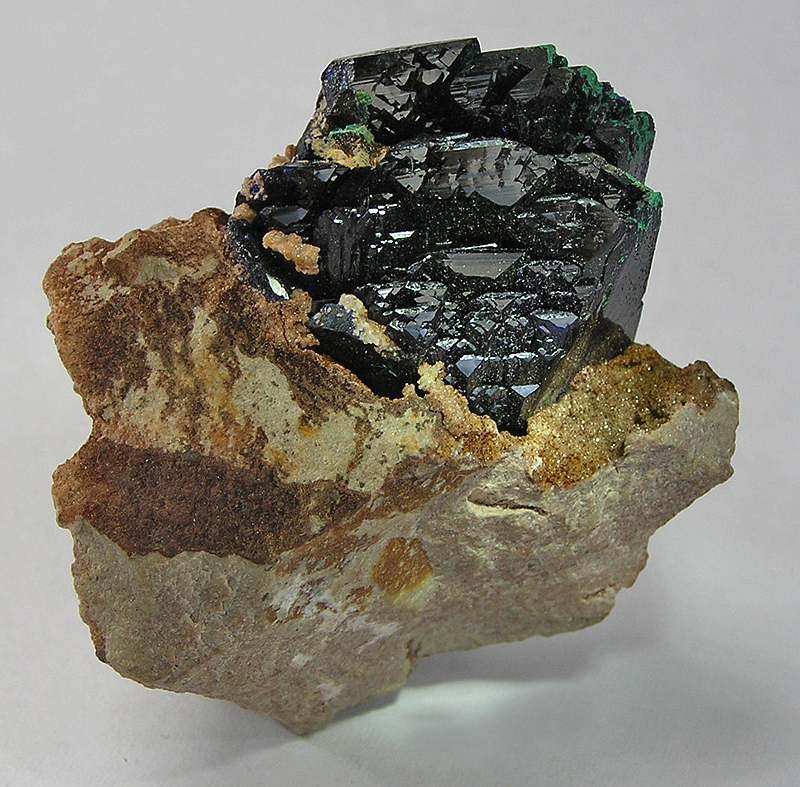
Azurite — deep azure-blue crystals, the classic partner of green malachite — Photo: Robert M. Lavinsky · CC BY-SA 3.0
What is Azurite?
Azurite is a copper carbonate hydroxide — Cu₃(CO₃)₂(OH)₂ — famous for the most saturated blue in the mineral kingdom. Medieval painters ground it into the pigment ‘blue bice’; prospectors have followed its color to copper for millennia.
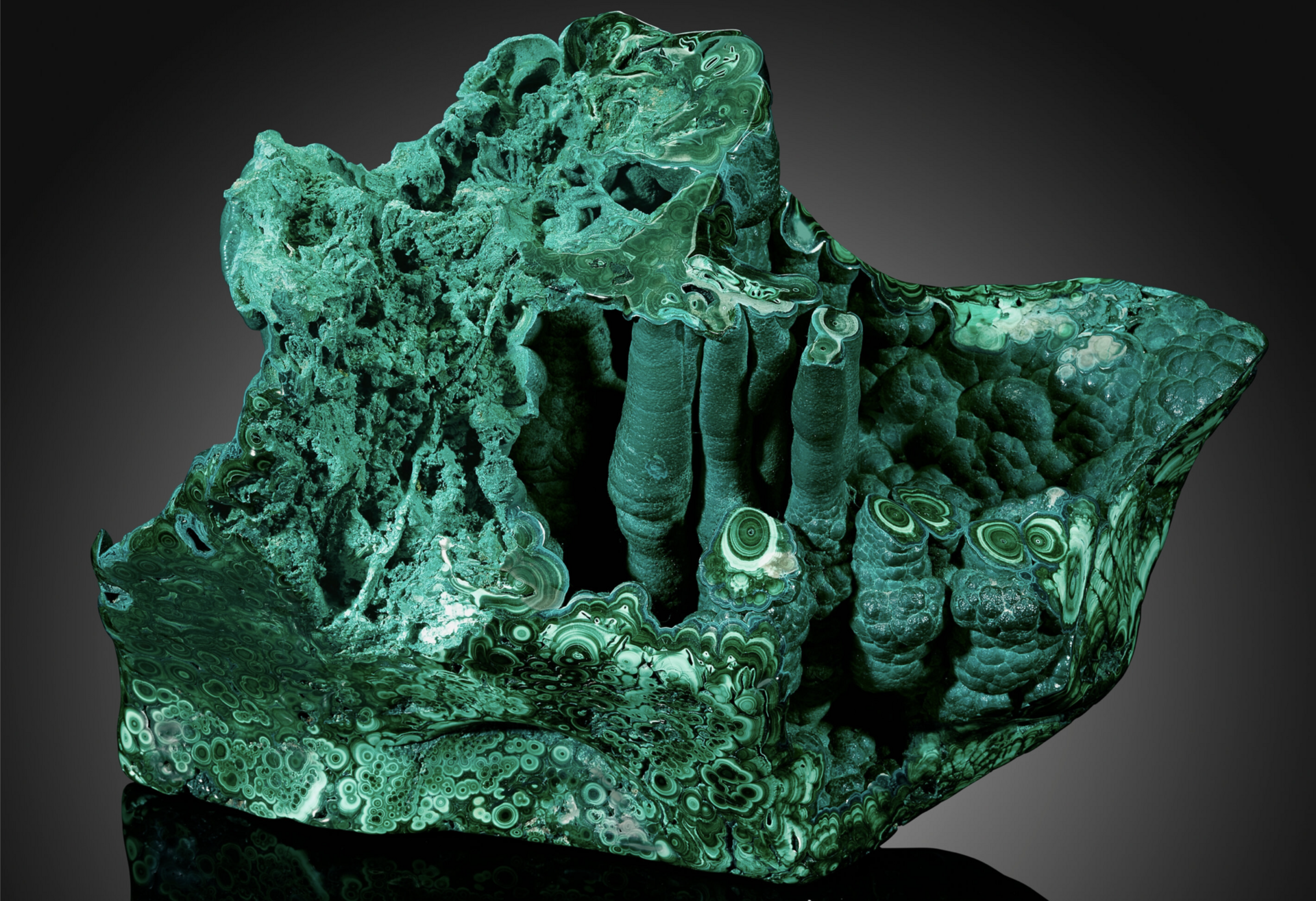
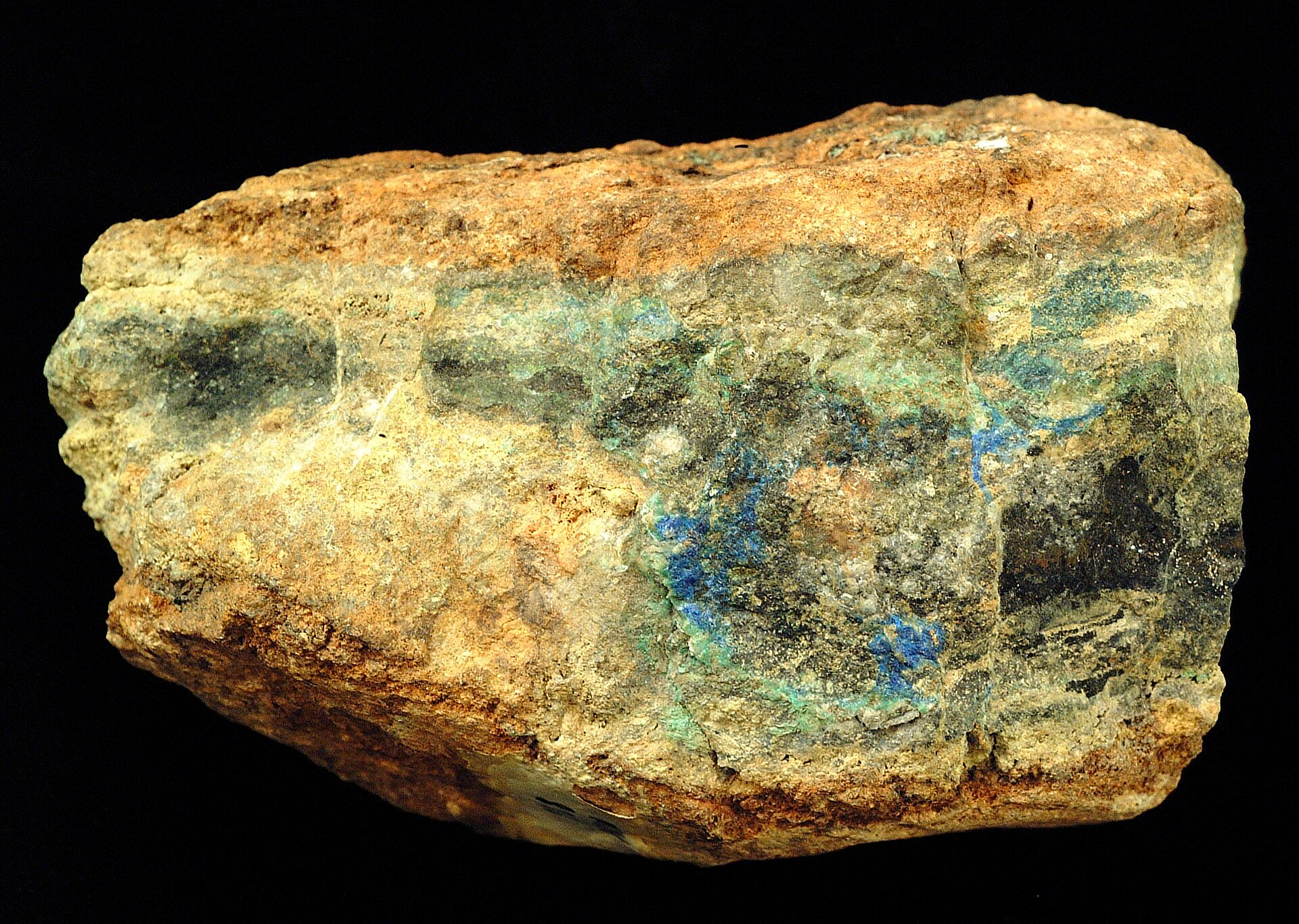
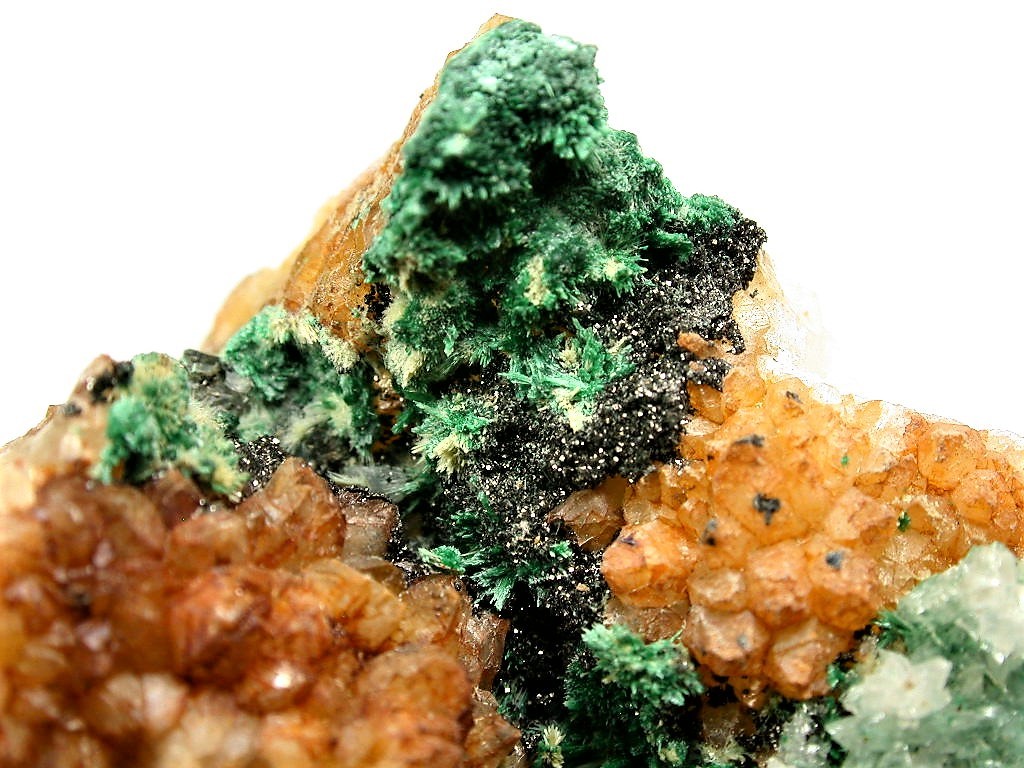
Like malachite, it is a secondary mineral that crystallizes where rainwater oxidizes copper sulfide ore. The two grow side by side so often that dealers sell the mixture as azur-malachite. Azurite is the less stable partner: over time it takes on water and turns green — malachite pseudomorphs after azurite crystals are textbook specimens.
That instability means sharp azurite crystals are survivors. The finest come from a handful of famous mines — Chessy in France (the old name ‘chessylite’), Tsumeb in Namibia, and in this century the Milpillas mine of Mexico.
Physical Properties
The full data table is in the panel alongside. Here’s what those numbers actually mean.
Color. Copper again does the coloring — the blue is intrinsic and intense, deepening toward black in thick crystals. Thin edges show the pure azure tone that gave the mineral its name.
Softness and cleavage. Mohs 3.5–4 with a perfect cleavage, so crystals are fragile and stones scratch easily. It is dense for its size (SG ~3.8) thanks to the copper.
The fizz and the fade. As a carbonate it effervesces in dilute acid — the quick field test. As a weathering product it slowly alters to malachite in damp air; museum specimens have gone green on their own.
Habit. Crystals are complex prisms and tablets, often in rosette-like sprays; massive and earthy material fills cracks as a powdery blue stain.
How & Where It Forms
Azurite precipitates in the oxidized zone of copper deposits where carbonate-bearing groundwater meets dissolved copper. It favors drier, more acidic micro-environments than malachite, then alters to malachite as conditions change — one reason the two are so often intergrown.
At Chessy it formed rich nodules in weathered shale; at Tsumeb it grew as lustrous crystals in deep oxidation cavities above a polymetallic orebody.
Often grows alongside:
What It’s Used For
How to Identify It
Deep azure-blue + fizzing in acid + green malachite alongside is diagnostic. If it doesn't fizz, suspect linarite or a blue silicate; if it is harder than glass, think lazurite or fluorite.
| Looks like… | But differs because… | Quick test |
|---|---|---|
| Linarite | A darker, inkier blue lead-copper sulfate; rarer and does not effervesce | Acid test |
| Lazurite | The blue of lapis lazuli — granular rock texture, harder (~5–5.5), no fizz | Acid & hardness |
| Shattuckite | Blue copper silicate with a fibrous, silky habit; no effervescence | Acid test |
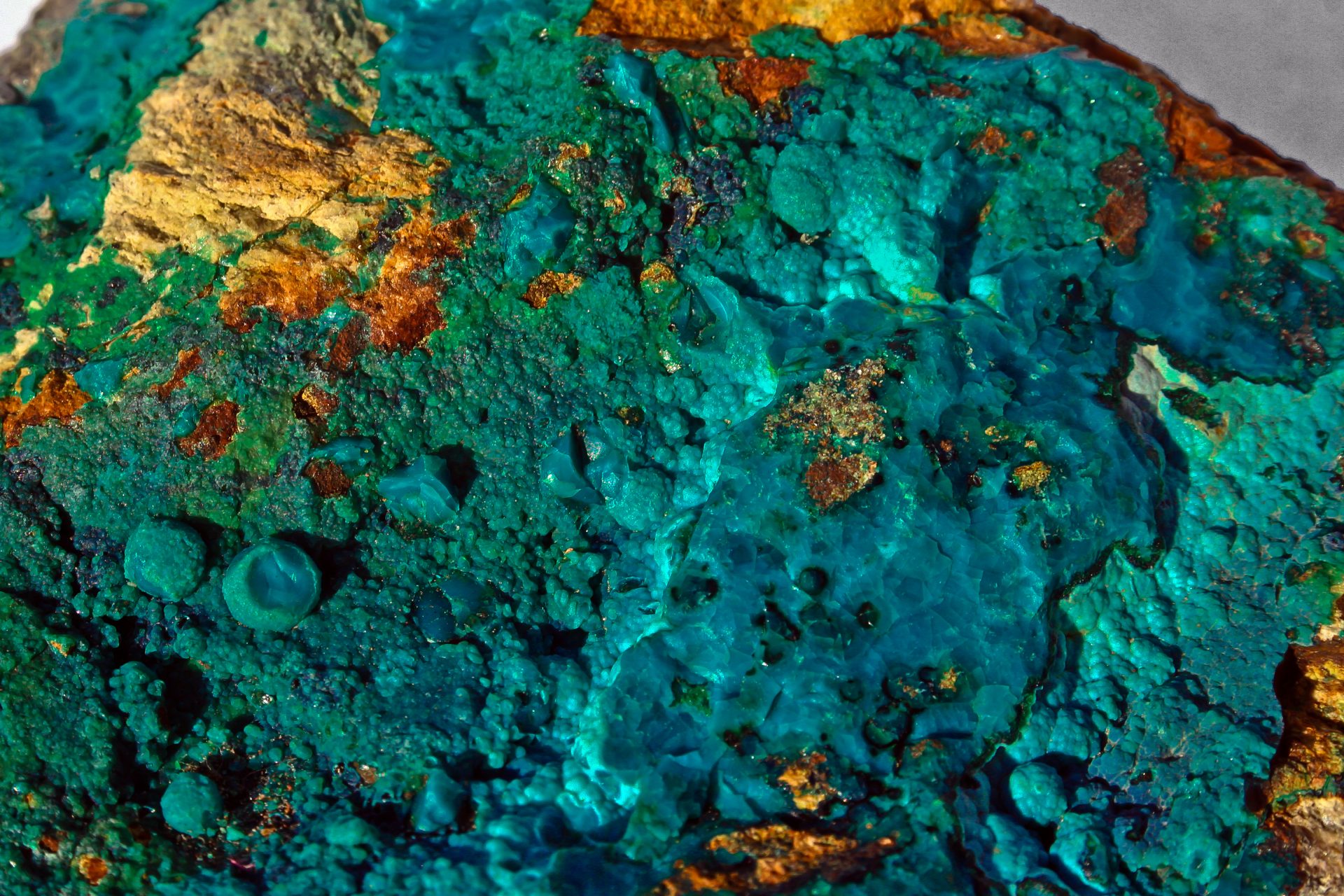
| Chrysocolla | Greener, earthy or botryoidal rather than crystalline; never fizzes | Acid test |
| Fluorite | Blue-purple with octahedral cleavage and no carbonate fizz | Cleavage & acid |
Where It’s Found
Notable localities for fine specimens:
Gallery
Photographs from Wikimedia Commons contributors — click a credit on the main image for the source and license.
Related Minerals
Others in the same family and minerals it commonly grows alongside.
References & Further Reading
- Dana's New Mineralogy, 8th ed. Hydroxyl carbonates.
- Mindat.org — Azurite mineral data and locality records.
- Wikipedia — Azurite.
Last reviewed 2026-09-14 · How to cite this page.