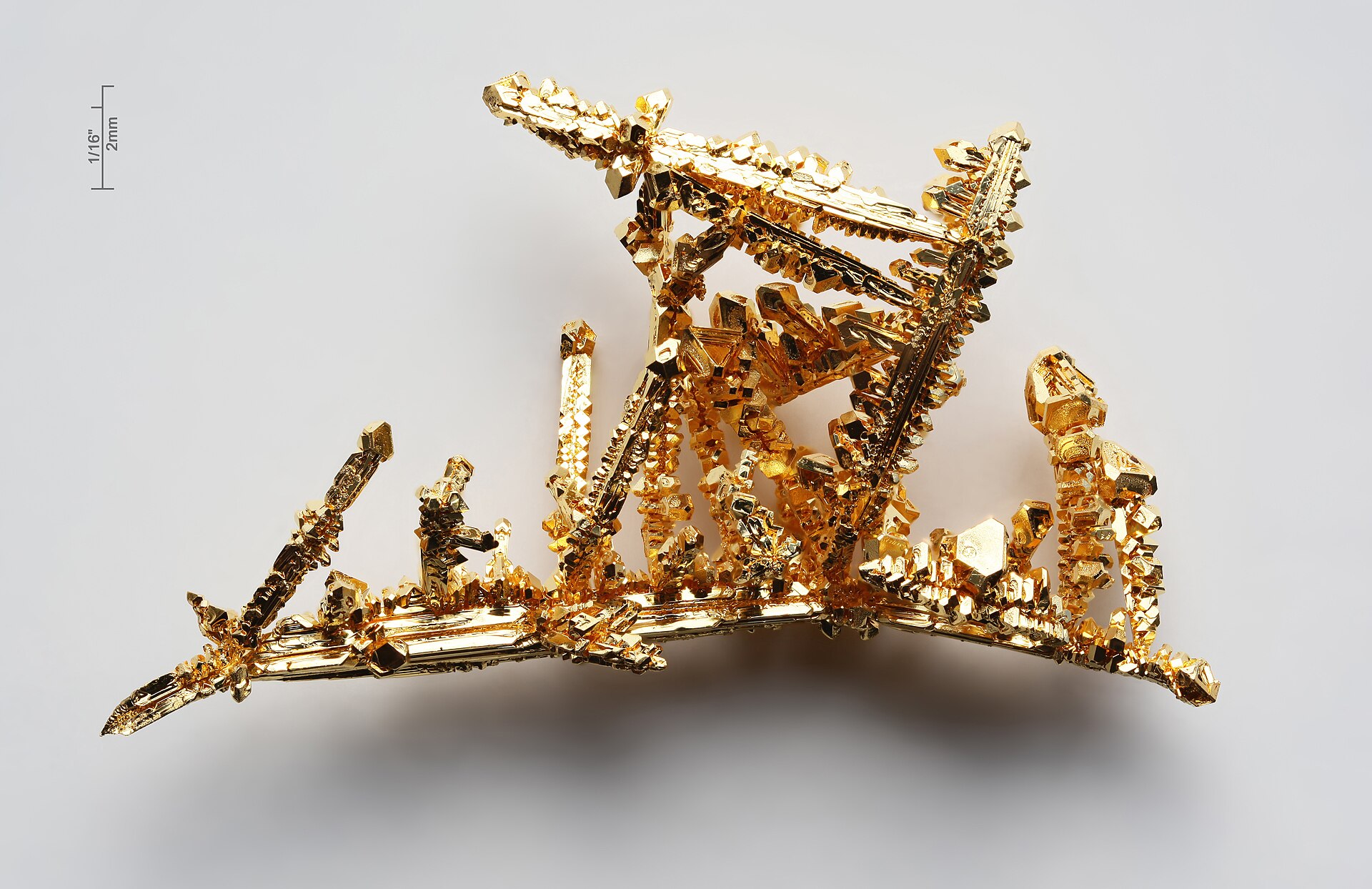
Native gold — a flattened, branching (dendritic) crystal cluster — Photo: Alchemist-hp (talk) www.pse-mendelejew.de · CC BY-SA 3.0 de
What is Gold?
Gold is a chemical element and a mineral at once — native gold is simply the metal gold, written Au, occurring in nature as a solid. It is the most malleable and ductile metal known: a single ounce can be beaten into a sheet covering a large room or drawn into miles of hair-fine wire.
In nature, gold turns up in two main disguises. Lode gold grows inside quartz veins laid down by hot water deep underground. Placer gold is what’s left when those veins erode — gold is so dense and so resistant to corrosion that it survives the trip downstream and settles out in riverbeds, which is why a simple pan still works.
Almost no natural gold is pure. Most carries a few percent silver (when silver dominates, the alloy is called electrum), which pales the color and lowers the weight. Gold crystals — octahedra, wires and branching ‘dendritic’ clusters — are real but rare; most gold is found as grains, flakes and the occasional famous nugget.
Physical Properties
The full data table is in the panel alongside. Here’s what those numbers actually mean.
Weight. Nothing else you’ll commonly pick up is this dense. Pure gold sits at 19.3 g/cm³ — nearly twice as heavy as lead — and even silver-rich natural gold (15–19) outweighs pyrite or chalcopyrite (~5 and ~4) three or four times over. ‘Heft it’ is a real field test.
Malleability. Hit gold and it dents and flattens; hit pyrite and it shatters. This single test has sorted real gold from fool’s gold for centuries. Gold is also sectile — a knife shaves a curl off it rather than chipping it.
Color and streak. Gold’s streak is the same golden yellow as the metal — sulfide lookalikes streak greenish-black. Gold also never tarnishes: a nugget pulled from a tomb or a river looks the same after thousands of years.
Hardness. At 2.5–3 on the Mohs scale, gold is about as soft as a fingernail can mark — pure gold jewelry scratches and bends precisely because the metal is so soft.
How & Where It Forms
Most gold starts life dissolved — at parts-per-trillion levels — in hot, salty water moving through cracks deep in the crust. When that fluid cools or reacts with the wall rock, gold falls out of solution and grows with quartz in hydrothermal veins.
Weathering then does the prospector’s work. As veins erode, chemically inert gold survives while lighter minerals wash away, concentrating in stream beds as placer deposits — the flakes and nuggets of every gold rush. The largest gold source ever worked, South Africa’s Witwatersrand, is a fossil version of exactly this: gold-bearing river gravels turned to rock billions of years ago.
Often grows alongside:
What It’s Used For
How to Identify It
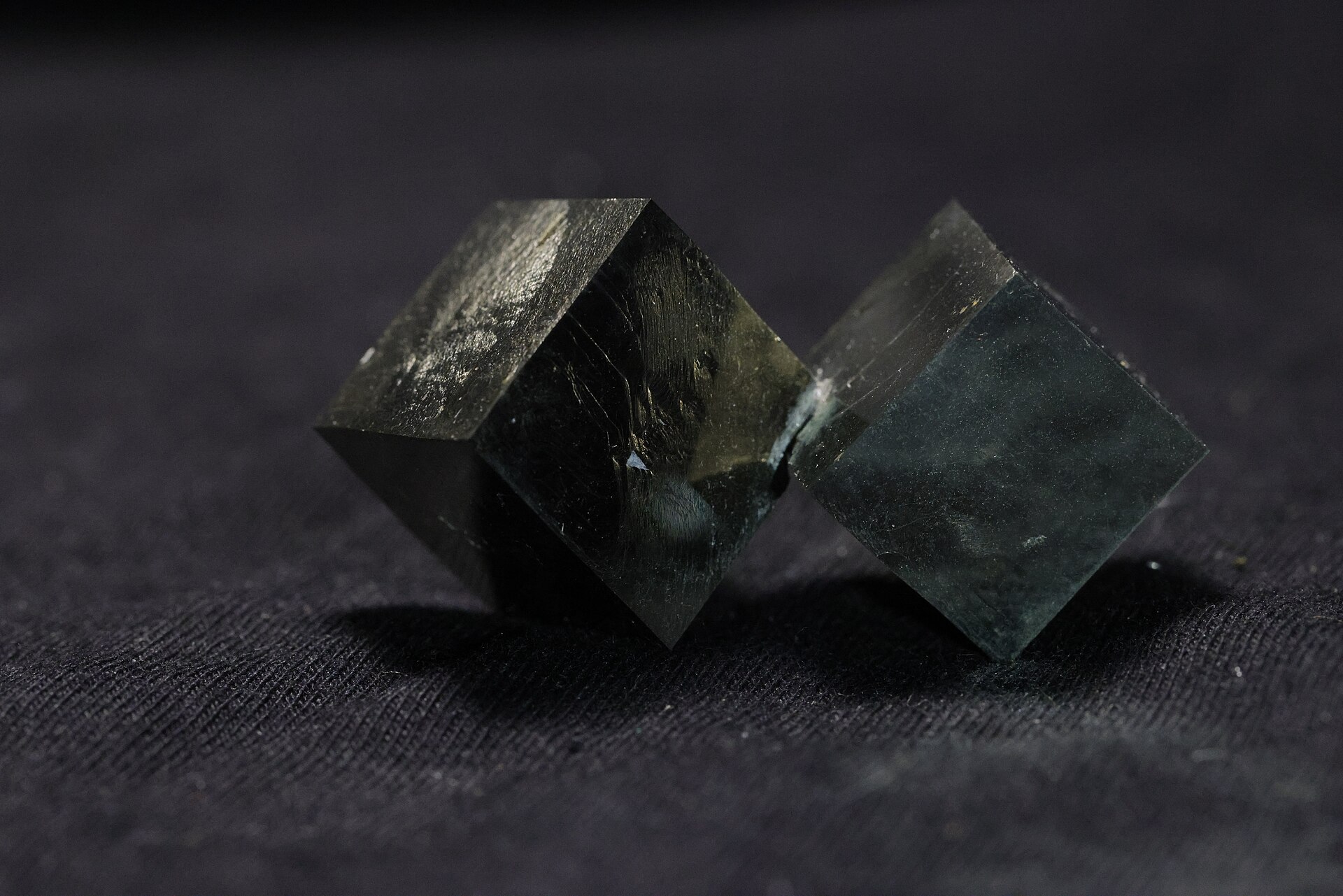
Real gold is heavy, soft, and malleable — it flattens under a coin instead of shattering — and its streak is golden yellow, never black or greenish. Pyrite is hard, brittle and streaks greenish-black; chalcopyrite is brassier, brittle and also streaks dark; mica flakes are paper-light and springy. If it dents, weighs a lot and shines yellow forever, it’s gold.
| Looks like… | But differs because… | Quick test |
|---|---|---|
| Pyrite | ‘Fool’s gold’ is harder (6–6.5), brittle (shatters rather than flattens), much lighter (SG ~5) and leaves a greenish-black streak | Streak + a tap |
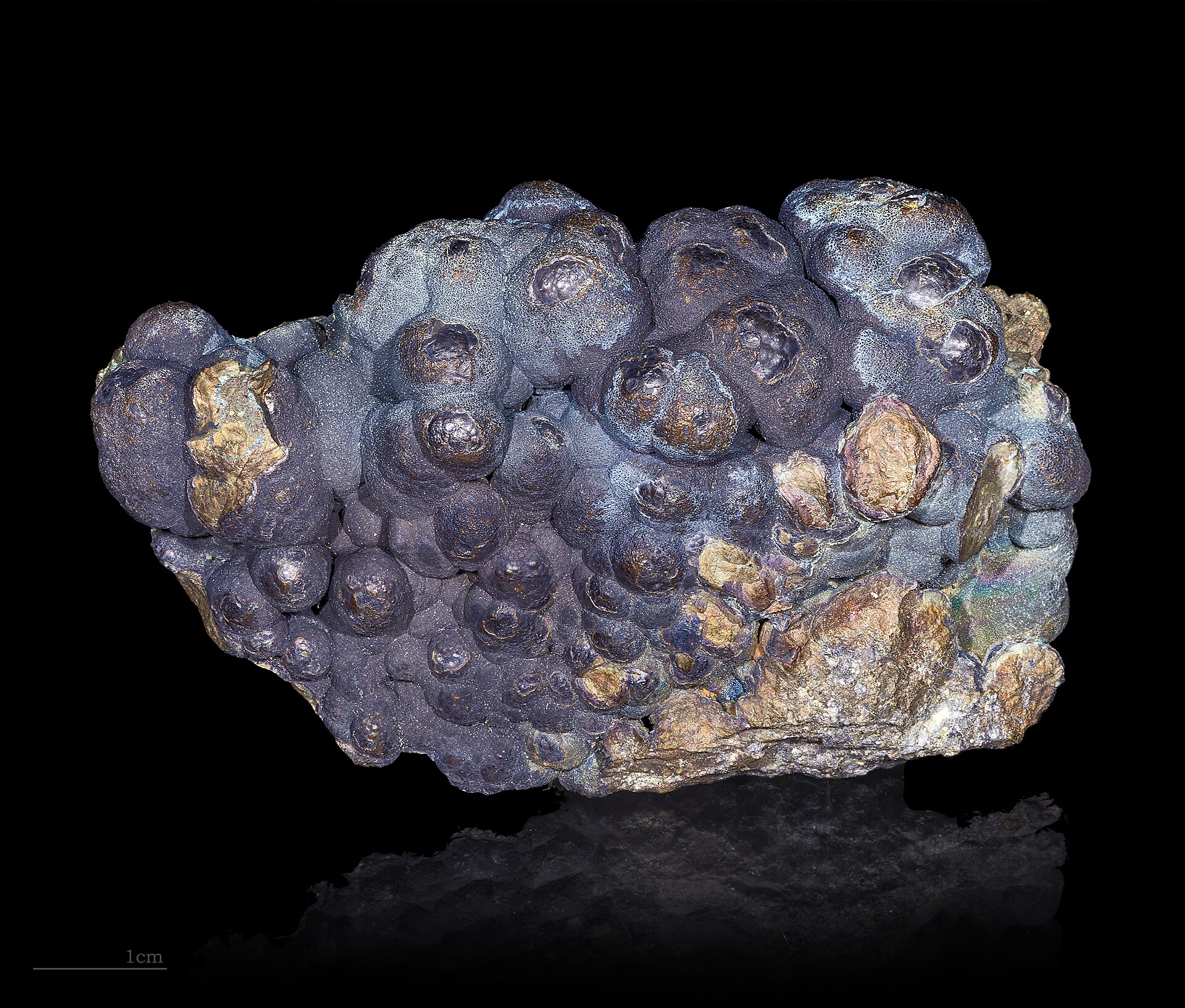
| Chalcopyrite | Brassier yellow, brittle, greenish-black streak, and often tarnishes iridescent; far lighter than gold | Streak test |
| Mica | Golden flakes in a stream pan are feather-light, flex and spring back, and never dent | Pinch and pan |
Where It’s Found
Notable localities for fine specimens:
Gallery
Photographs from Wikimedia Commons contributors — click a credit on the main image for the source and license.
Related Minerals
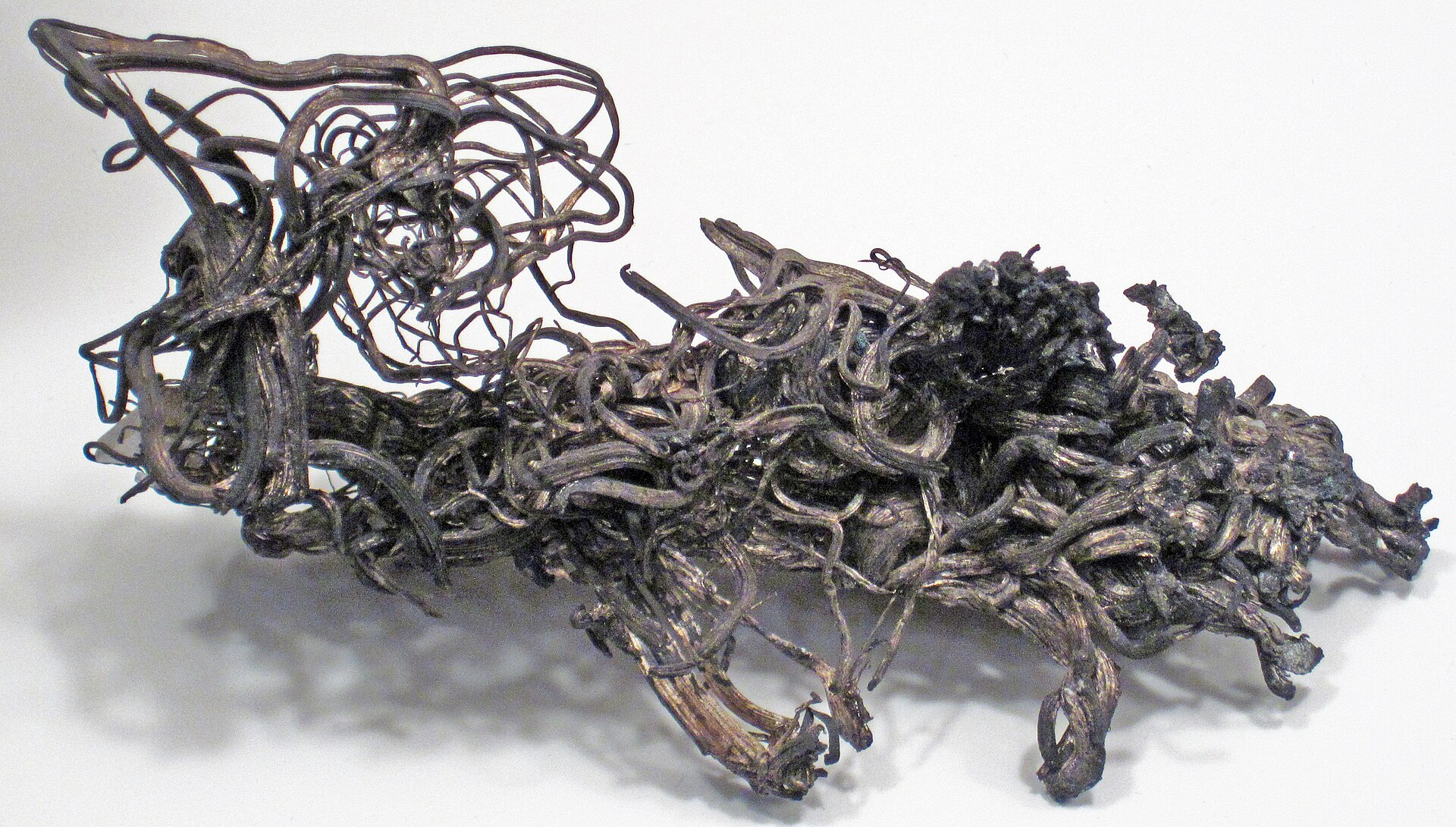
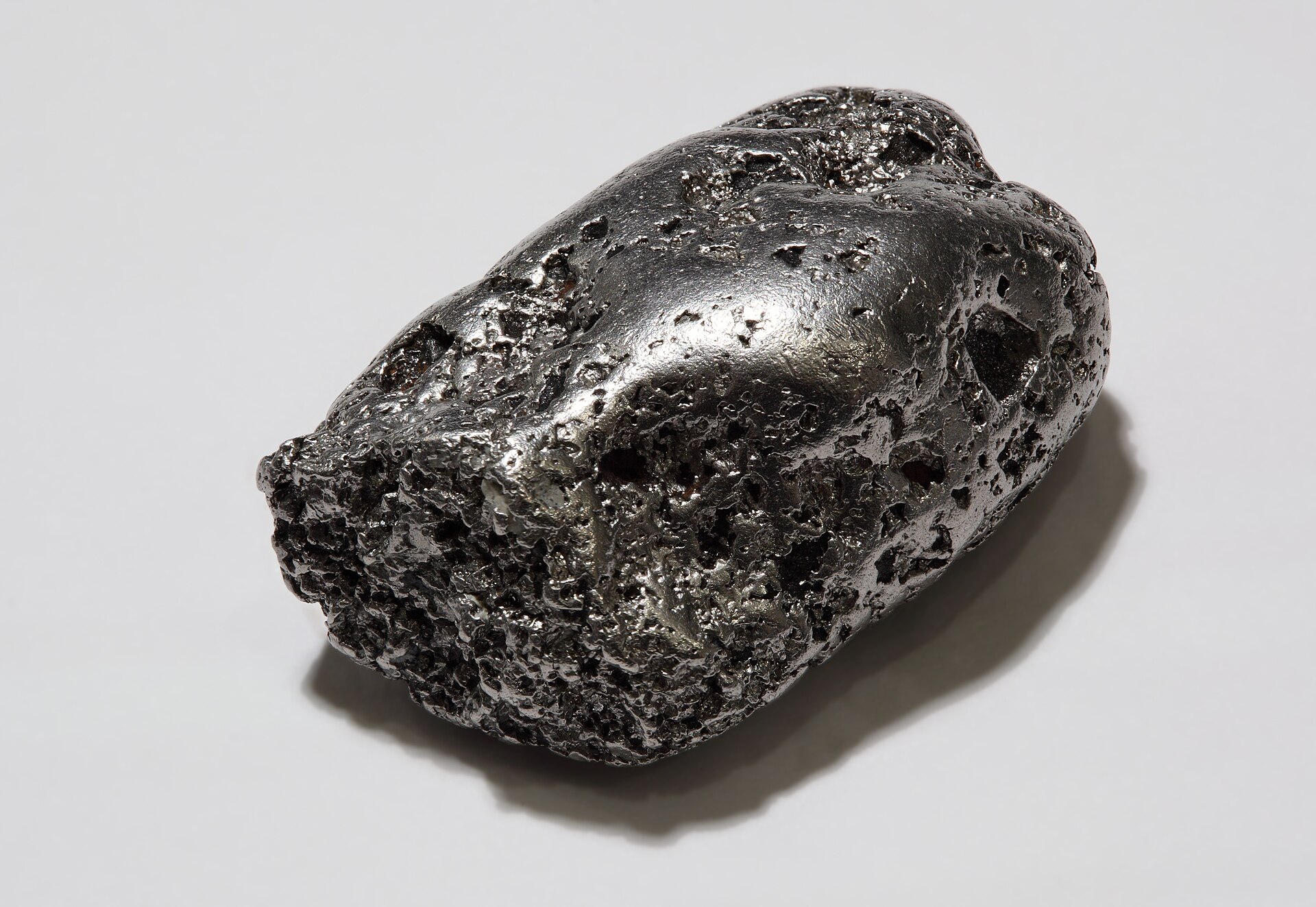
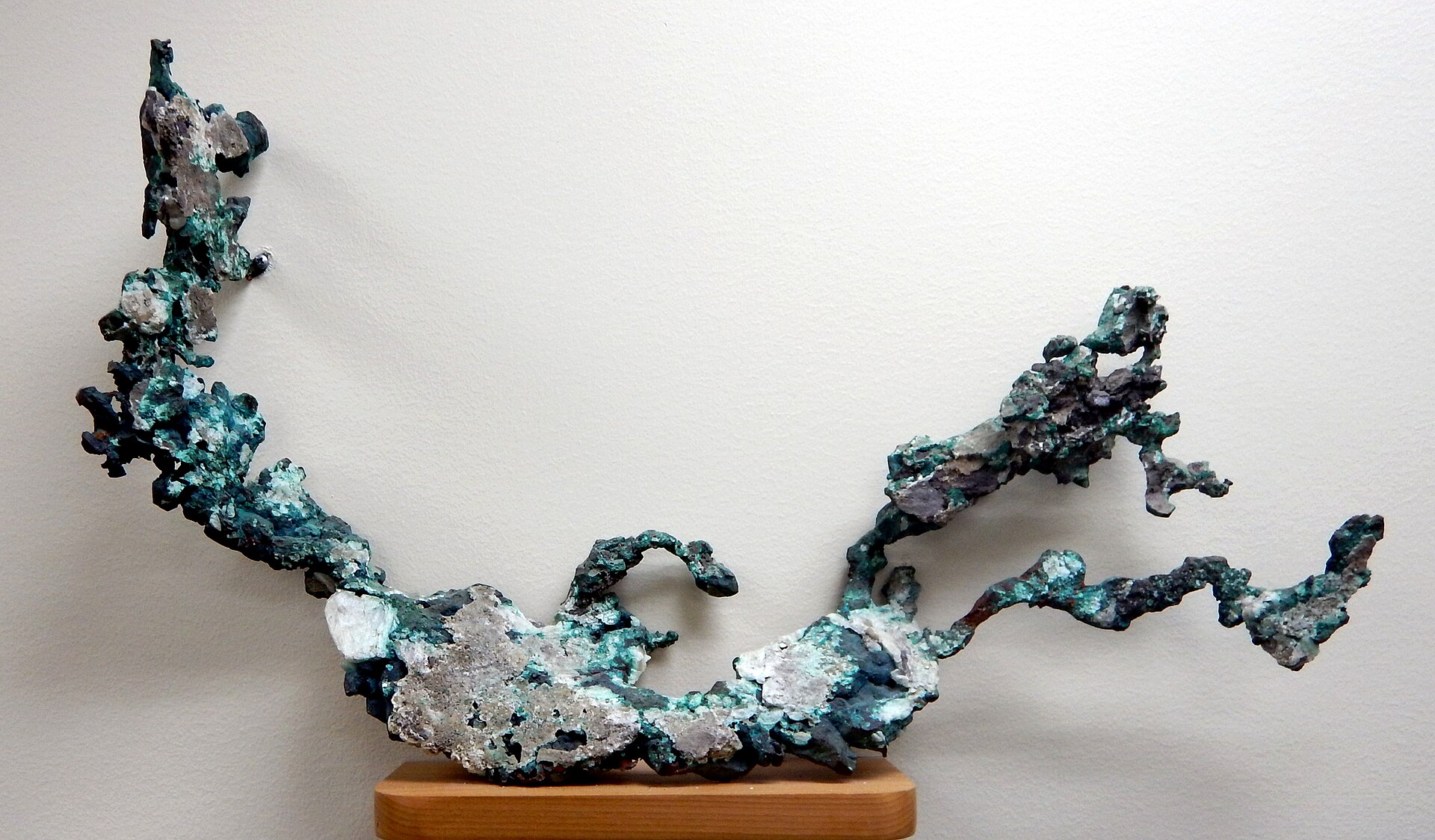
Others in the same family and minerals it commonly grows alongside.
References & Further Reading
- Dana’s New Mineralogy, 8th ed. Native elements — gold group.
- Mindat.org — Gold mineral data and locality records.
- Wikipedia — Gold.
Last reviewed 2026-09-14 · How to cite this page.