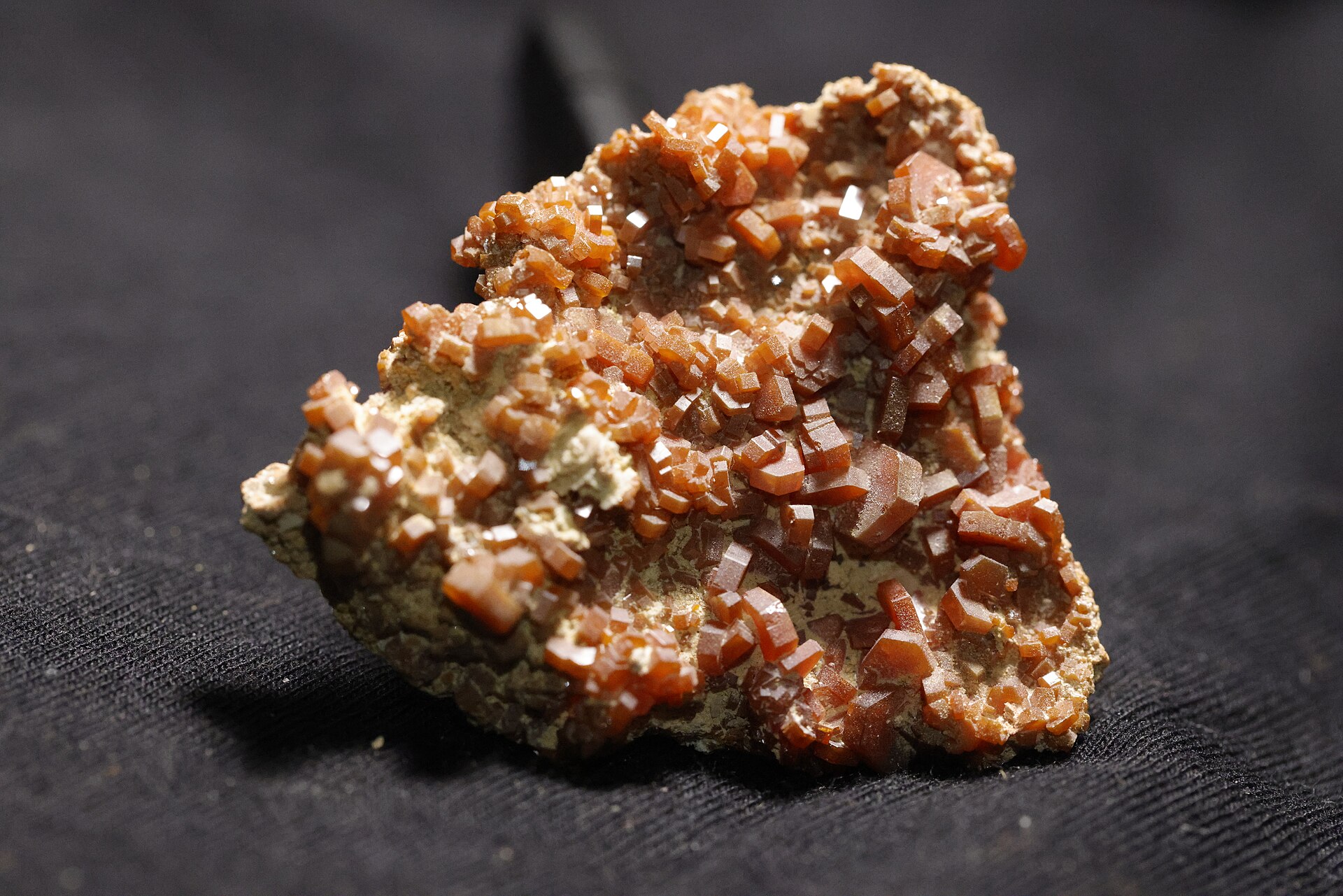
Vanadinite — red-orange hexagonal prisms, the lead-vanadium mineral that gave us vanadium — Photo: TheFurther21 · CC BY-SA 4.0
What is Vanadinite?
Vanadinite is lead chlorovanadate — Pb₅(VO₄)₃Cl — and it holds a small place in the history of chemistry: in 1801 Andrés Manuel del Río found a new element in Mexican vanadinite, called it erythronium ('red'), and was talked out of his own discovery. Thirty years later Nils Sefström re-isolated the metal and named it vanadium.
Structurally it belongs to the apatite family — the same atomic scaffolding as pyromorphite and mimetite, built around lead instead of calcium. The result is dense (it is mostly lead, SG ~6.6–7.2), soft (H 3), and spectacular: stubby six-sided prisms in reds and oranges that look almost manufactured.
It is a mineral of deserts. Vanadium is scarce, and vanadinite needs both lead ore to oxidize and V-bearing fluids to supply the second ingredient — conditions best met in the dry oxidized zones of Morocco, Mexico and the American Southwest.
Physical Properties
The full data table is in the panel alongside. Here’s what those numbers actually mean.
Color and habit. Bright red, orange-red, brick and occasionally yellow — the warm end of the spectrum with a resinous-to-adamantine sparkle. Crystals are textbook hexagonal prisms, often hollow or barrel-shaped.
Density. At SG ~6.9 it is one of the heaviest colorful minerals you can hold — pick one up and the lead announces itself.
Softness. Mohs 3, brittle, white streak. The crystals take wear poorly, which is why sharp undamaged Moroccan clusters command such prices.
Chemistry. Pb₅(VO₄)₃Cl — lead, vanadate groups, and a structural chloride ion, in the hexagonal apatite arrangement.
How & Where It Forms
Vanadinite is a secondary mineral of the oxidized zone over lead deposits. As primary sulfides like galena break down, vanadium leached from surrounding rocks combines with the freed lead in oxygen-rich, arid groundwater and crystallizes as vanadinite.
That recipe — lead ore plus desert — explains the map: the great specimen fields at Mibladen and Touissit in Morocco, Zimapán in Mexico, and Arizona's oxidized lead districts.
Often grows alongside:
What It’s Used For
How to Identify It
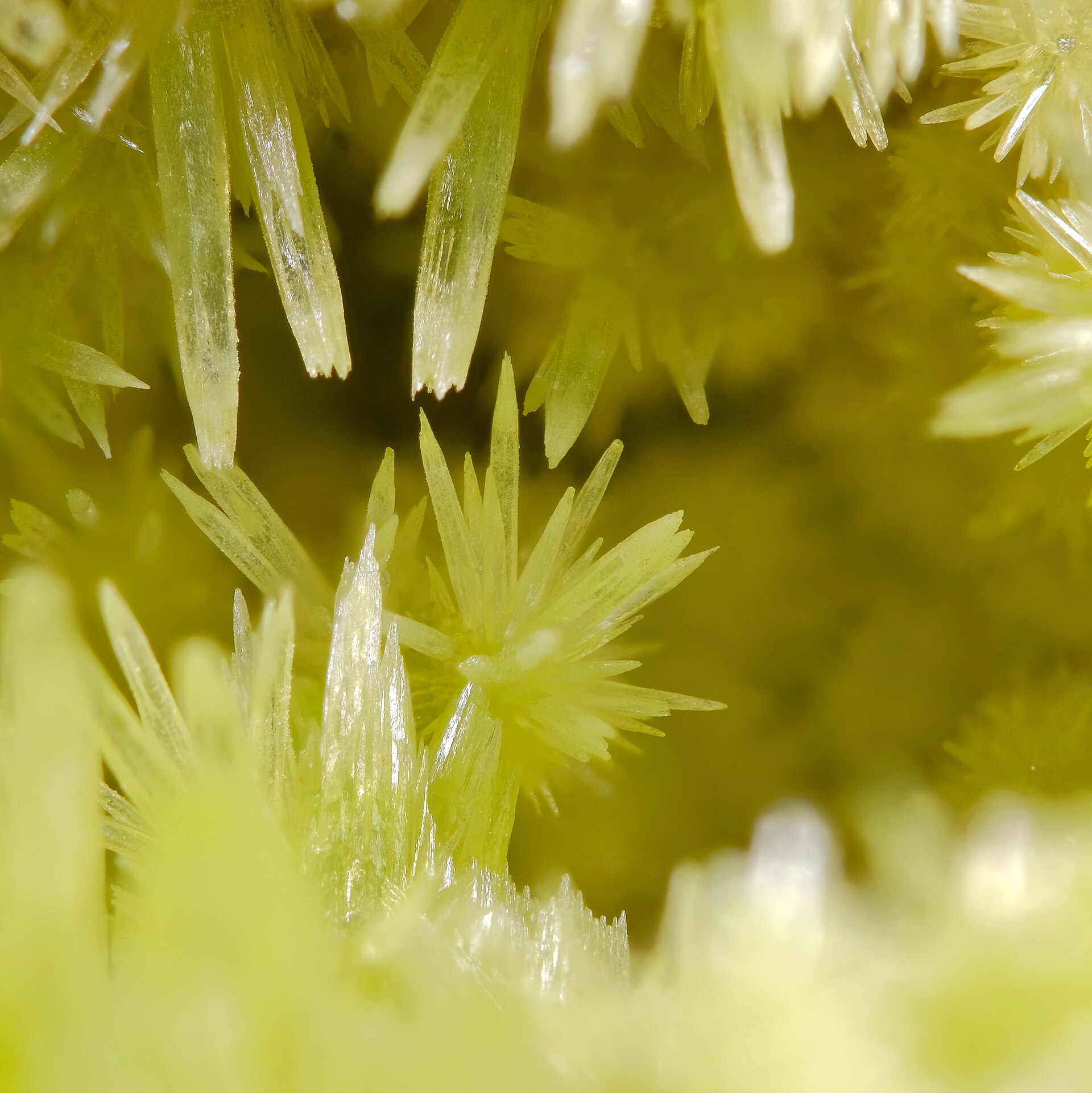
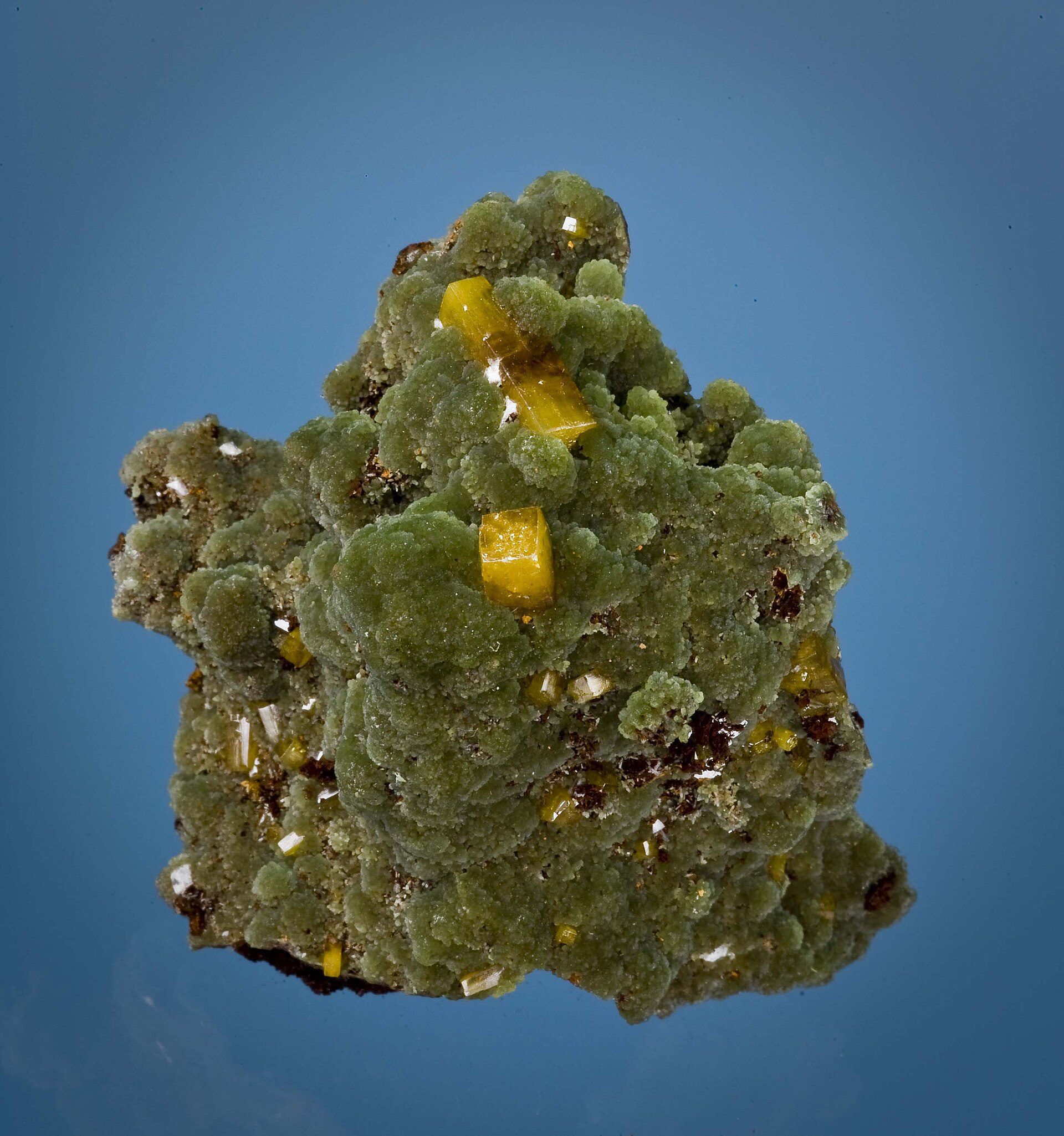
Red-orange hexagonal prisms + lead-weight heft in a dry lead-district specimen is essentially diagnostic. Pyromorphite is greener, crocoite forms needles not prisms, and wulfenite forms thin square plates rather than six-sided barrels.
| Looks like… | But differs because… | Quick test |
|---|---|---|
| Pyromorphite | Same apatite family and habit, but green to yellow-green; a phosphate, not a vanadate | Color & association |
| Mimetite | Also hexagonal lead chloride, but typically yellow 'campylite' barrels; an arsenate | Color |
| Crocoite | Brighter orange-red but slender striated monoclinic needles, never stubby hexagonal prisms | Crystal form |
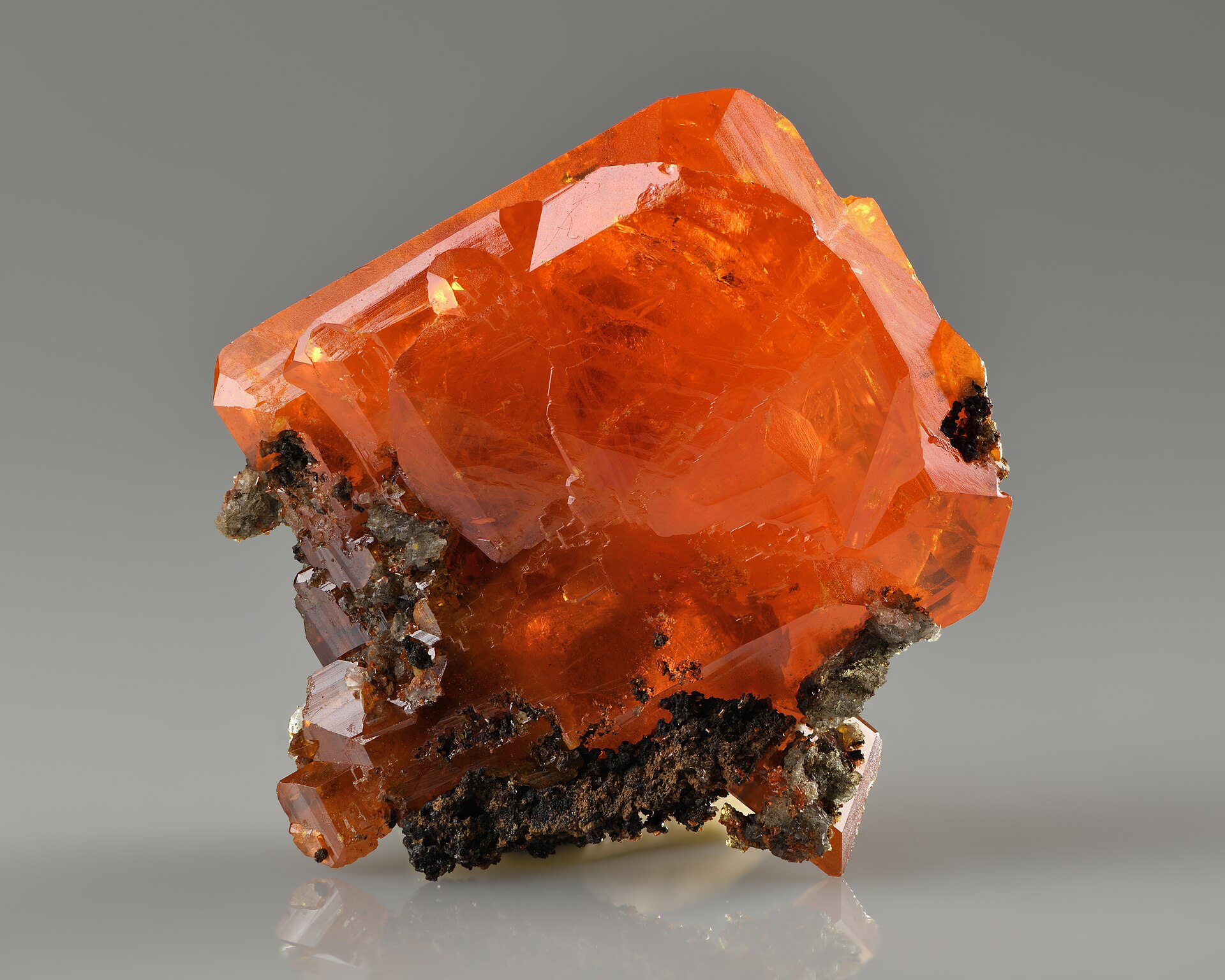
| Wulfenite | Orange too, but thin square plates rather than six-sided prisms | Crystal form |
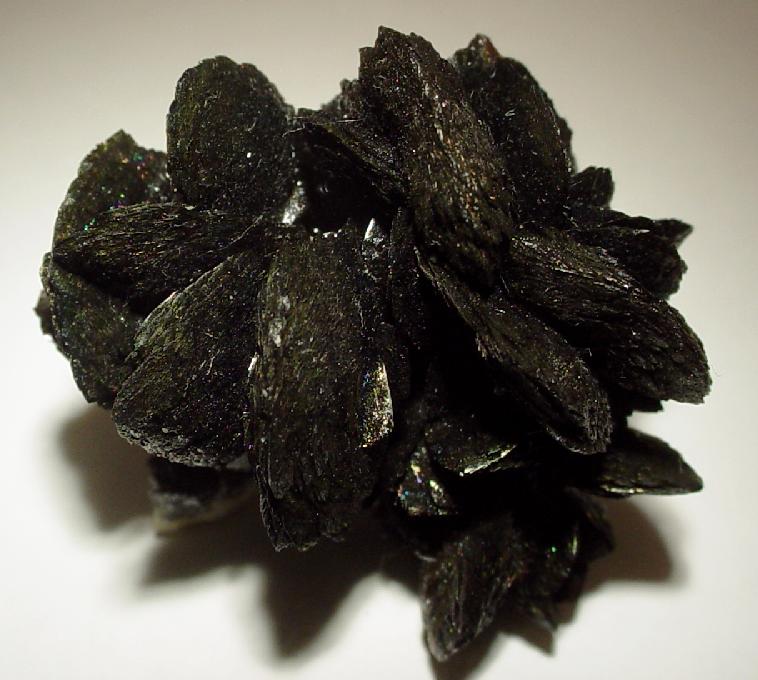
| Descloizite | Crusts and drusy surfaces in browns and blacks, not free-standing hexagonal prisms | Habit |
Where It’s Found
Notable localities for fine specimens:
Gallery
Photographs from Wikimedia Commons contributors — click a credit on the main image for the source and license.
Related Minerals
Others in the same family and minerals it commonly grows alongside.
References & Further Reading
- Dana's New Mineralogy, 8th ed. Apatite group, vanadates.
- Mindat.org — Vanadinite mineral data and locality records.
- Wikipedia — Vanadinite.
Last reviewed 2026-09-14 · How to cite this page.