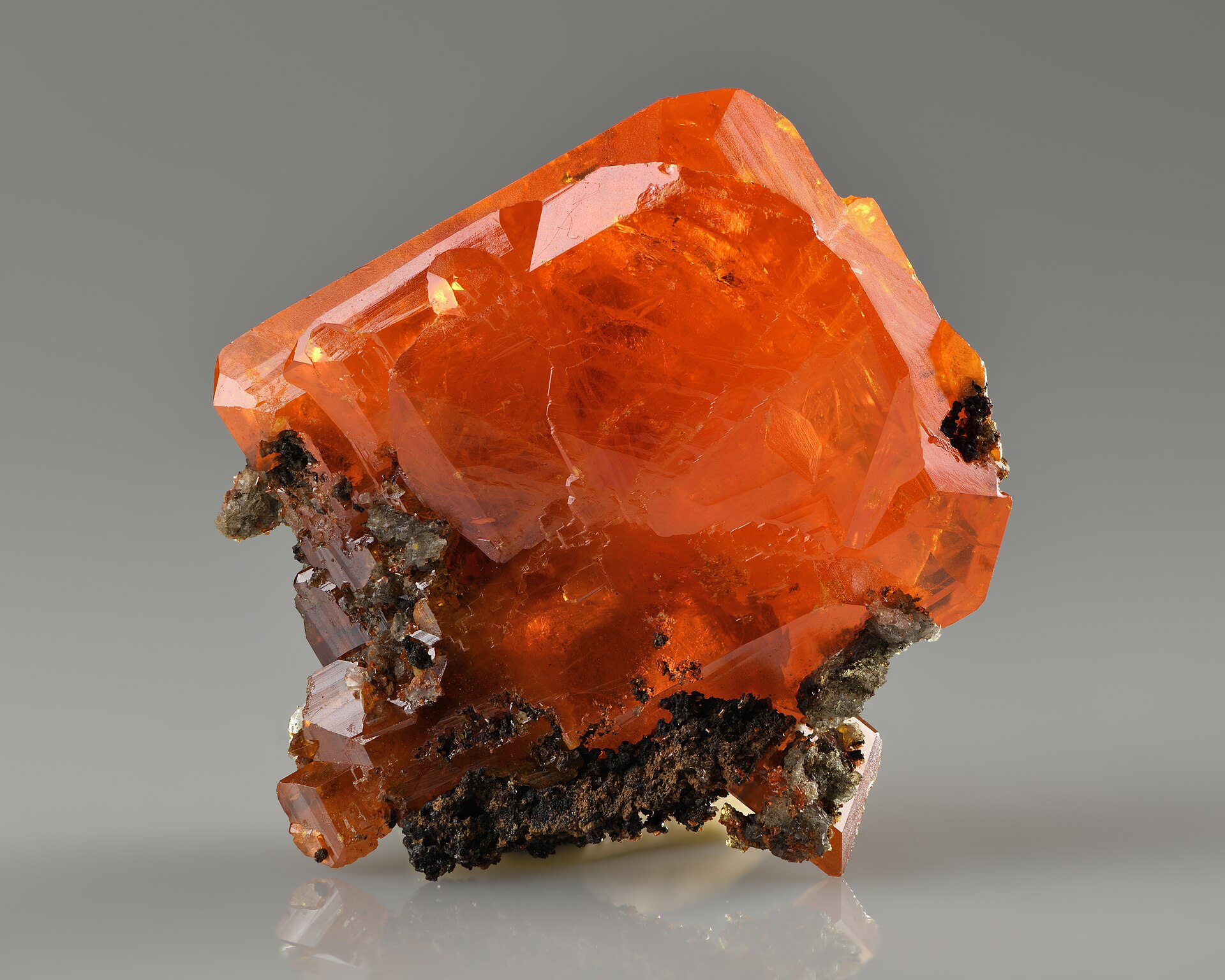
Wulfenite — thin orange tabular crystals, the 'yellow lead ore' of classic lead districts — Photo: Ivar Leidus · CC BY-SA 4.0
What is Wulfenite?
Wulfenite is lead molybdate — PbMoO₄ — a mineral of contradictions. It is one of the densest bright minerals you can hold (it is mostly lead), yet it forms plates so thin and brittle that collecting one undamaged is an achievement.
It belongs to the scheelite family: the same tetragonal atomic pattern as scheelite (calcium tungstate) and powellite (calcium molybdate), but with lead swapped in — which is what turns the color up to orange and the density up to nearly seven times that of water.
Miners knew it as 'yellow lead ore'; mineralogists named it for Franz von Wulfen, the Austrian Jesuit who catalogued the minerals of Carinthia. Today it is a crown jewel of collections — Arizona's Red Cloud Mine has been worked almost entirely for cabinet specimens.
Physical Properties
The full data table is in the panel alongside. Here’s what those numbers actually mean.
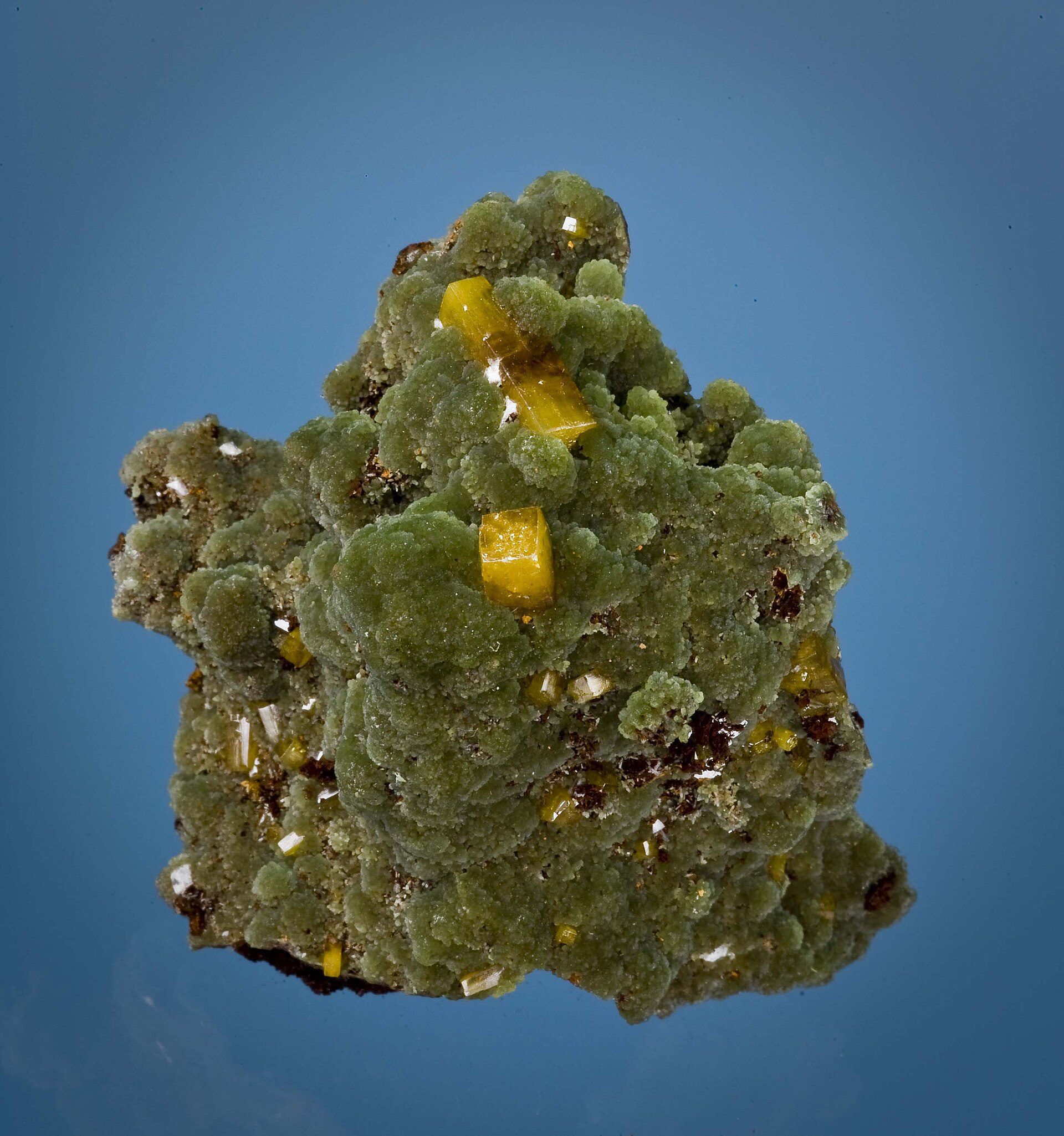
Habit. The signature look: wafer-thin square or rectangular tablets, often with beveled edges, sitting on matrix like panes of orange glass. Thicker crystals go pyramidal; massive material is just 'yellow lead ore'.
Density and softness together. SG ~6.5–7 with Mohs 2.5–3 — heavy and fragile, a combination produced by lead-rich chemistry in an open structure.
Color. Yellow-orange through deep red-orange, adamantine to resinous. The color is intrinsic to the Pb–Mo–O structure.
No glow. Unlike its cousin scheelite (bright blue-white under UV), wulfenite does not fluoresce — a handy separating test.
How & Where It Forms
Wulfenite is a secondary mineral, crystallizing in the oxidized zone where primary lead sulfides and molybdenum minerals (often molybdenite) weather together. Oxygen-rich desert groundwater does the combining: lead plus molybdate in, thin orange plates out.
The great localities are all dry-country oxidized lead districts — Arizona's Red Cloud and Rowley mines, Mexico's Los Lamentos, Tsumeb's deep oxide zone, and the type locality at Bleiberg in Austria.
Often grows alongside:
What It’s Used For
How to Identify It
Thin square orange plates + lead-weight heft + softness is nearly unique. If it glows under UV, suspect powellite or stolzite; if it forms hexagonal prisms instead of square wafers, it is vanadinite.
| Looks like… | But differs because… | Quick test |
|---|---|---|
| Stolzite | Lead tungstate — same family and look, usually duller and browner; fluoresces under UV | UV lamp |
| Powellite | Calcium molybdate — lighter, typically brownish, fluoresces cream to yellow | UV lamp & heft |
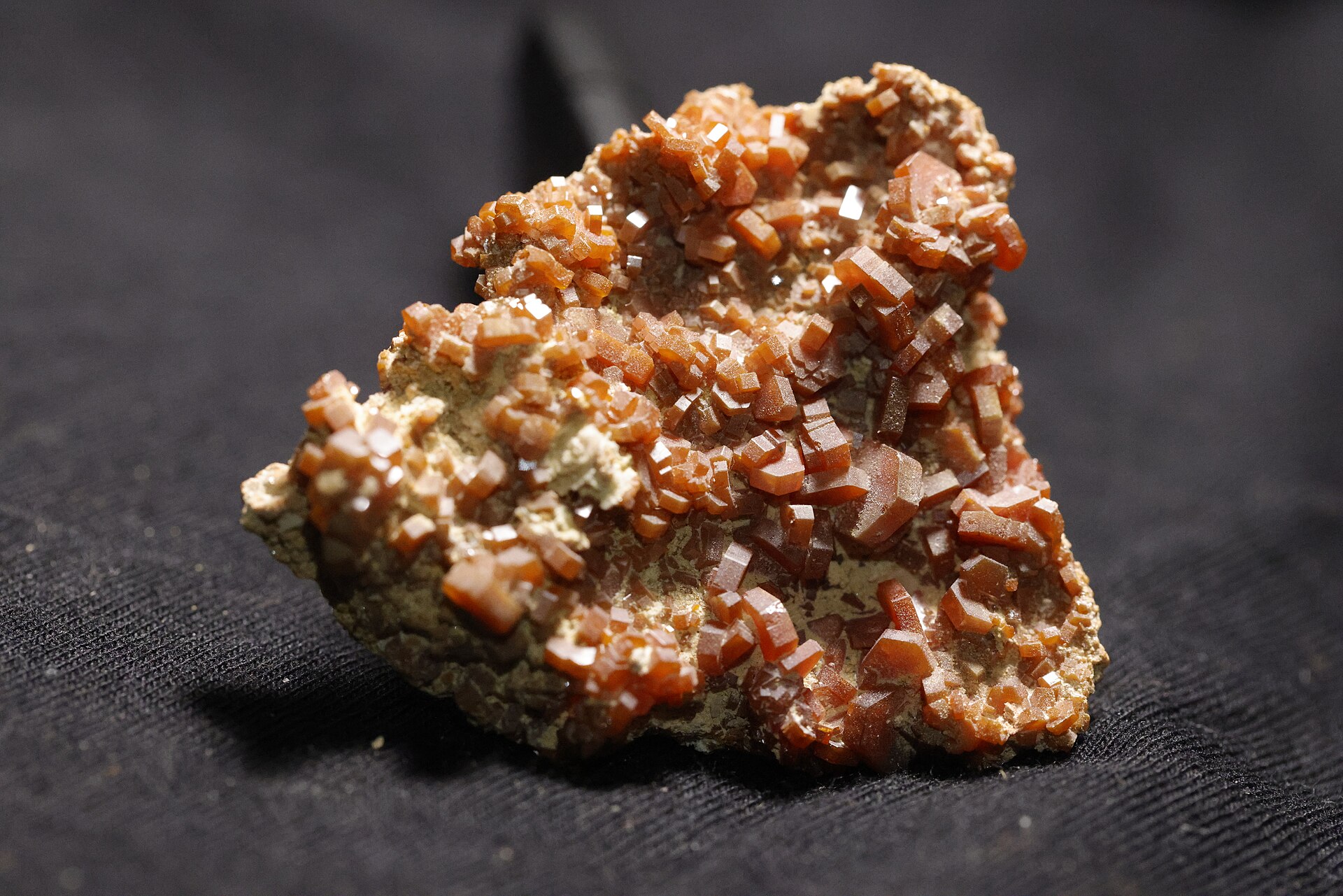
| Vanadinite | Six-sided prisms and barrels, not thin square wafers | Crystal form |
| Crocoite | Brighter red-orange but long slender striated needles | Crystal form |
| Mimetite | Rounded barrel crystals ('campylite'), never flat plates | Crystal form |
Where It’s Found
Notable localities for fine specimens:
Gallery
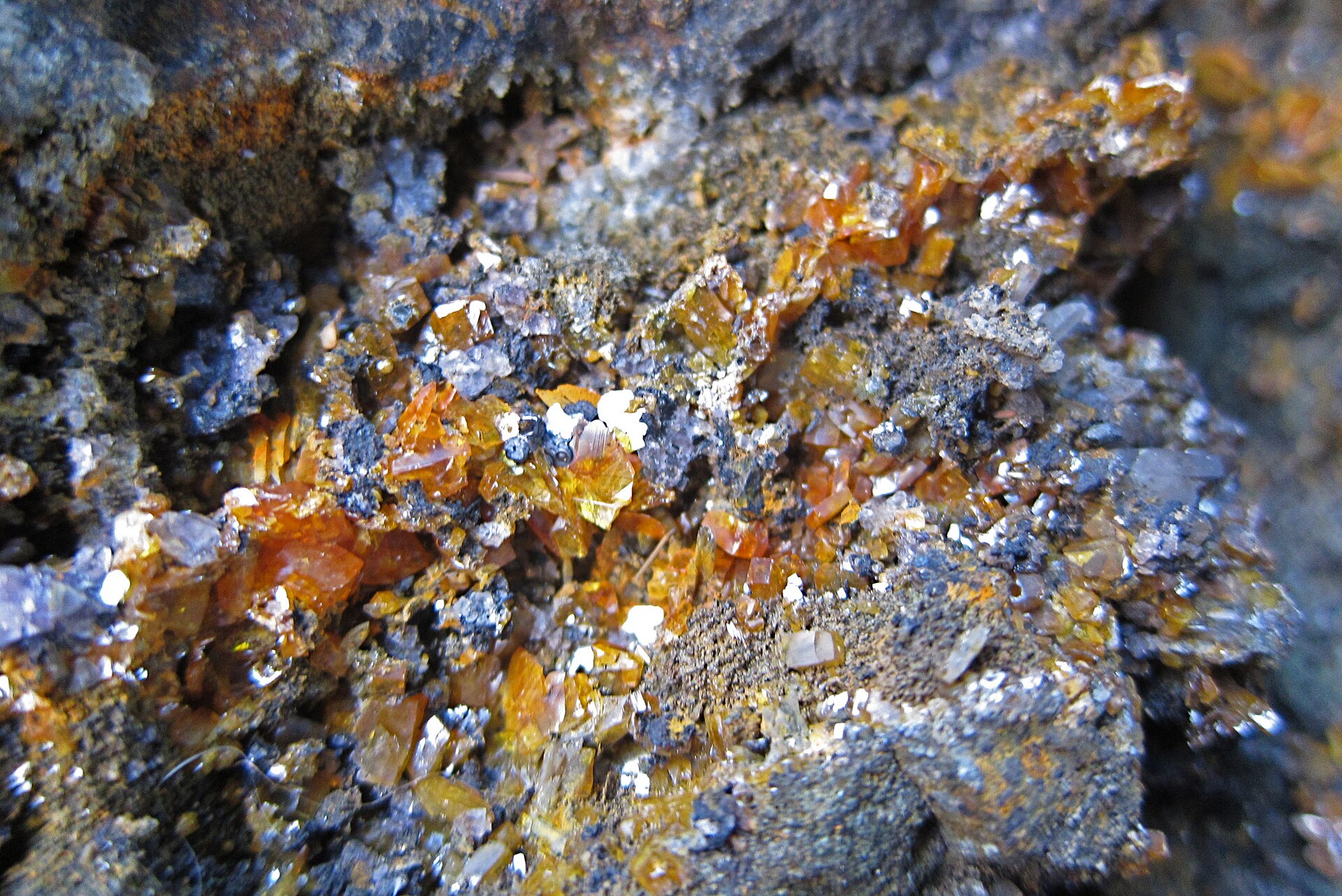
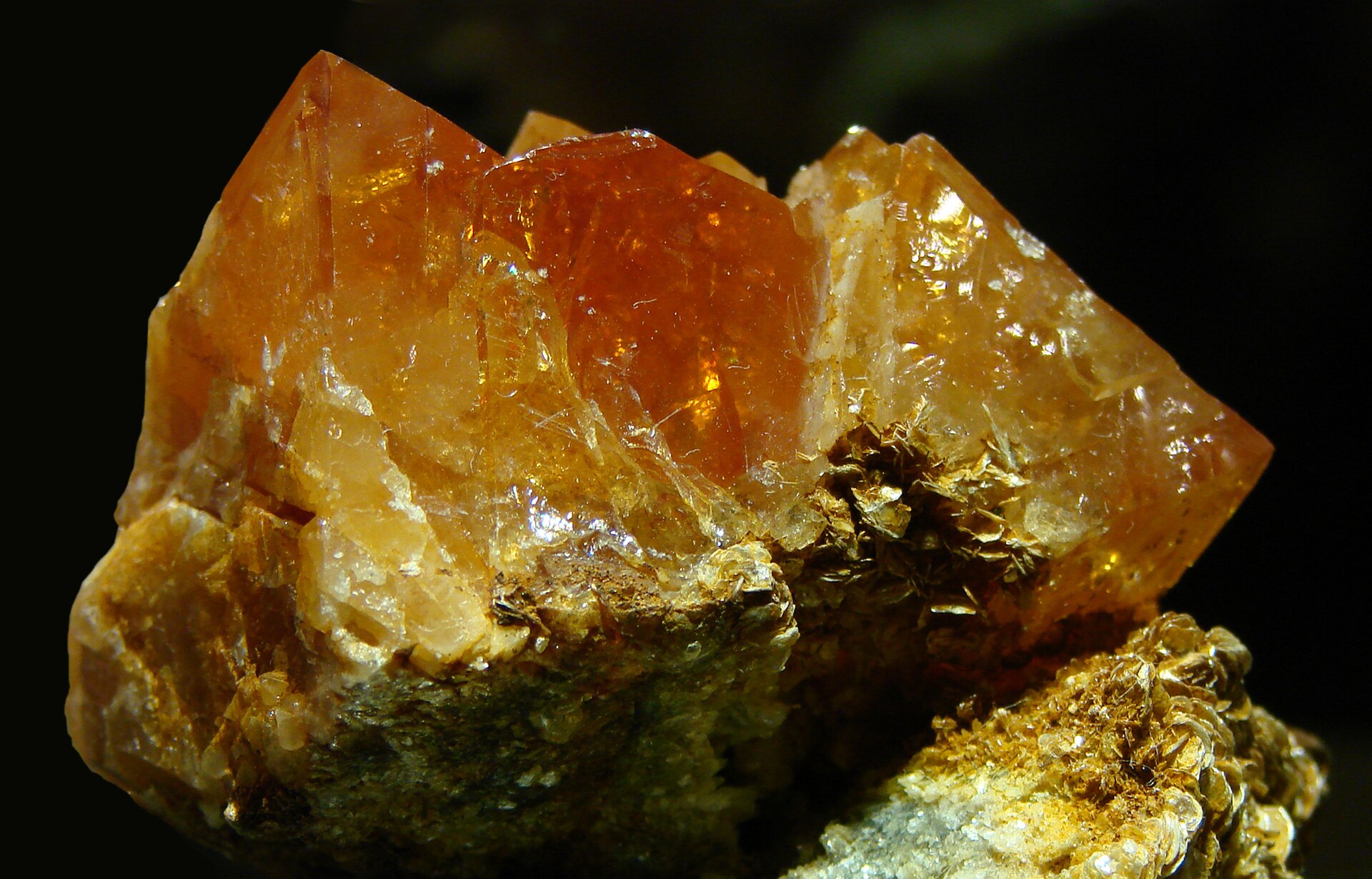
Photographs from Wikimedia Commons contributors — click a credit on the main image for the source and license.
Related Minerals
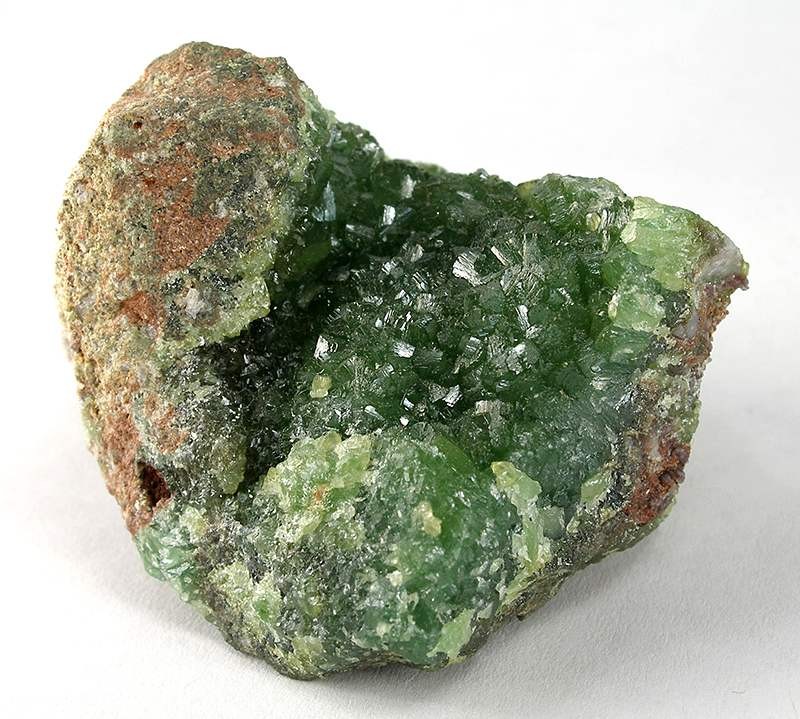
Others in the same family and minerals it commonly grows alongside.
References & Further Reading
- Dana's New Mineralogy, 8th ed. Molybdates and tungstates, scheelite group.
- Mindat.org — Wulfenite mineral data and locality records.
- Wikipedia — Wulfenite.
Last reviewed 2026-09-14 · How to cite this page.