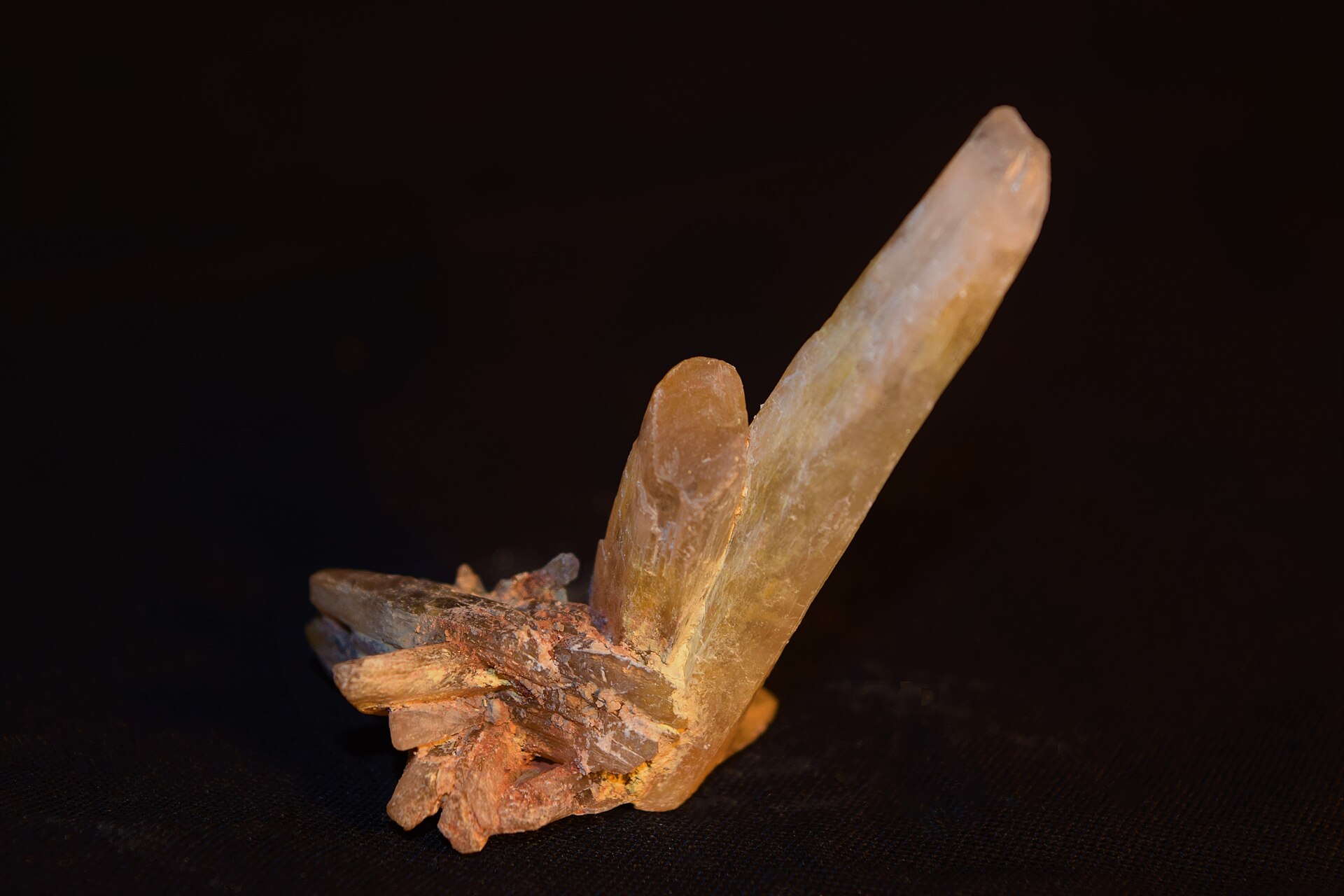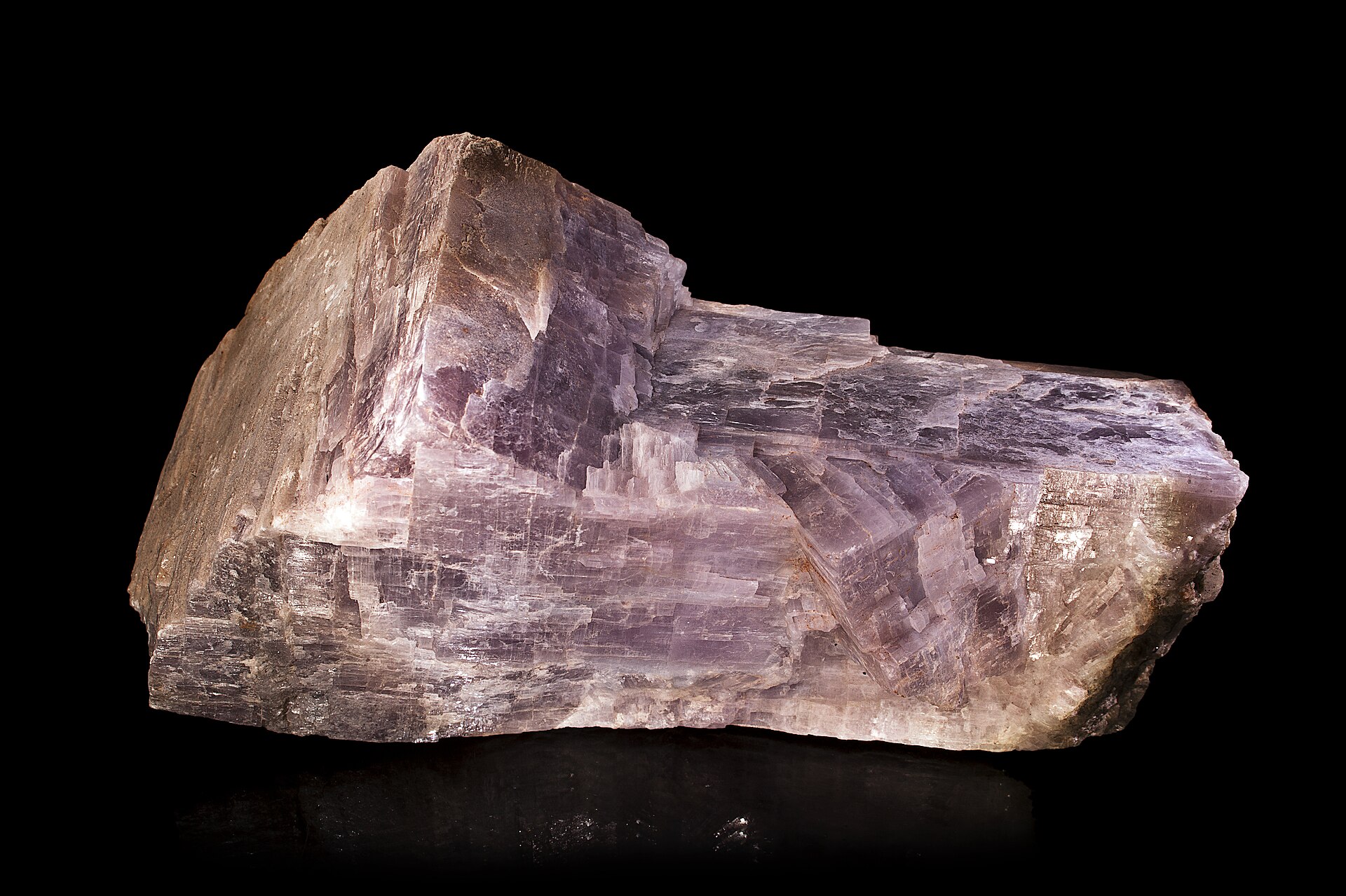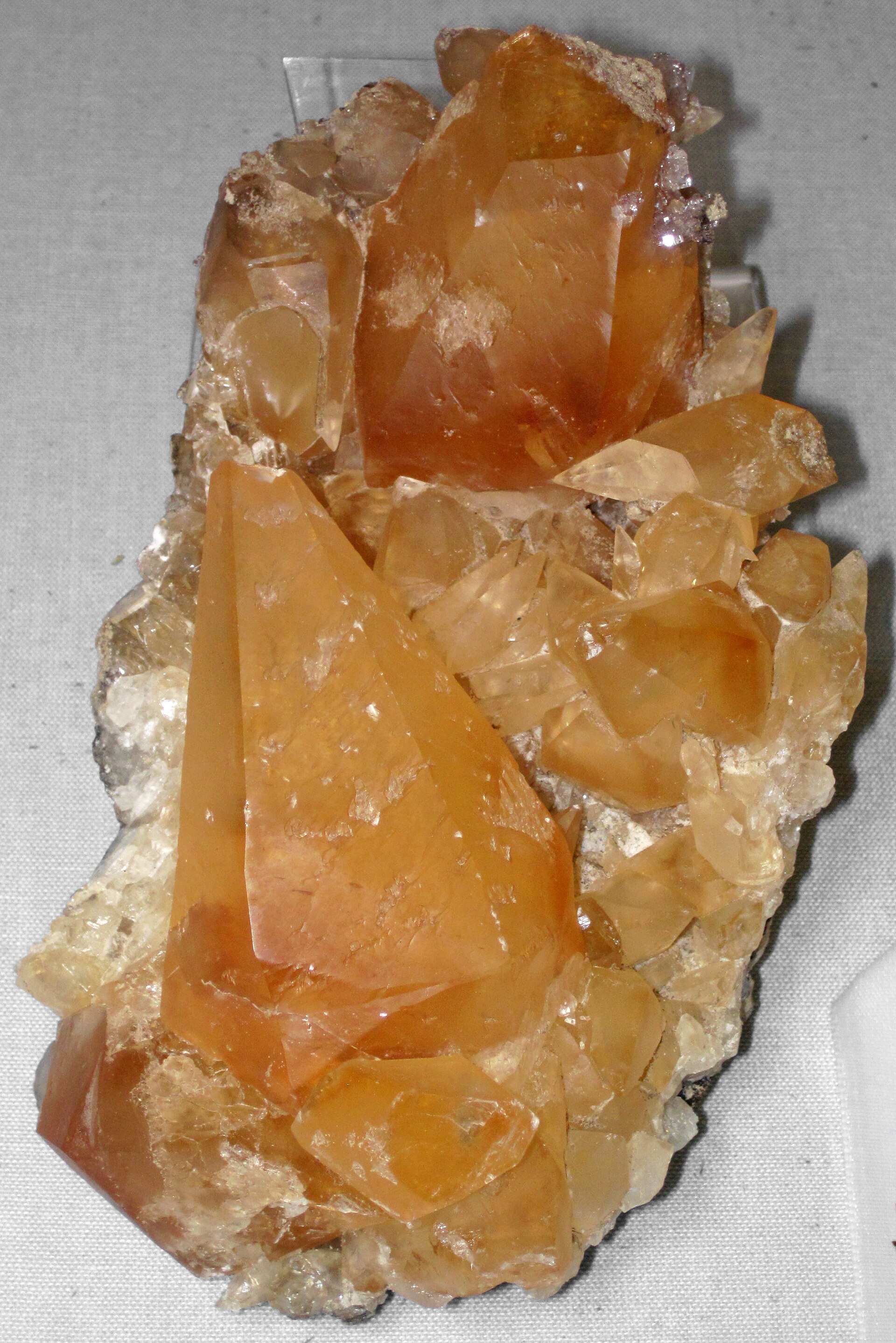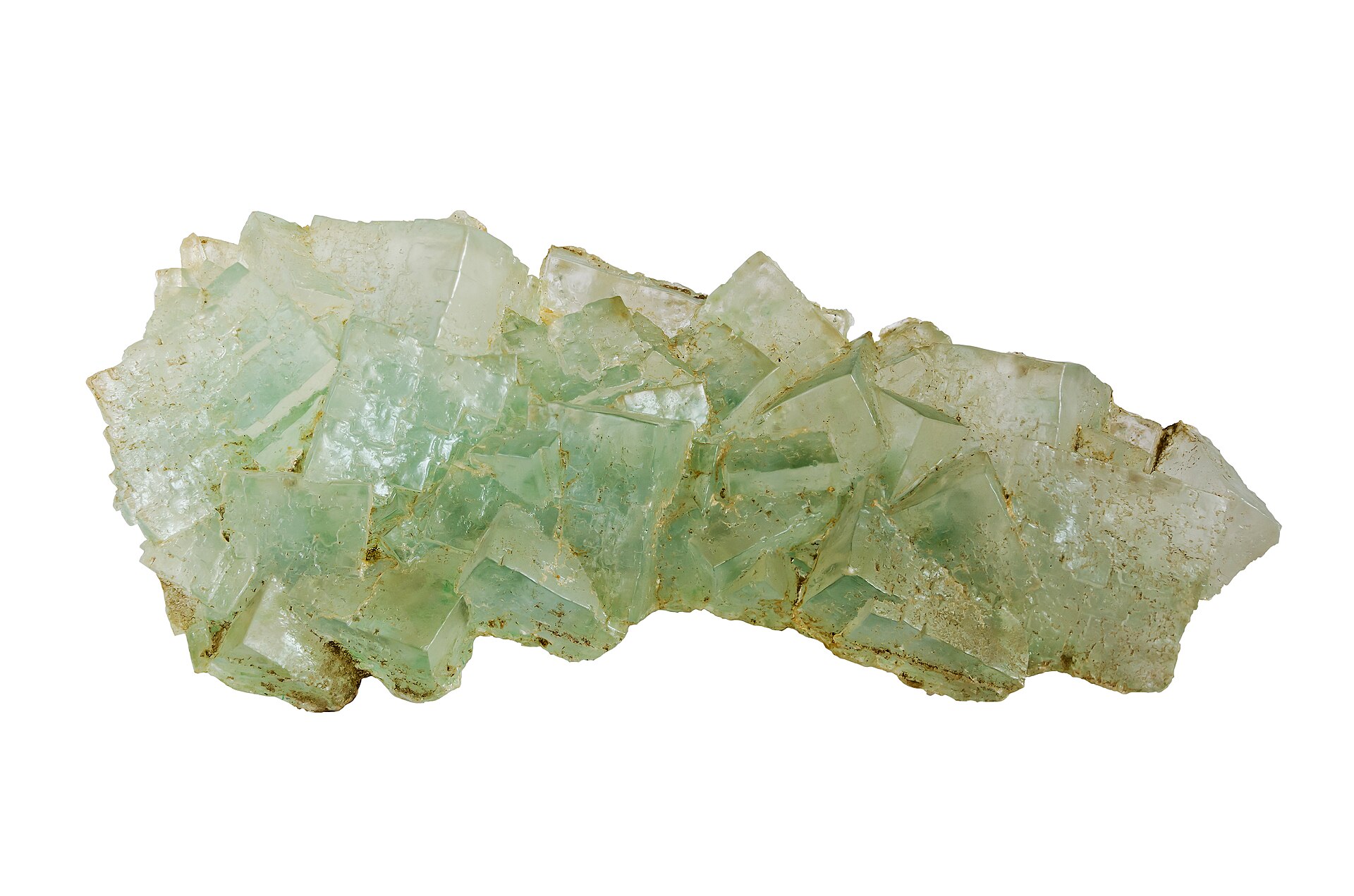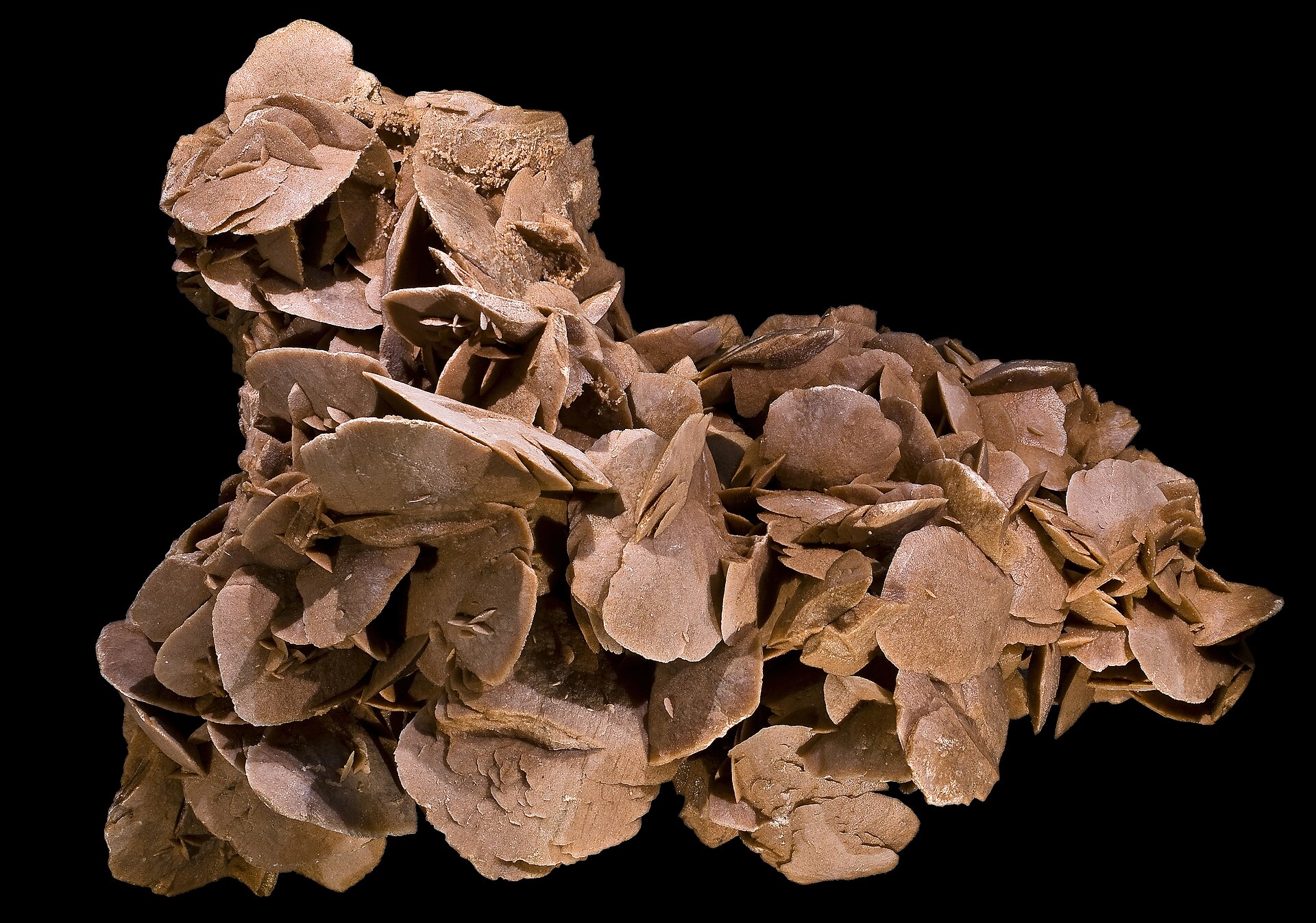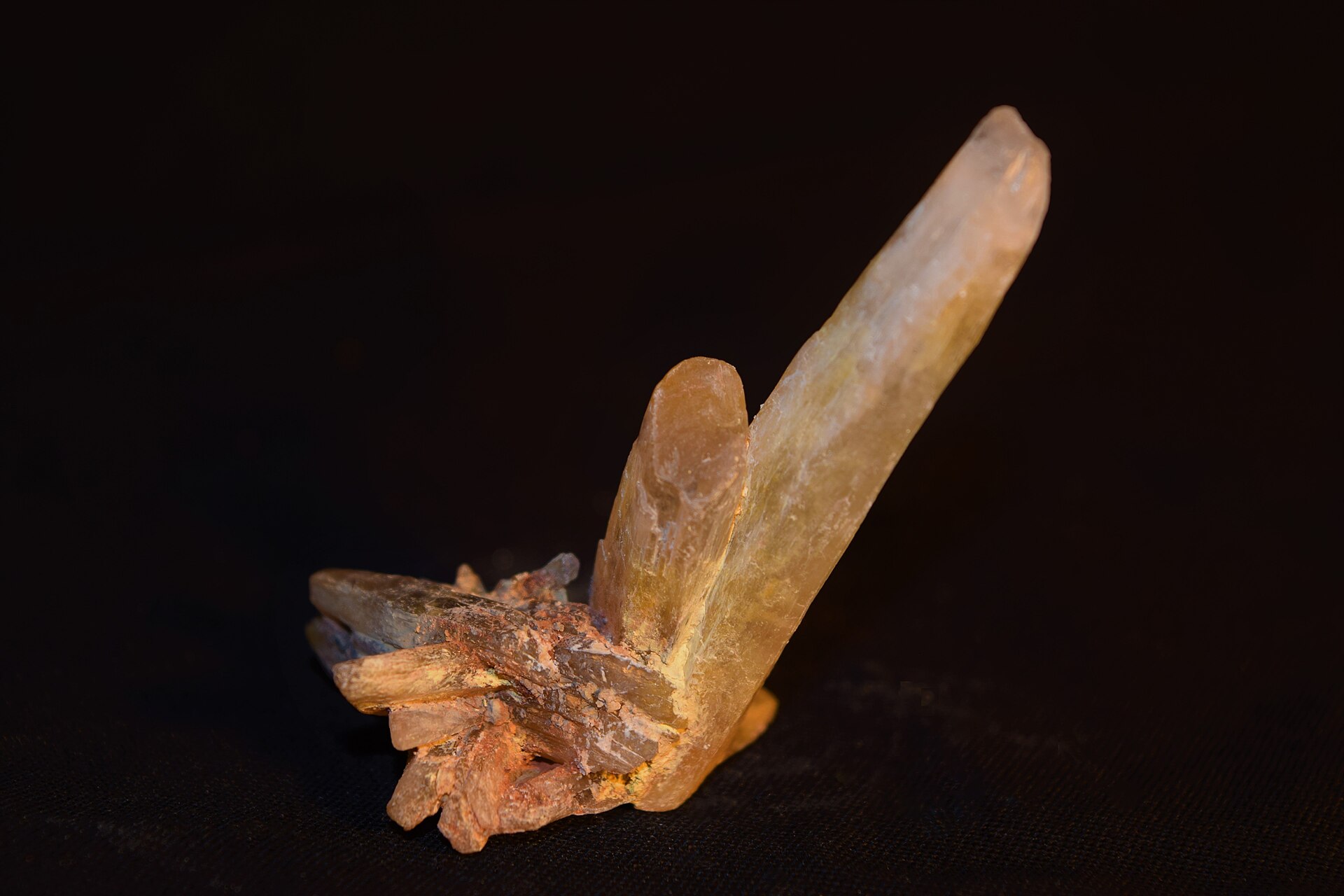
Selenite — Photo: Bryan Barnes · CC BY-SA 4.0
What is Selenite?
Selenite is the colorless, transparent variety of gypsum — CaSO₄·2H₂O — named for Selene, the Greek moon goddess, after its moonlit glow. The same mineral appears as silky satin spar, bladed desert roses, and the largest crystals ever found: Naica's Cave of Crystals holds beams of selenite up to 12 meters long.
It is one of the softest minerals — a fingernail scratches it — and cleaves into thin, flexible-looking sheets that ancient peoples sometimes used for window glass.
Physical Properties
The full data table is in the panel alongside. Here’s what those numbers actually mean.
Hardness. H 2 — the Mohs anchor. Fingernail hardness is the field test.
Twinning. Swallow-tail and fishtail twins are classic.
Giant growth. Naica crystals grew at a steady 58 °C for perhaps 500,000 years.
What It’s Used For
How to Identify It
| Looks like… | But differs because… | Quick test |
|---|---|---|
| Calcite | Harder (3), fizzes in acid, rhombohedral cleavage | Hardness & acid |
| Quartz | Far harder (7), no cleavage | Hardness |
Where It’s Found
Notable localities for fine specimens:
Gallery
Photographs from Wikimedia Commons contributors — click a credit on the main image for the source and license.
Related Minerals
Others in the same family and minerals it commonly grows alongside.