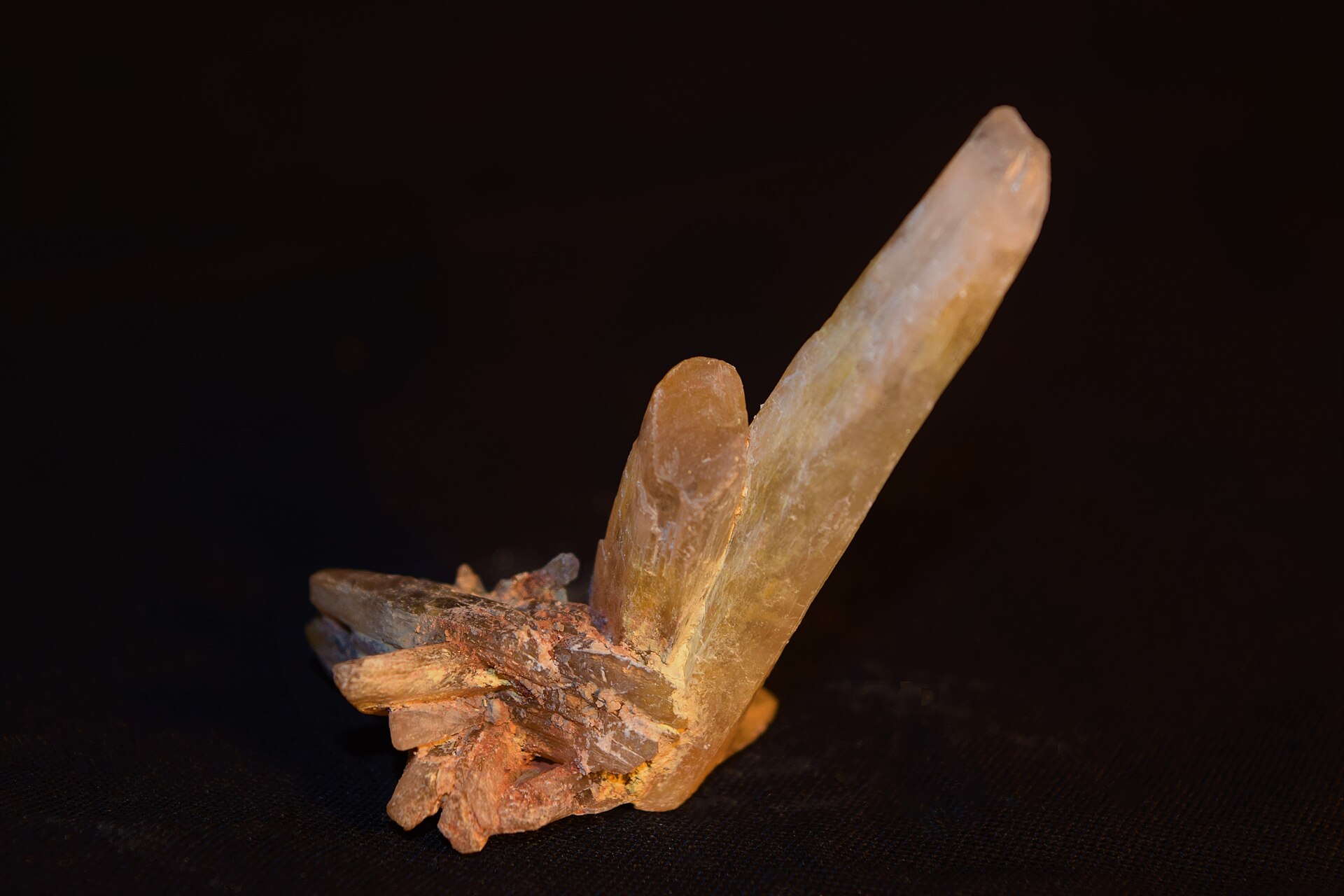
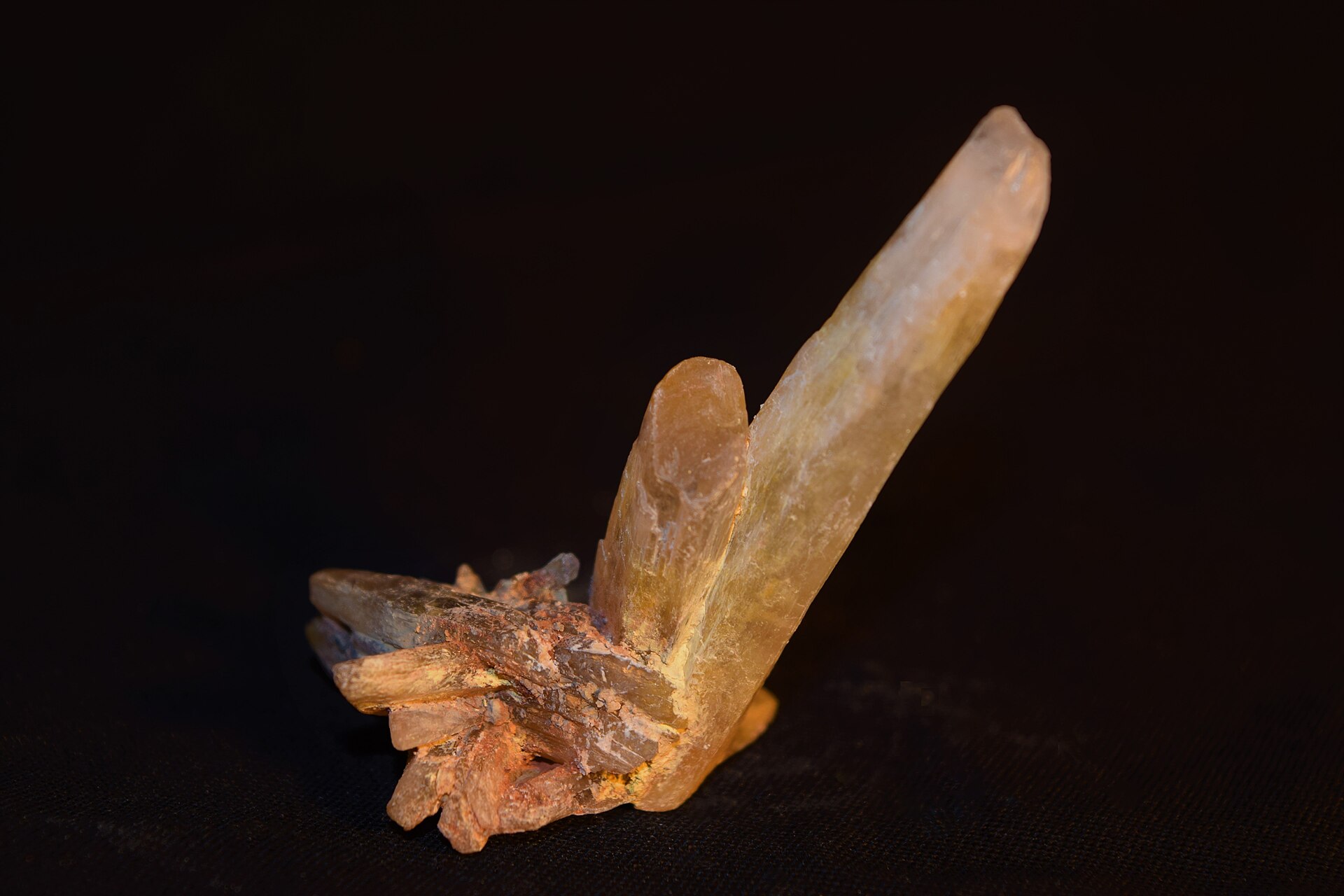
A clear selenite blade — gypsum’s transparent, flexible crystal form — Photo: Bryan Barnes · CC BY-SA 4.0
What is Gypsum?
Gypsum is hydrated calcium sulfate — CaSO₄·2H₂O — the second-softest common mineral (Mohs 2) and the raw stuff of plaster, drywall and chalk. You can scratch it with a fingernail.
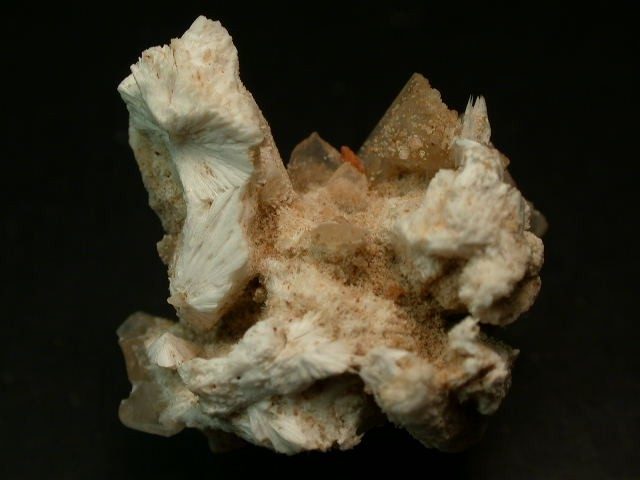
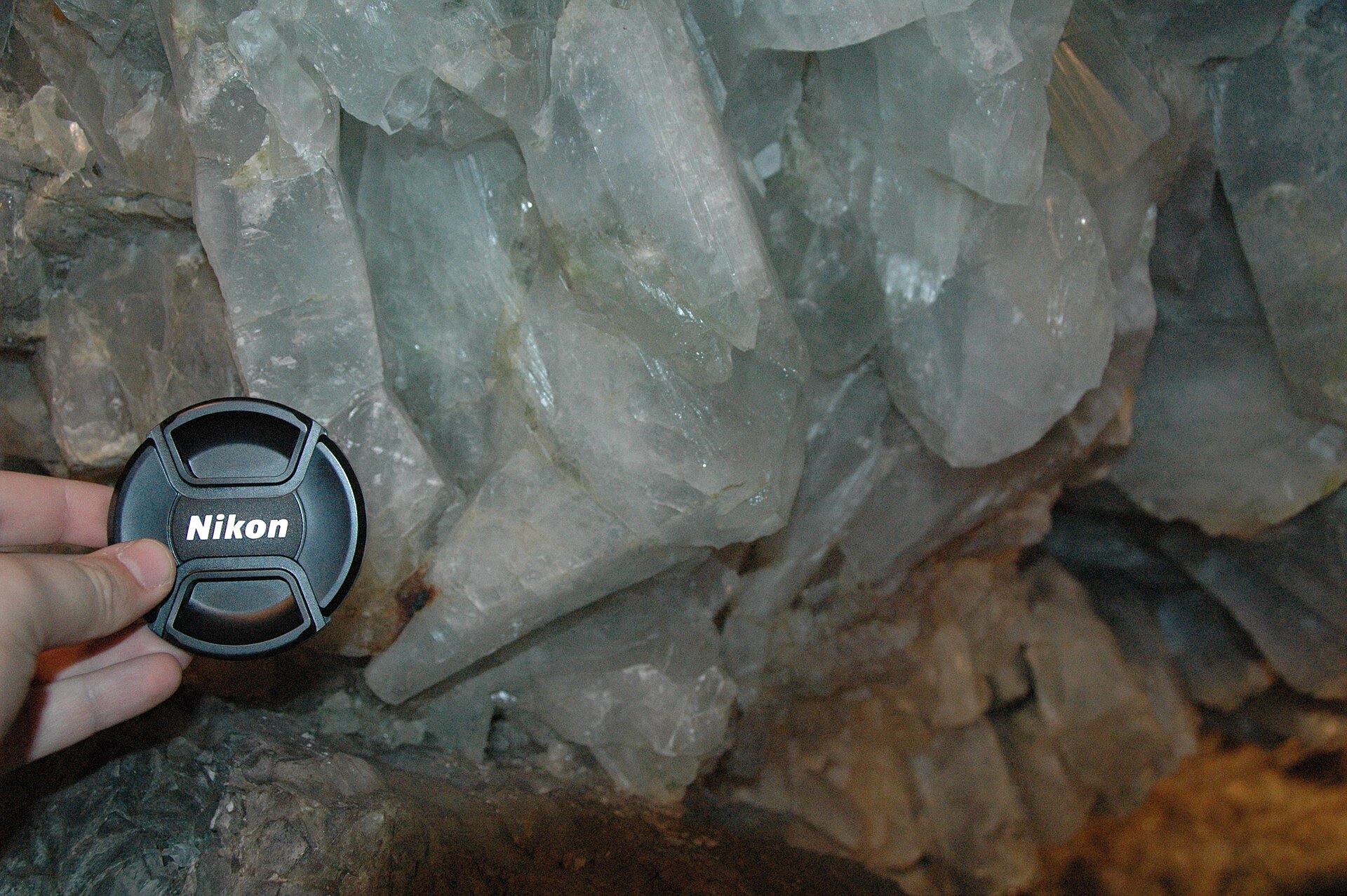
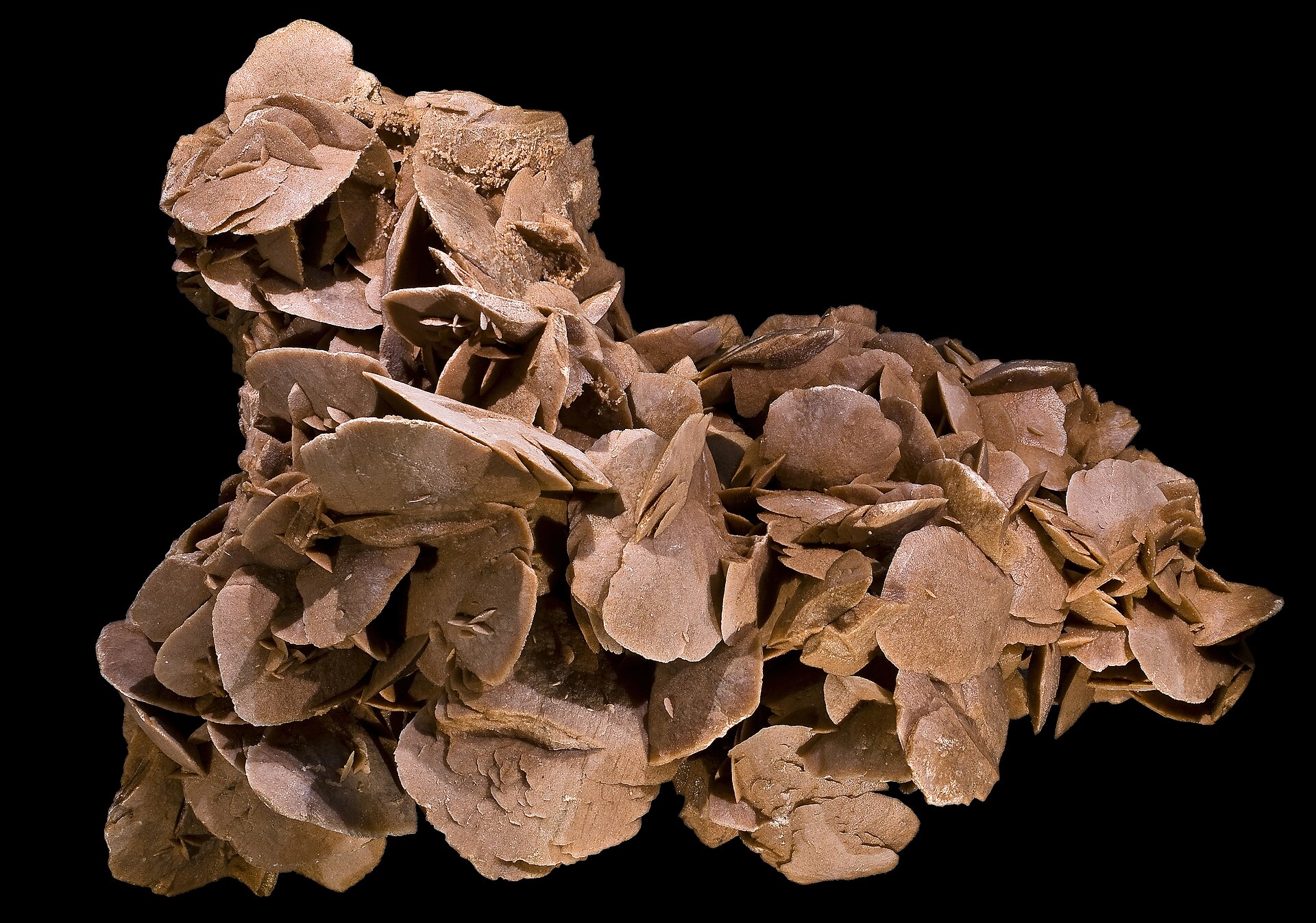
It wears different names for different habits: clear blades are selenite, silky fibrous seams are satin spar, fine white massive stone is alabaster, and sand-filled rosettes are desert roses. All are the same mineral — and the biggest selenite crystals on record, Mexico’s Cave of the Crystals beams, run past eleven meters.
When evaporating seas and salt lakes concentrate dissolved calcium and sulfate, gypsum precipitates in beds that can run hundreds of meters thick — the feedstock for one of the oldest building materials on Earth.
Physical Properties
The full data table is in the panel alongside. Here’s what those numbers actually mean.
Softness. Hardness 2 — the Mohs reference — means a fingernail (2.5) marks it easily. That single test rules out almost every lookalike.
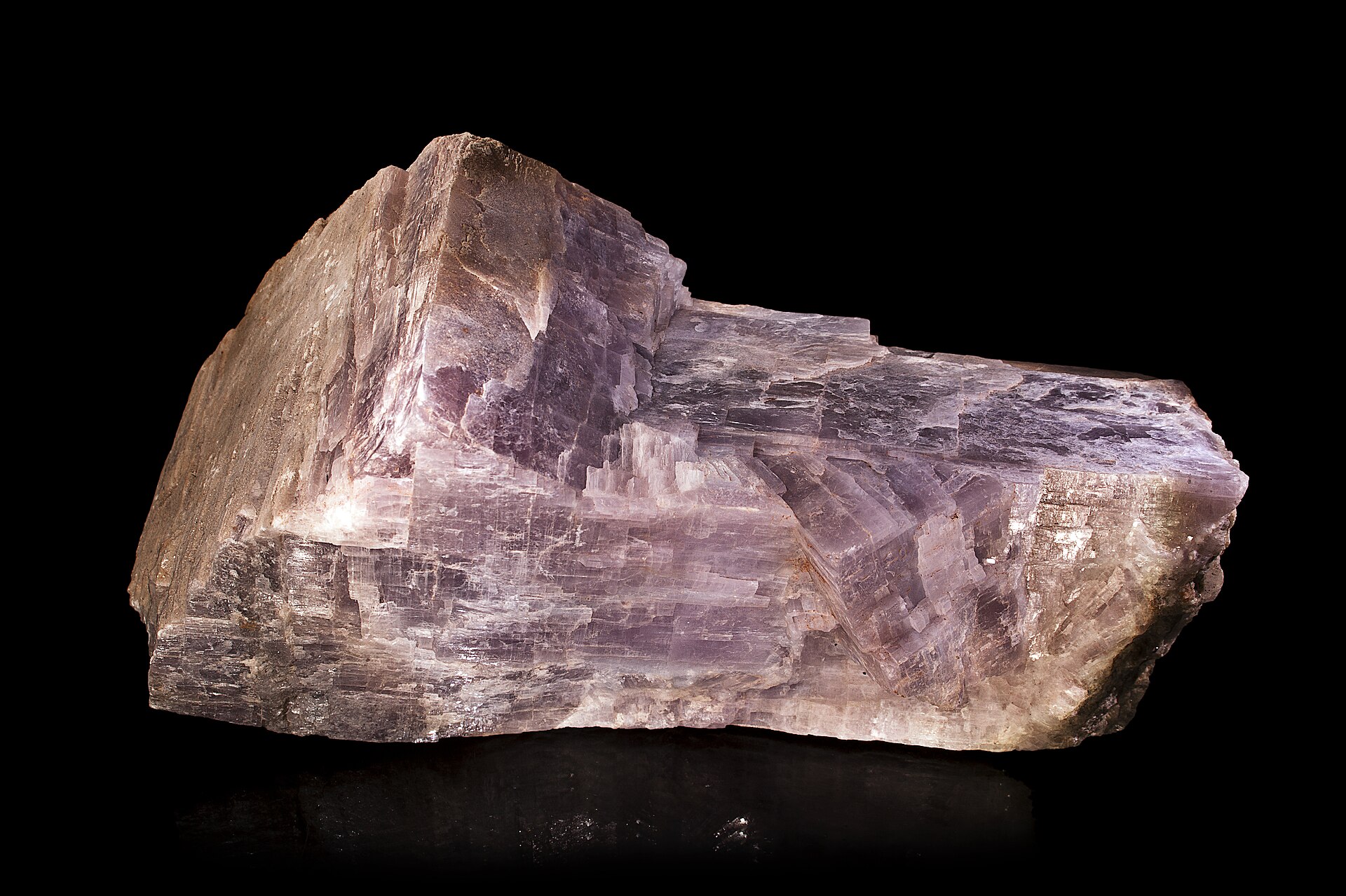
Cleavage and flexing. One perfect cleavage lets selenite split into thin sheets that bend a little — like mica, but without the spring: bent gypsum stays bent.
Water inside. Roughly a fifth of gypsum’s weight is water built into the crystal. Heating to about 150 °C drives most of it out, leaving powdery plaster of Paris — which re-hardens into solid gypsum when water is added back. That reversible trick is the whole plaster industry.
Habits. Selenite blades, satin-spar fibers, alabaster masses and desert-rose rosettes are all growth forms of the same species.
Varieties
Same chemistry, different faces — trace impurities and how finely it crystallizes give a whole family of familiar stones.
How & Where It Forms
Gypsum is an evaporite: it crystallizes when seawater or lake water evaporates past the point where calcium sulfate can stay dissolved. Great beds formed this way in the Permian and Miocene, and gypsum is still precipitating under modern salt flats and coastal sabkhas.
In caves it grows slowly into spear blades and flowers; in arid soils it traps wind-blown sand into desert roses. It also forms where weathering sulfides acidify carbonate rocks.
Often grows alongside:
What It’s Used For
How to Identify It
Fingernail-scratchable softness is the headline test. Then: white streak, no fizz in acid (rules out calcite), and no salty taste or ready solubility (rules out halite). Anhydrite — its dehydrated cousin — resists the fingernail at hardness 3–3.5. Clear flexible blades are selenite; silky seams are satin spar.
| Looks like… | But differs because… | Quick test |
|---|---|---|
| Anhydrite | Same elements minus the water — harder (3–3.5) with three right-angle cleavages | Fingernail fails on anhydrite |
| Calcite | Harder (3), fizzes in acid, and cleaves into rhombs | Acid |
| Talc | Even softer (1), with a greasy feel and usually a green tinge | Feel & color |
| Baryte | Nearly twice as dense (≈4.5) and harder (3–3.5) | Heft & hardness |
Where It’s Found
Notable localities for fine specimens:
Gallery
Photographs from Wikimedia Commons contributors — click a credit on the main image for the source and license.
Related Minerals
Others in the same family and minerals it commonly grows alongside.
References & Further Reading
- Dana’s New Mineralogy, 8th ed. Hydrated sulfates, gypsum group.
- Mindat.org — Gypsum mineral data and locality records.
- Wikipedia — Gypsum.
Last reviewed 2026-09-14 · How to cite this page.