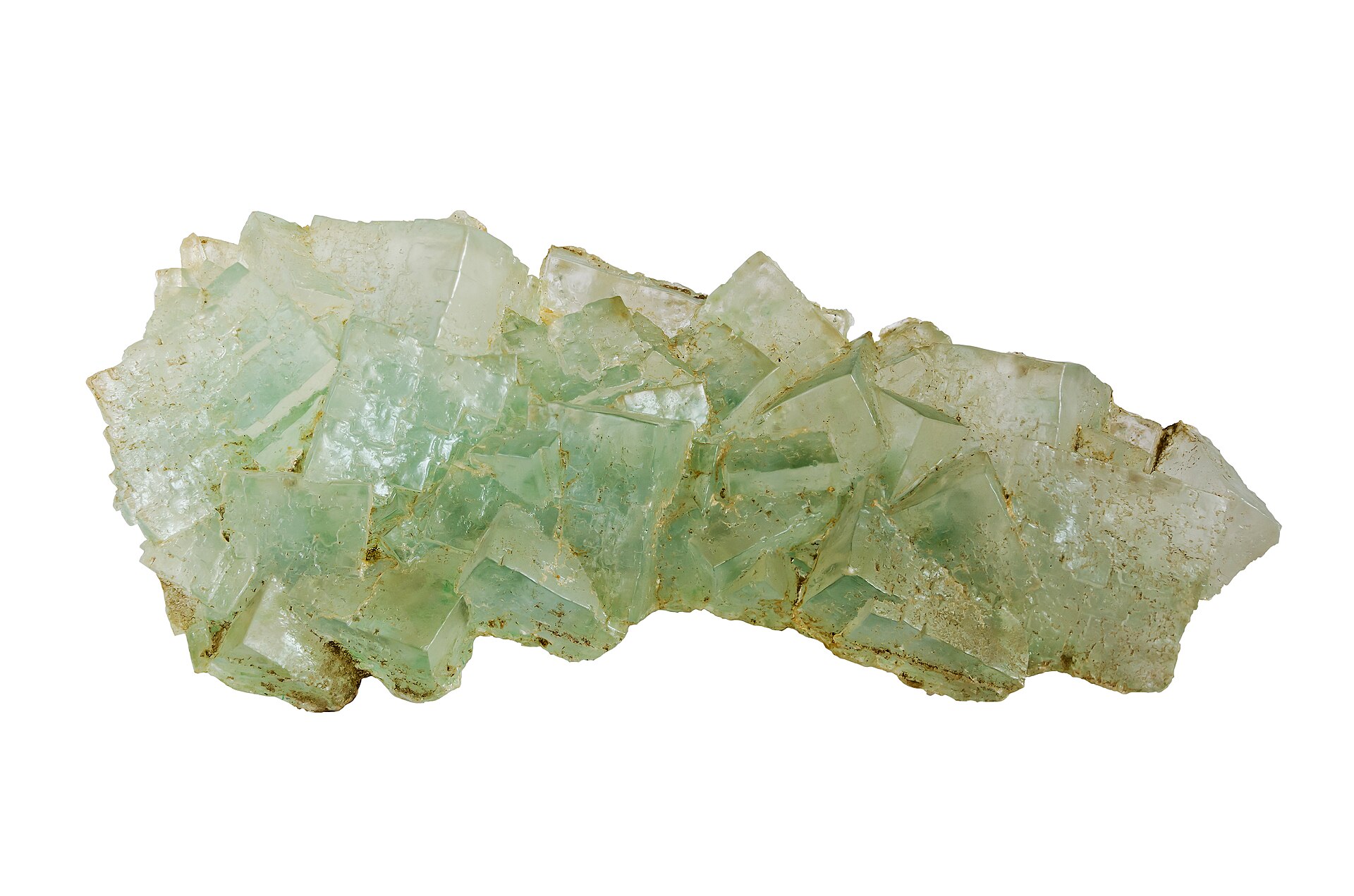
Cubic halite crystals — the same geometry as the salt grains on a table — Photo: Zbynek Burival · CC BY-SA 4.0
What is Halite?
Halite is sodium chloride — NaCl — ordinary table salt in mineral form. It crystallizes in cubes, cleaves into cubes, tastes of salt, and dissolves completely in water.
Most halite is an evaporite, left behind when seas and salt lakes dry up. Beds hundreds of meters thick underlie the Gulf Coast, Germany and the Dead Sea basin, and where buried salt is squeezed it rises in slow-motion salt domes that trap oil and gas.
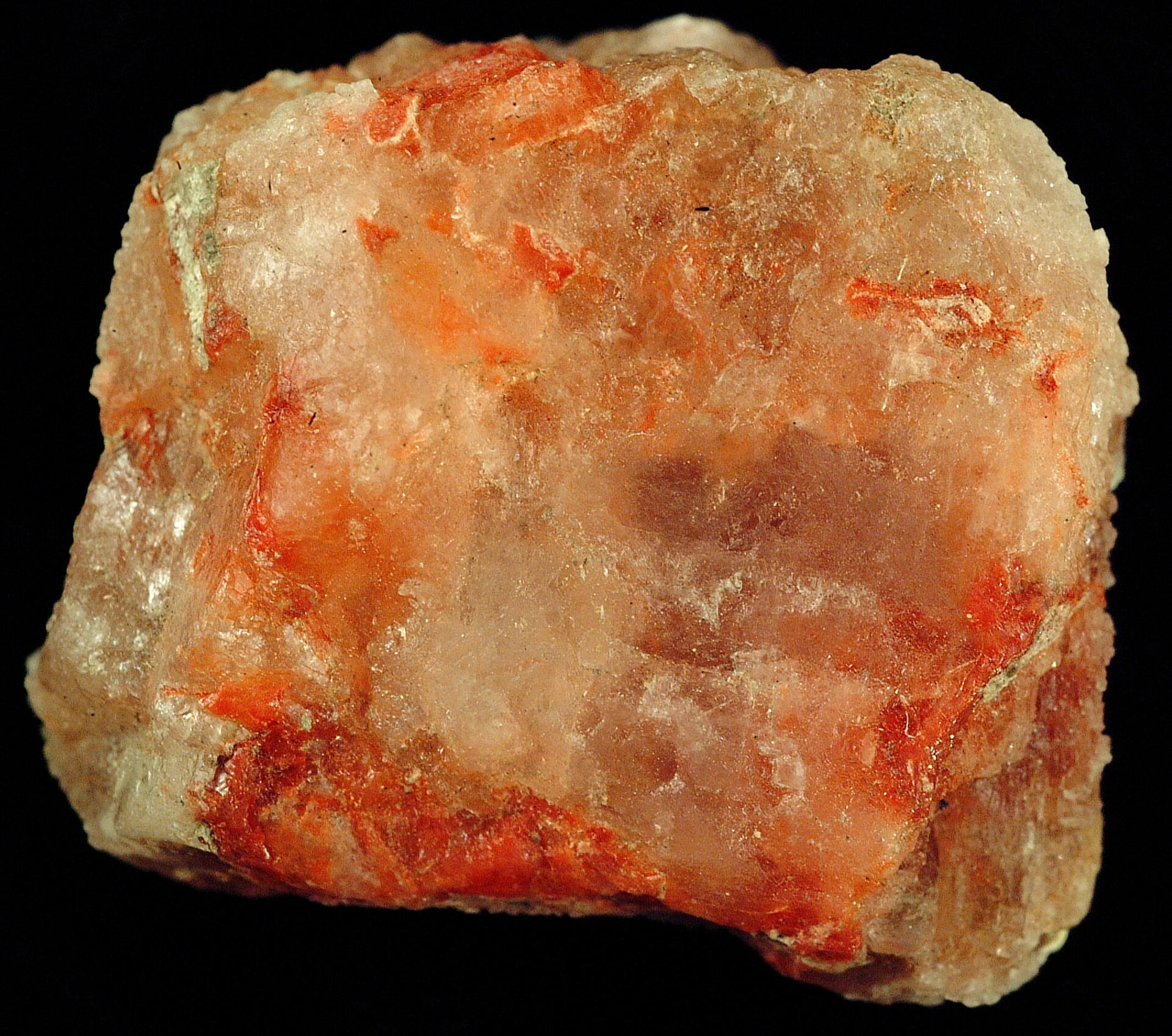
Usually colorless or white, halite turns deep blue or violet where natural radiation rearranges its crystal structure, and pink where salt-loving microbes live inside the grains.
Physical Properties
The full data table is in the panel alongside. Here’s what those numbers actually mean.
Taste and solubility. A touch to the tongue gives clean saltiness — and a small crystal dissolves entirely in a drop of water. (Only taste minerals you can already identify with confidence.)
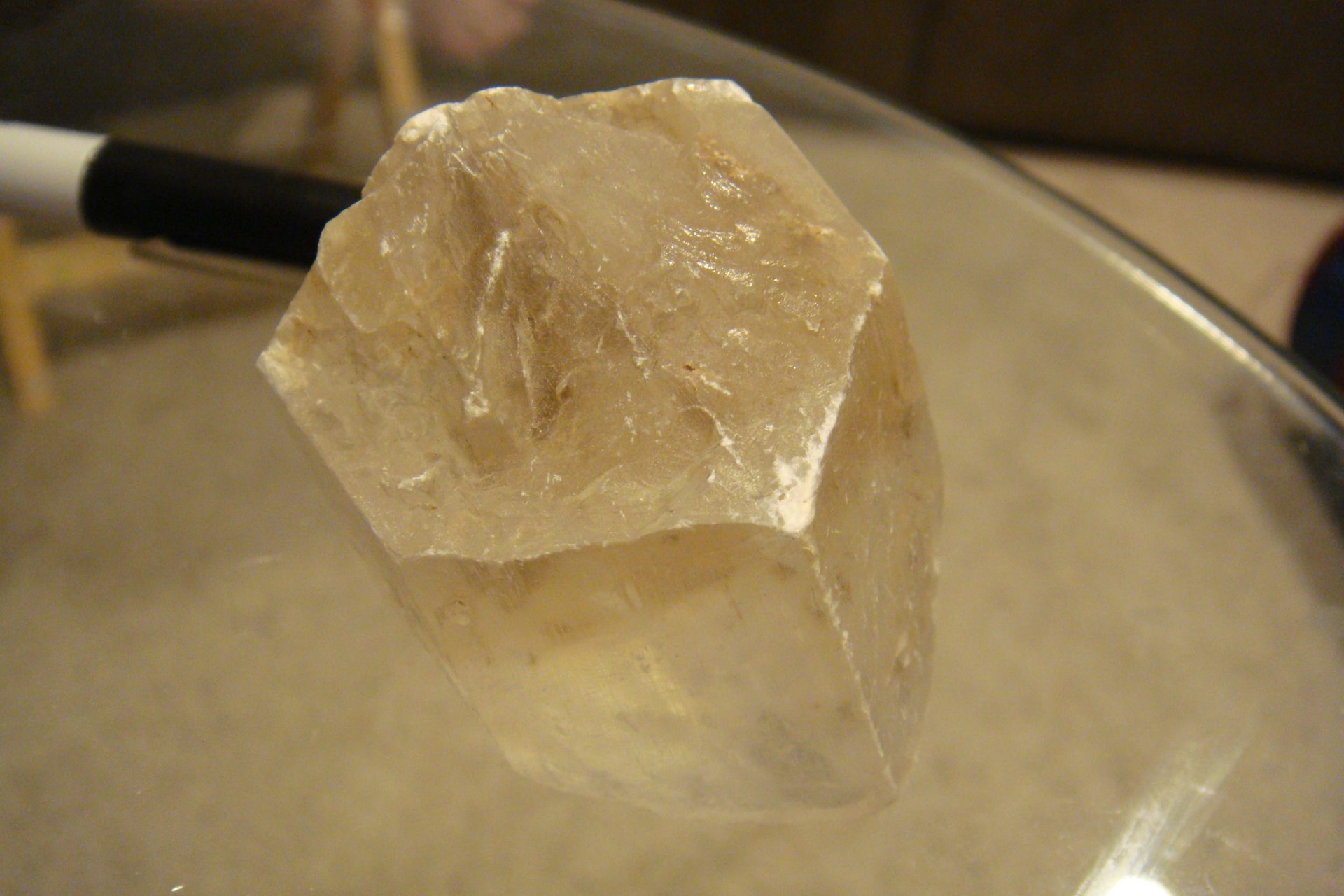
Cubic cleavage. Halite splits perfectly in three directions at right angles, so a crushed crystal yields tiny cubes — exactly the shape of the salt grains on a table.
Softness. Mohs 2.5 — about the hardness of a fingernail.
Color surprises. Radiation from surrounding potash beds creates electron-trapping color centers that turn halite sapphire-blue or violet; the color lives in the structure, not in impurities.
How & Where It Forms
Halite precipitates when salty water evaporates — in today’s salt flats, playas and coastal pans, and in the great evaporite basins of the geologic past. Deep burial makes thick salt flow plastically, bulging upward as salt domes.
Hopper crystals — cubes with stepped, hollowed faces — grow quickly at brine surfaces. Halite also crusts volcanic fumaroles and desert soils.
Often grows alongside:
What It’s Used For
How to Identify It
Taste settles it: clean saltiness is halite; a bitter edge suggests its potash partner sylvite. Cubic cleavage and instant solubility in water confirm it. Halite never fizzes in acid (unlike calcite) and is far softer than quartz or fluorite — a fingernail nearly marks it.
| Looks like… | But differs because… | Quick test |
|---|---|---|
| Sylvite | Its potassium partner — tastes bitter-sharp rather than purely salty and is often reddish | Careful taste test |
| Calcite | Fizzes in acid, doesn’t dissolve in fresh water, and cleaves into rhombs not cubes | Water drop & acid |
| Fluorite | Harder (4), cleaves into octahedra, insoluble and tasteless | Taste & cleavage |
| Quartz | Much harder (7), no cleavage, insoluble | Knife test |
Where It’s Found
Notable localities for fine specimens:
Gallery
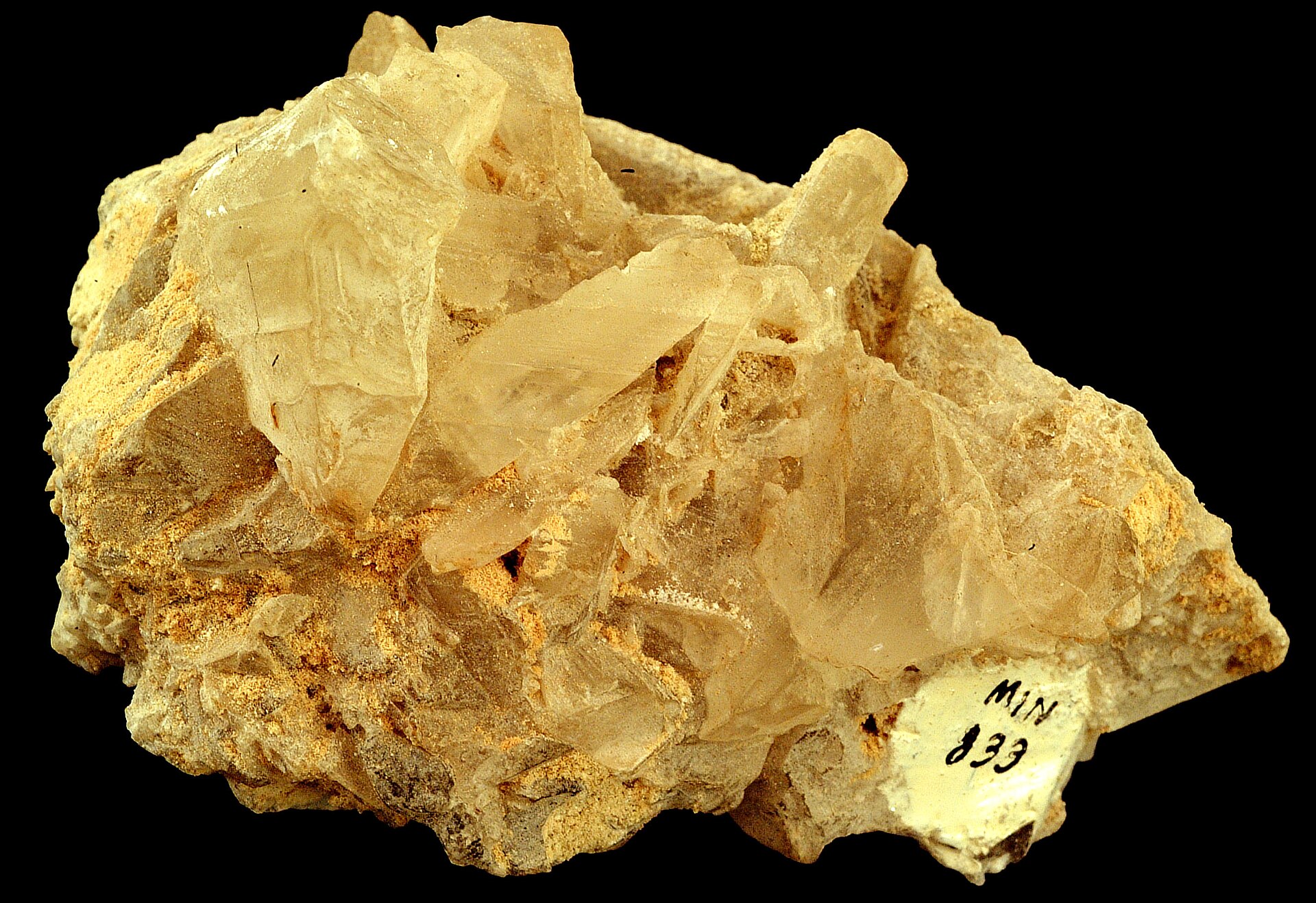
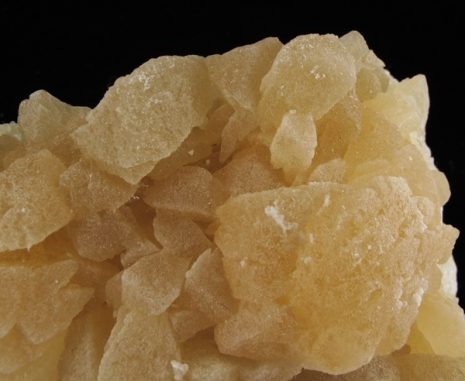
Photographs from Wikimedia Commons contributors — click a credit on the main image for the source and license.
Related Minerals
Others in the same family and minerals it commonly grows alongside.
References & Further Reading
- Dana’s New Mineralogy, 8th ed. Simple halides, rocksalt group.
- Mindat.org — Halite mineral data and locality records.
- Wikipedia — Halite.
Last reviewed 2026-09-14 · How to cite this page.